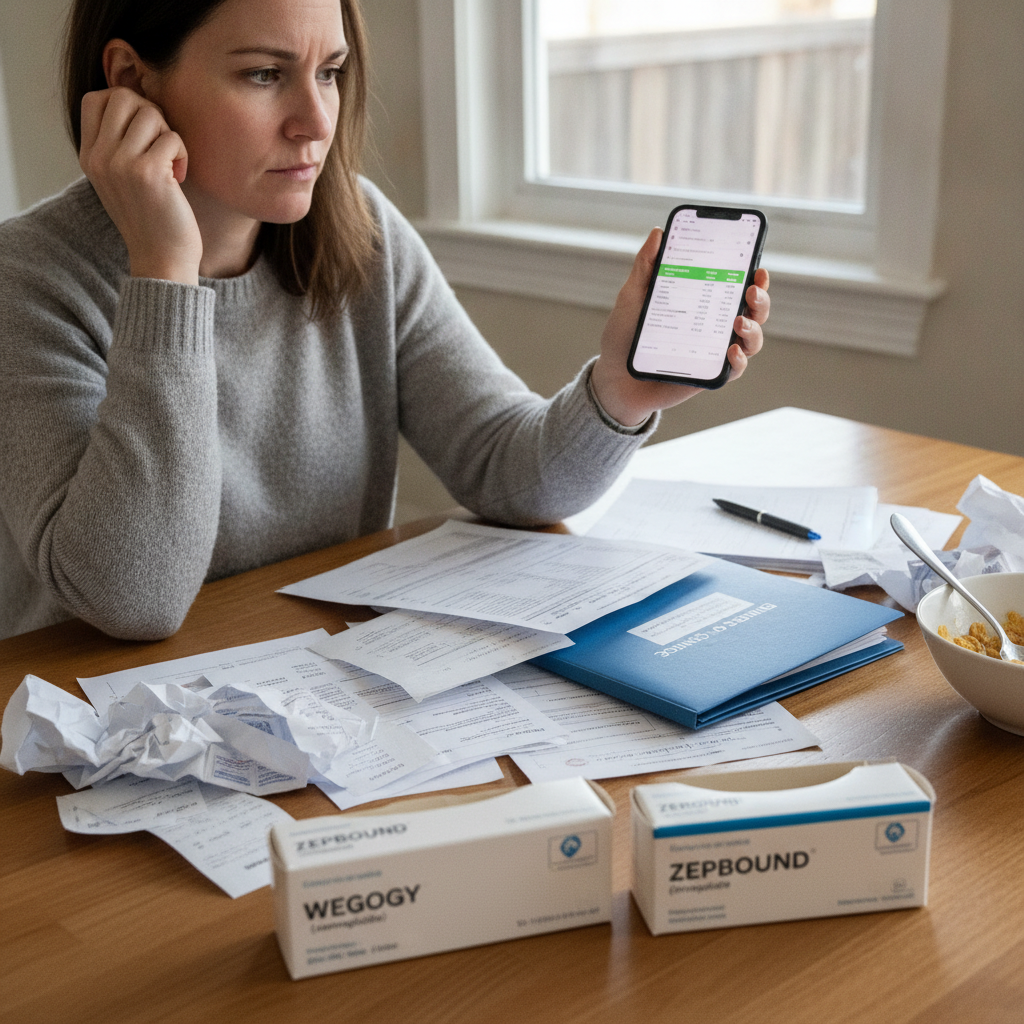
If you have priced newer weight loss medications at the pharmacy counter, you already know the sticker shock is real. Wegovy, Zepbound, and similar anti-obesity medications can cost roughly $1,000 to $1,350 per month without coverage. That price creates an uncomfortable reality: the people most motivated to start often discover that the hardest part is not finding a prescription, but getting the prescription approved and affordable.
The good news: many patients do get coverage when the request is documented correctly. The bad news: insurers rarely approve these medications casually. Most plans require specific BMI thresholds, a diagnosis code, proof of previous lifestyle attempts, prior authorization paperwork, and sometimes step therapy. If you go in unprepared, you may get denied quickly. If you go in with the right evidence, timing, and appeal strategy, your odds can improve dramatically.

Why These Medications Are So Hard to Get Covered Right Now
Demand has exploded for GLP-1 and related medications because they are among the most talked-about medical weight management tools available today. Wegovy is the weight management version of semaglutide. Zepbound is tirzepatide, a dual GIP/GLP-1 receptor agonist approved for chronic weight management. Ozempic and Mounjaro are often discussed in the same conversation, but they are primarily diabetes medications, which matters for insurance coverage.
Insurers are under pressure because these drugs are expensive and are commonly prescribed long term. A plan covering Wegovy at around $1,300 per month could be looking at more than $15,000 per year before negotiated discounts. That is why prior authorization has become the gatekeeper. Plans want to see that you meet medical necessity criteria and that the requested drug is covered under your specific pharmacy benefit.
The Medications Most Often Discussed for Medical Weight Management
Wegovy: Semaglutide for Chronic Weight Management
Wegovy is commonly used for adults with obesity or overweight with at least one weight-related condition. Cash prices often land around $1,300 or more per month, depending on pharmacy and location. Some commercial insurance plans cover it, but many require prior authorization. Manufacturer savings programs may lower costs for eligible commercially insured patients, but they typically do not apply to Medicare, Medicaid, or other government insurance programs.
Zepbound: Tirzepatide for Weight Management
Zepbound is one of the most requested newer options. Cash pricing is commonly around $1,000 to $1,100 per month before discounts. Some patients may use manufacturer savings cards if they have commercial insurance and meet program rules. Because demand is high, insurance plans often scrutinize requests closely and may require detailed documentation of BMI, comorbidities, and previous weight loss efforts.
Saxenda, Qsymia, Contrave, and Older Options
Saxenda is liraglutide, a daily injectable medication that predated Wegovy. It can still be covered by some plans but also may require prior authorization. Qsymia, a combination of phentermine and topiramate, and Contrave, a combination of naltrexone and bupropion, are oral prescription options that may cost less than GLP-1 drugs. Generic phentermine is often far cheaper, sometimes under $30 per month with discount cards, but it is not appropriate for everyone and is usually used short term. Insurers may ask you to try one of these lower-cost options first through step therapy.
The Coverage Checklist: What Insurers Usually Want to See
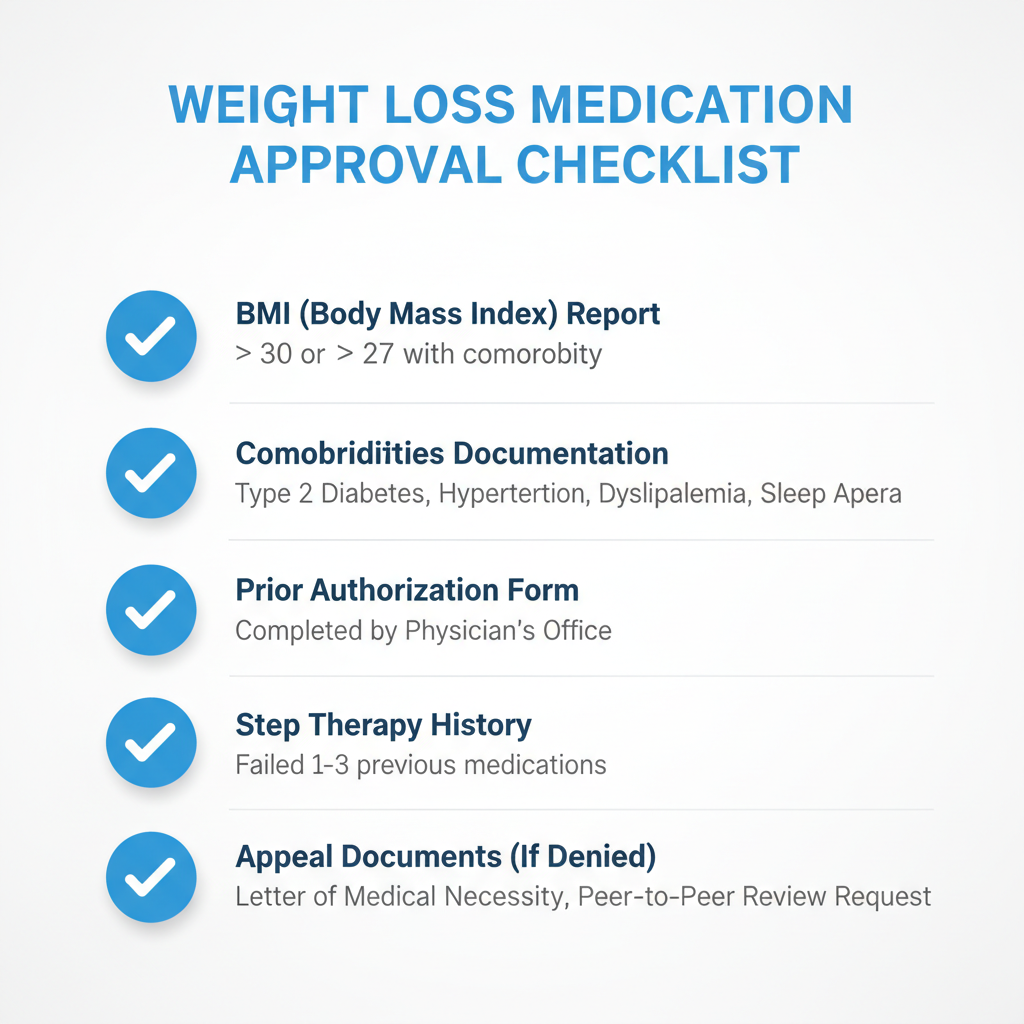
Every plan is different, but many approvals come down to a predictable set of requirements. Before your appointment, gather the following:
- Your current BMI: Many plans use BMI of 30 or higher, or BMI of 27 or higher with at least one weight-related condition.
- Weight-related conditions: Examples may include hypertension, high cholesterol, prediabetes, type 2 diabetes, obstructive sleep apnea, fatty liver disease, or joint problems worsened by weight.
- Past weight loss attempts: Bring dates and details for nutrition counseling, exercise programs, behavioral programs, calorie tracking apps, WeightWatchers, Noom, dietitian visits, or medically supervised plans.
- Medication history: Note whether you have tried metformin, phentermine, Contrave, Qsymia, Saxenda, or other therapies, and why they failed or were not appropriate.
- Relevant labs and vitals: A1C, fasting glucose, lipids, blood pressure readings, waist circumference, and weight trend can help your clinician make the case.
This is where many people lose time. They ask for the medication, the doctor sends a brief prescription, and the insurer denies it because the file is thin. Treat this like an application, not a casual request.
Step-by-Step: How to Improve Your Approval Odds
1. Check the Formulary Before the Visit
Log into your insurance portal and search the prescription formulary for Wegovy, Zepbound, Saxenda, Qsymia, Contrave, Ozempic, and Mounjaro. Look for words like covered, non-formulary, excluded, prior authorization, quantity limit, or step therapy. If your plan has a pharmacy benefits manager such as CVS Caremark, Express Scripts, or Optum Rx, check there too.
Practical tip: call the number on your insurance card and ask, Is anti-obesity medication coverage included in my pharmacy benefit, and what are the prior authorization criteria for Zepbound or Wegovy? Write down the representative’s name, date, and reference number.
2. Ask Your Clinician to Submit a Strong Prior Authorization
A strong prior authorization usually includes your diagnosis, BMI, comorbidities, previous attempts at lifestyle intervention, why the requested medication is appropriate, and why alternatives may not be suitable. If the insurer requires a specific form, your clinician’s office should use that form instead of sending a generic note.
If you are using a medical weight management clinic, ask whether they have a dedicated prior authorization team. This can be a major advantage. Clinics that submit these requests every day usually understand what insurers want to see.

3. Be Ready for Step Therapy
Step therapy means the insurer wants you to try a preferred, usually lower-cost option before approving a newer and more expensive drug. For example, your plan may prefer Saxenda before Wegovy, or Contrave or Qsymia before Zepbound. Sometimes the step can be bypassed if there is a documented contraindication, prior failure, side effect, or medical reason not to use the preferred drug.
Do not assume step therapy is the end of the road. Ask exactly what steps are required, how long the trial must last, and what documentation proves failure or intolerance.
4. If Denied, Appeal Fast and Specifically
A denial is not always final. Many approvals happen on appeal. Read the denial letter carefully. It will usually state the reason: plan exclusion, BMI not documented, missing comorbidity, no proof of lifestyle intervention, required step therapy not completed, or drug not medically necessary.
Your appeal should directly answer the denial reason. If the denial says no BMI was submitted, provide BMI and weight history. If it says no comorbidity, include diagnosis codes and lab results. If it says lifestyle intervention was not documented, submit records from dietitian visits, app logs, supervised programs, or previous treatment notes. The most persuasive appeals are not emotional; they are precise, organized, and tied to the plan’s own policy language.
What If Your Plan Excludes Weight Loss Drugs?
This is the frustrating part. Some employer plans completely exclude anti-obesity medications, regardless of medical need. In that case, a prior authorization may not help because the benefit simply is not available. Your options may include asking HR if the employer can add obesity medication coverage during the next benefits cycle, using manufacturer savings if eligible, comparing cash prices, or discussing alternative covered treatments with your clinician.
Medicare coverage is also complicated. Federal rules have historically limited coverage for drugs used solely for weight loss, although certain medications may be covered when prescribed for another FDA-approved indication, depending on the plan and circumstances. Medicaid coverage varies by state. Always verify current rules with your plan because coverage policies change quickly.
Cash-Pay and Discount Options If Insurance Says No
If insurance will not cover your medication, do not automatically pay the first quoted pharmacy price. Compare prices at major pharmacies such as CVS, Walgreens, Walmart, Costco, and grocery pharmacy chains. Ask about manufacturer savings cards from Novo Nordisk for Wegovy or Eli Lilly for Zepbound if you have commercial insurance. Check reputable discount platforms, but understand that coupons often have limited impact on brand-name GLP-1 medications.
Also ask your clinician about lower-cost alternatives. Contrave, Qsymia, generic phentermine, topiramate, metformin for insulin resistance or prediabetes when appropriate, and intensive lifestyle programs may be more affordable. They are not identical to Wegovy or Zepbound, but they may be realistic bridges while you pursue coverage or wait for your employer plan to update benefits.
Questions to Ask at Your Next Appointment
- Based on my BMI and health history, do I meet typical medical necessity criteria for an anti-obesity medication?
- Which medication is most likely to be covered by my insurance: Wegovy, Zepbound, Saxenda, Qsymia, or Contrave?
- Will your office submit prior authorization and appeals, or do I need to coordinate with insurance myself?
- What documentation should I bring to support the request?
- If denied, what is our backup plan?
These questions move the conversation from hope to strategy. In a market where appointments fill quickly, drug shortages can happen, and insurance policies change without much warning, preparation gives you an edge.

The Smartest Next Move
If you are serious about getting a weight loss medication covered, start today with three actions: check your formulary, gather your medical documentation, and schedule a visit with a clinician or medical weight management program experienced in prior authorizations. Do not wait until after the prescription is denied to build your case.
The patients who succeed are often not the ones who simply ask for the newest medication. They are the ones who understand the rules, document the need, and appeal with evidence when the first answer is no. If Wegovy, Zepbound, or another prescription option is clinically appropriate for you, the right insurance strategy may be the difference between a $25 copay and a $1,300 monthly bill.

Call to action: Before your next appointment, download your plan’s prior authorization criteria or call your insurer for the requirements. Bring that information to your provider and ask for a coverage plan, not just a prescription.