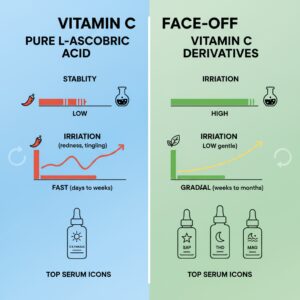
If you’ve ever stared at a shelf of ‘age-defying’ serums and thought, “What on earth is right for my skin, right now?” you’re not alone. The smartest anti‑aging strategy in 2025 isn’t chasing the strongest ingredient—it’s matching the right collagen‑boosting active to your age, skin type, and lifestyle, then building a routine you can actually stick to.
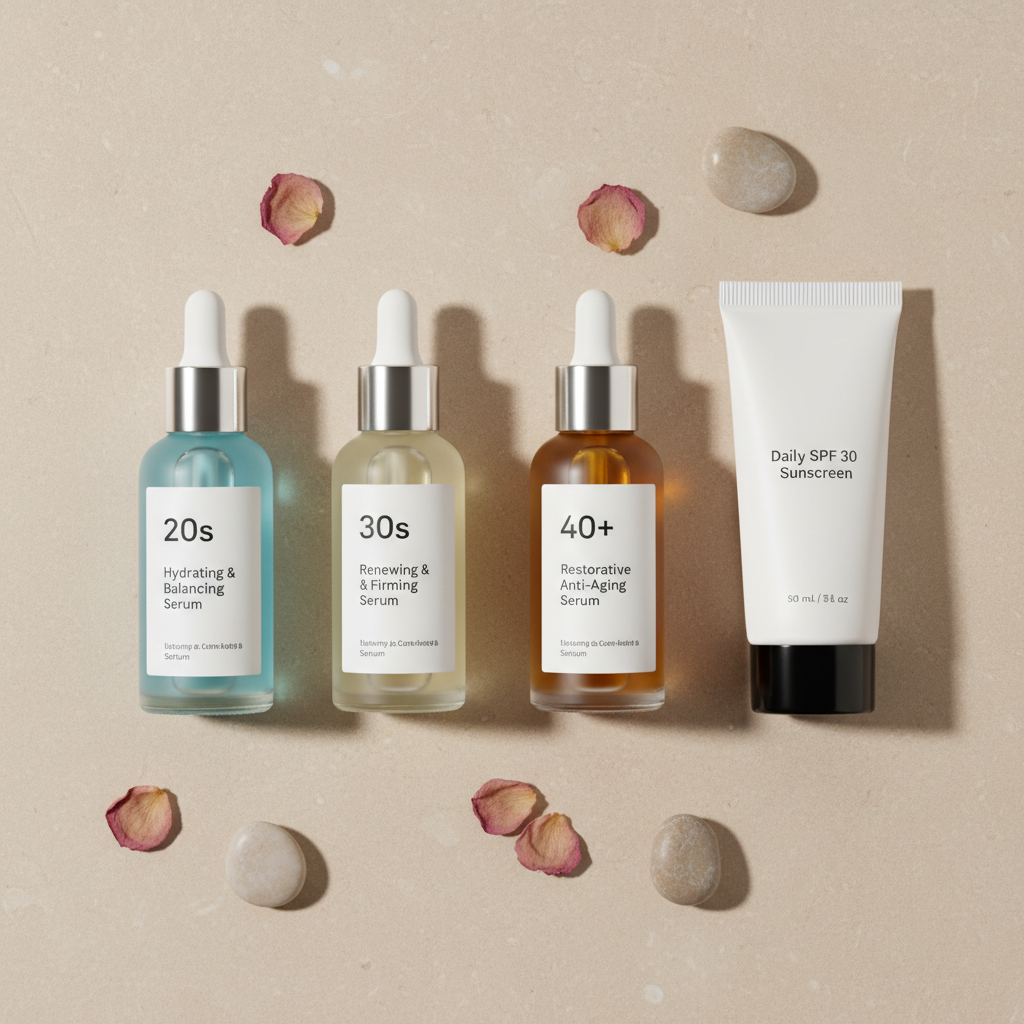
[Image Suggestion: Flat lay of three minimalist serums labeled for 20s, 30s, 40+ on a vanity, plus a sunscreen, to visually reinforce age-based routines.]
The New Rule: Personalize Your Collagen Strategy, Don’t Copy TikTok
Dermatology research over the last decade has made one thing clear: ingredients that increase cell turnover, boost collagen, and even pigmentation can visibly soften fine lines and photoaging.[1][3] But tolerance varies wildly. Some people glow; others peel, sting, or quit after a week.[3][4] That’s why viewing your routine as an age- and skin-type playbook is far more effective than hunting for a one-size-fits-all “holy grail.”
Clinical data shows that certain plant-based actives can deliver wrinkle and pigment improvement comparable to gold‑standard vitamin A derivatives, but with far less irritation.[1][3][7] At the same time, classic vitamin A–based formulas still have the deepest body of evidence and tend to work faster, especially for more pronounced signs of aging.[3][6][10] The art is in choosing which lane you play in—or how to combine them—based on your skin’s behavior, not just your birth year.
Your 20s: Prevention Mode With a Gentle Edge
Primary Goal: Slow Damage, Don’t Fight Deep Wrinkles
Most people in their 20s are battling early dullness, the first fine lines, and sun damage—not deep etching. The priority is prevention: daily UV protection plus a mild collagen‑supporting serum that won’t wreck your barrier.
Best Fits by Skin Type
- Oily / breakout-prone 20s
Look for lightweight serums that gently boost cell turnover and fade post-acne marks without triggering a purge war. Many vitamin A derivatives are proven to target both acne and early photoaging.[3][6] - Dry or sensitive 20s
You’ll benefit from ingredients that mimic retinoid-like gene activity—improving wrinkles and pigmentation—yet show significantly less scaling and stinging in 12‑week trials.[1][3][7] These are ideal if your skin stings easily or you’ve struggled with eczema or rosacea‑like flares. - Pregnant, nursing, or “clean beauty only” 20s
Plant-derived options that don’t increase sun sensitivity and can be used morning and night are particularly attractive here.[2][3]
Sample 20s Routine (Even Sensitive Skin)
- AM: Hydrating cleanser → antioxidant or gentle collagen-supporting serum → moisturizer → SPF 30–50 mineral or hybrid sunscreen
- PM: Cleanser → same serum or a slightly stronger night version → ceramide-rich moisturizer
Products to consider (as of 2025):
- BYOMA Sensitive Retinol Oil (~$19 for 30 ml): Designed for barrier‑impaired, reactive skin, using encapsulated vitamin A plus barrier-supporting lipids for a slower, softer delivery.[10] Great bridge product if you want to dip a toe into vitamin A without a full-strength formula.
- Medik8 Bakuchiol Peptides (~$62 for 30 ml): Uses a clinically studied plant active that mimics retinoid effects (collagen support, tone evening) with additional anti-inflammatory benefits, particularly suited to sensitive or redness-prone 20s.[3][6]
Action step: In your 20s, pick one collagen-supporting serum and commit to 6–12 weeks. Results in trials for both retinoid-like and plant-derived options typically show up between 8–12 weeks, sometimes sooner for classic vitamin A.[2][3]
Your 30s: Precision Repair for Texture, Pores, and First Static Lines
Primary Goal: Upgrade to Targeted Remodeling
By your 30s, you may see “static” lines that stay even when you’re not moving, early crow’s feet, and uneven tone from cumulative UV exposure. Studies show both traditional vitamin A derivatives and certain botanicals can significantly improve wrinkle surface area and hyperpigmentation over 12 weeks, with no meaningful difference in efficacy—only in irritation.[1][3][7]
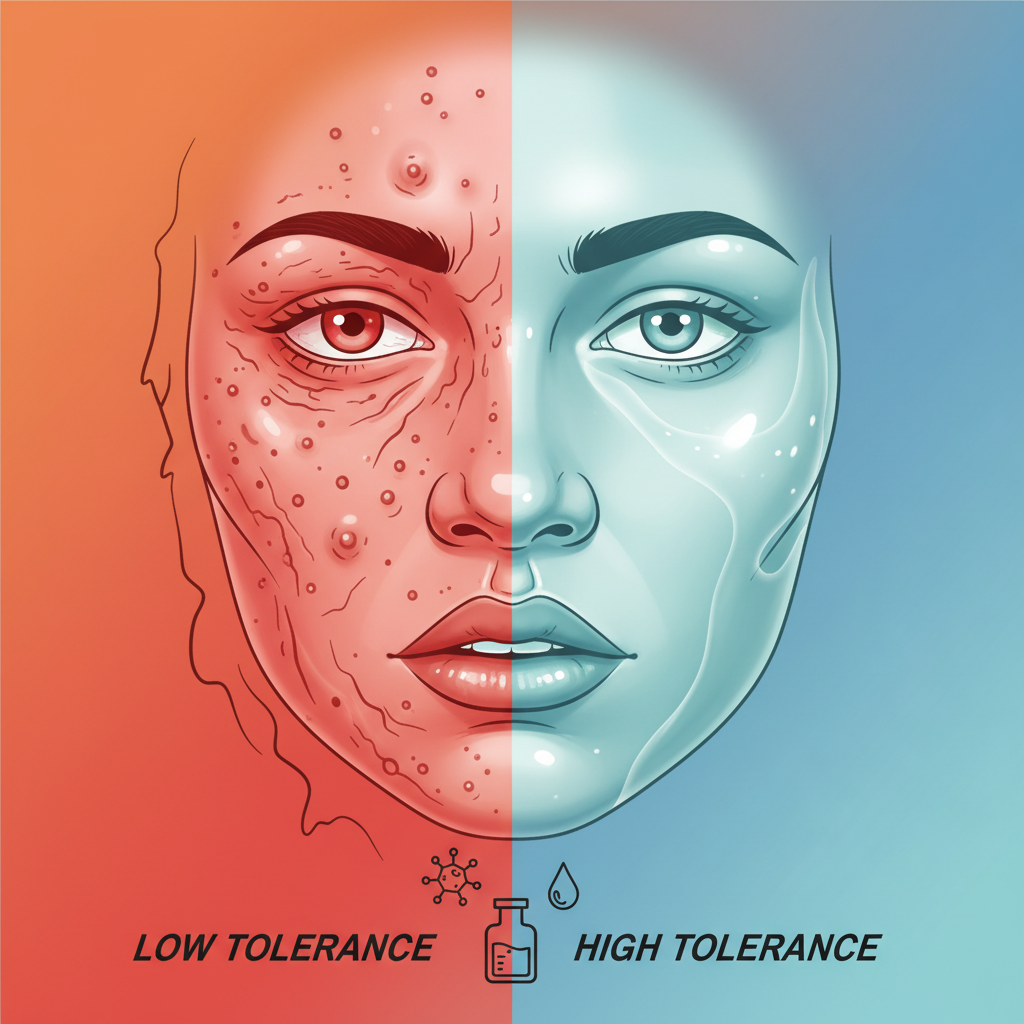
[Image Suggestion: Split-face style visual (illustration) showing ‘irritated, flaky’ vs ‘calm, hydrated’ cheek, symbolizing different tolerance levels and ingredient choices.]
Best Fits by Skin Type
- Normal / combination 30s
You can usually handle classic vitamin A derivatives a few nights per week. These remain the most extensively researched agents for fine lines, photoaging, and even adult acne.[3][6][10] - Dry or sensitive 30s
Evidence suggests that plant-derived options provide comparable improvements in wrinkles and pigmentation with far fewer reports of scaling and stinging.[1][3][7] They also don’t heighten photosensitivity, so you can use them in the morning along with SPF to stack protection.[3] - Post-inflammatory hyperpigmentation, melasma-prone
Consider a combo approach: classic vitamin A at night a few times a week plus a gentler, antioxidant-rich serum by day. Some data indicate that combining these ingredients can make vitamin A more stable, less irritating, and even slightly more effective overall.[2][3]
Sample 30s Routine (Combination or Uneven Tone)
- AM: Gentle gel cleanser → antioxidant + plant-derived collagen‑support serum → lightweight moisturizer → broad‑spectrum SPF 50
- PM (2–4 nights/week): Cleanser → classic vitamin A serum → barrier-supporting moisturizer
- PM (off nights): Skin-cycling style—skip the vitamin A and use only hydrating, ceramide‑rich products
Products to consider:
- The Ordinary Granactive Retinoid 2% Emulsion (~$15 for 30 ml): Uses a newer retinoid complex designed to offer visible smoothing with less irritation than traditional forms—appealing if you’re just moving up from beginner products.
- Rejuvaskin Anti-Aging Moisturizer with Bakuchiol (~$60 for 50 ml): Cites clinical data showing increases in moisture, clarity, and smoothness while harnessing retinoid-like gene expression without added sun sensitivity.[3]
Action step: In your 30s, think “dual-lane”: one lane for fast, proven remodeling (vitamin A at night), one lane for support and soothing (gentler daytime serum). This mirrors how dermatologists now often stack actives to keep people on treatment long enough to see results.[3][4]
Your 40s and Beyond: Strategic Power With Minimum Downtime
Primary Goal: Deep Wrinkle, Firmness, and Pigment Correction
In the 40s+ bracket, collagen loss, laxity, and sun damage become more obvious. Many dermatologists still consider classic vitamin A derivatives the “workhorse” option because of decades of robust studies in photoaging and wrinkle reduction.[3][6][10] That said, not everyone can tolerate them nightly—especially as skin gets drier and the barrier more fragile.
Best Fits by Skin Type
- Resilient, thicker, or oily 40s+
You can usually tolerate higher‑strength night serums or creams. Experts note these are ideal for more etched lines and texture issues, as long as you tolerate them and commit to strict daytime sunscreen.[3][6] - Dry, reactive, or rosacea‑prone 40s+
Plant-based retinoid mimics stand out here: studies show similar wrinkle and pigment improvement versus classic vitamin A at the same percentage, but with markedly fewer reports of peeling and burning.[1][3][7] For maturing, thinner skin easily inflamed by strong actives, this trade‑off is often worth a slightly slower trajectory.[2][9] - Neck, chest, and hands
These areas are thinner and more prone to irritation; many people do well using a gentler, retinoid-like serum daily on these zones while reserving classic vitamin A for the face only.
Sample 40s+ Routine (Normal-to-Dry)
- AM: Creamy cleanser → antioxidant + gentle collagen-supporting serum (neck and chest too) → rich moisturizer → SPF 50
- PM (2–5 nights/week): Cleanser → vitamin A serum or cream tailored to your tolerance → nourishing night cream or oil
- PM (off nights): Fragrance‑free, barrier‑repair routine only
Products to consider:
- Medik8 Crystal Retinal 3–10 (~$62–$108 depending on strength): A laddered retinaldehyde system (a potent vitamin A derivative) with strong evidence for rapid, visible improvements in fine lines and texture, particularly suited to 40s+ once a weekly tolerance test is passed.[6]
- Serums formulated around 0.5% plant-based retinoid mimics (various brands, typically $40–$90): Clinical trials at this concentration showed significant reductions in wrinkle surface area and pigmentation over 12 weeks with better tolerability vs the same percentage of vitamin A.[1][3][7]
Action step: In your 40s+, choose your “hero” based on what your skin will realistically tolerate 6–12 months in a row. A moderate-strength formula you can use 3–5 nights a week beats a high-strength product that forces you to quit every third week from burning and peeling.[3][8]
How to Test Your Tolerance (At Any Age)
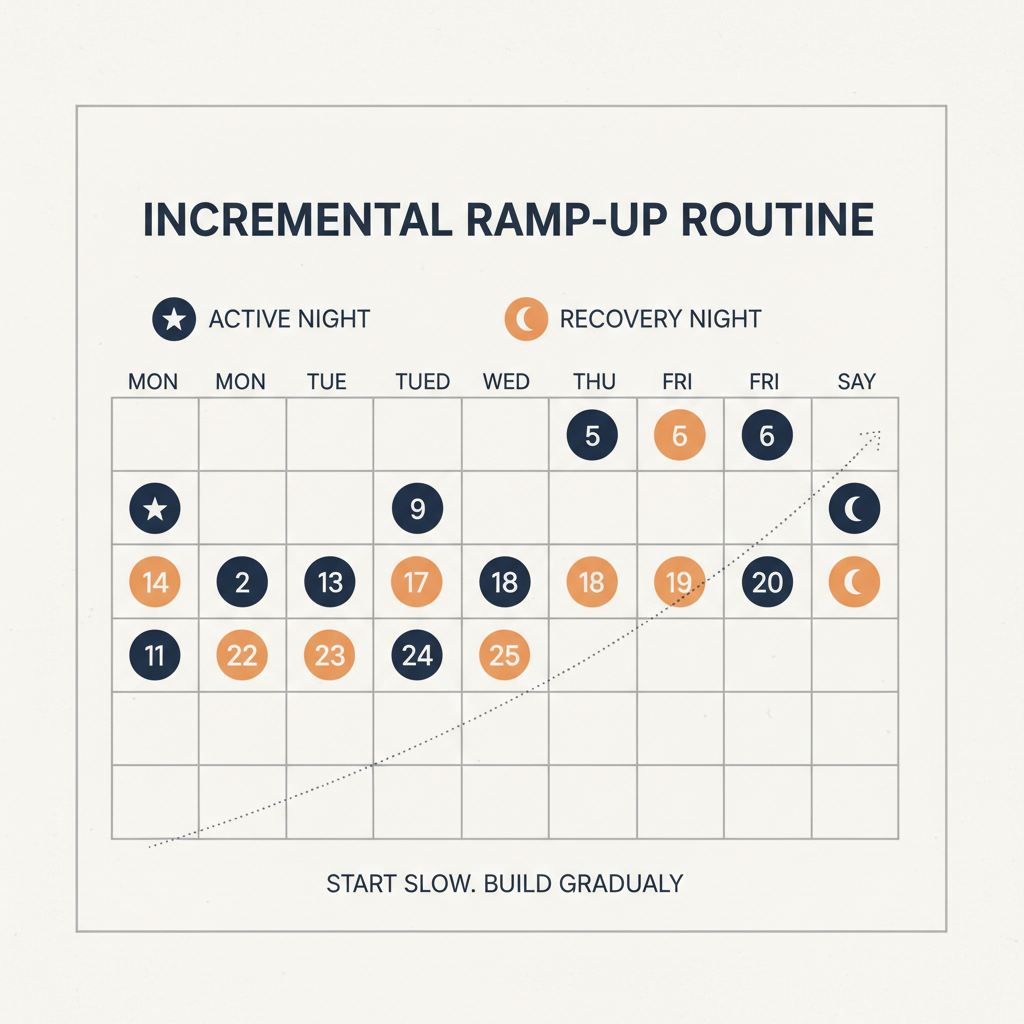
Step-by-Step Ramp-Up Plan
- Week 1–2: Use your active 2 nights per week (non‑consecutive), sandwiched between moisturizer if you’re reactive.
- Week 3–4: Move to 3 nights if no stinging or flaking; keep daytime SPF non‑negotiable, as vitamin A derivatives increase photosensitivity.[3]
- Week 5–8: Decide if you’ll cap at 3–4 nights or gently move to every other night. Even gentler, plant-based options can be used daily if your skin is comfortable.[2][3]
If redness, burning, or persistent flaking occurs, step back, pause for a week, and reintroduce less often—or switch to the gentler lane entirely. Trials clearly show that tolerant use over months matters far more than trying to “tough it out” at a strength your skin hates.[1][3][8]
[Image Suggestion: Calendar-style graphic with marked ‘active nights’ vs ‘recovery nights’ to visually explain ramp-up and skin cycling.]
Big 2025 Trends: Why “Gentle but Effective” Is Winning
Recent reviews highlight growing enthusiasm for botanically sourced actives that deliver retinoid-like collagen and pigment benefits while also showing antioxidant, anti-inflammatory, and even antibacterial actions.[1][3][4][6] They are being positioned as ideal for:
- Barrier-damaged, sensitized, or over-exfoliated skin
- Necks, chests, and under-eyes where classic vitamin A burns too easily
- Pregnant, nursing, or ultra-cautious users under medical guidance[2][3]
At the same time, there is renewed interest in using both lanes together: brands now formulate duos and complexes where the gentler active stabilizes and cushions vitamin A, with some internal data suggesting improved efficacy and reduced irritation versus vitamin A alone.[2][3] This “teamwork” approach is ideal in your 30s–50s if your skin can handle a layered or alternating routine.
Your Personalized Anti-Aging Playbook: Choose Your Lane
- If you’re in your 20s: Start conservative. One gentle collagen-supporting serum + SPF every single morning is enough to put you years ahead.
- If you’re in your 30s: Go hybrid. Nighttime vitamin A plus a soothing, plant-powered serum by day is a high‑impact, low‑irritation strategy.
- If you’re 40+: Match potency to tolerance. Powerful retinal or retinoid formulas for resilient skin; gentler, retinoid‑mimicking serums for reactive or very dry skin—and don’t forget neck, chest, and hands.
Call to action: Audit your shelf tonight. Keep your daily SPF, pick one primary collagen‑supporting active that suits your decade and skin type, and commit to using it consistently for at least 12 weeks. Take clear before photos now—future you will be very glad you did.