
If you’ve ever bounced between keto, fasting, or the latest TikTok cleanse, you already know the real question isn’t “Which diet is best?”—it’s “Which plan will help me lose weight and still function like a normal human in 2025?” Instead of obsessing over one “perfect” diet, this year’s smartest approach is to compare plans by how they score on four things that matter in real life: results, safety, cost, and day‑to‑day simplicity.
To build this 2025 weight‑loss power ranking, we pulled from the latest expert lists (including the new U.S. News & World Report rankings and dietitian reviews) and recent research on what actually works long term for most people.[1][3][4]
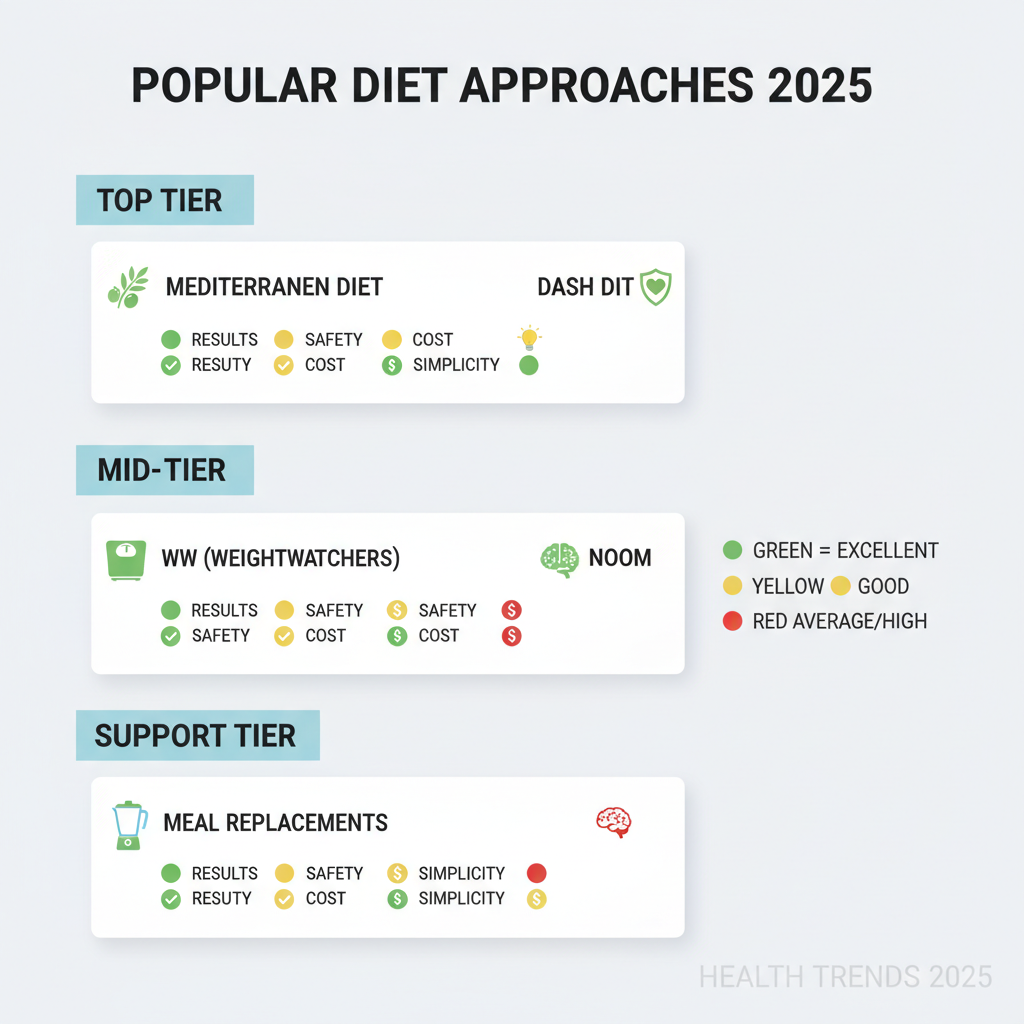
The 2025 Weight‑Loss Diet Power Rankings (At a Glance)
Think of this as your shortcut to narrowing down the chaos. Higher tiers balance weight‑loss results with safety and sustainability.
| Tier | Diet / Program | Best For |
|---|---|---|
| Tier S | WeightWatchers, Mediterranean‑style, Volumetrics | Most people wanting steady loss + good health markers[1][3] |
| Tier A | DASH, Flexitarian, Mayo Clinic, Noom | Habit builders who want structure without extremes[3][4] |
| Tier B | Pescatarian, simple plant‑forward, app‑based “digital wellness” plans | People who like plants, flexibility, and light tech support[2][4] |
| Tier C | Meal‑replacement programs (SlimFast, Jenny Craig–style) | Short‑term, fast loss when convenience beats variety[1] |
Key takeaway: The more a diet looks like normal, balanced eating (with extra plants and fewer ultra‑processed foods), the higher it ranks in 2025 expert lists.[1][2][3][4]
Tier S: The Heavyweights of 2025 (High Results, High Safety)
1. WeightWatchers (WW): Behaviour‑Change First, Points Second
U.S. News & World Report again ranks WeightWatchers as the #1 diet specifically for weight loss in 2025, with a 4.3/5 expert score—beating the Mediterranean and Volumetrics plans on weight‑loss outcomes.[1][3] WW uses a personalised “Points” budget (now called PersonalPoints in many markets) where higher‑calorie, low‑nutrient foods cost more points while whole foods often cost zero.
Pricing snapshot (US, 2025 typical promos):
- Digital only: around $23–$29/month depending on offers.
- Digital + Workshops/Coaching: typically $35–$60/month depending on region and access level (in‑person vs. virtual).
Why it ranks so high:
- Results: Consistently strong weight‑loss outcomes in long‑term studies when people stick with the program.[1]
- Safety: No food groups are banned; calorie deficit is moderate.
- Simplicity: Barcode scanner, large food database, and pre‑tracked popular foods lower daily friction.
- Cost FOMO: Compared with one month of takeout “splurges,” WW’s monthly fee feels manageable for many users.
2. Mediterranean‑Style Eating: The “Un‑Diet” That Keeps Winning
The Mediterranean diet remains the #1 overall diet for 2025, topping lists for heart health, longevity, and ease of following, and still landing near the top for weight loss.[1][2][3] It focuses on vegetables, fruits, whole grains, legumes, nuts, olive oil, fish, and modest portions of dairy and meat.
What’s new for 2025:
- Ranked top in 12 of 21 categories in recent best‑diets lists, including inflammation and metabolic health.[2][3]
- Reviews highlight it as one of the easiest diets to sustain socially—wine with dinner and restaurant meals are compatible when portions are reasonable.[3]
Cost reality check: You can do a Mediterranean pattern at nearly any budget. A typical day might be built around:
- Store‑brand extra‑virgin olive oil (~$7–$10 per litre).
- Frozen salmon or white fish (~$6–$10 per pound) and canned beans (~$1–$1.50 per can).
- Bulk oats, brown rice, and in‑season produce.
3. Volumetrics: Eating More to Weigh Less
Volumetrics, developed by nutrition scientist Barbara Rolls, remains a top‑three weight‑loss diet in the 2025 U.S. News rankings, just behind WW and Mediterranean for weight loss.[1] It emphasises low‑calorie‑density foods (soups, fruits, vegetables, lean proteins) so you can eat larger portions for fewer calories.
Why some people love it: If you hate feeling hungry, this framework lets you “trade” calorie‑dense foods for bigger volumes of lighter foods. A bowl of vegetable soup and a large salad may replace a smaller, calorie‑dense entrée.
Cost anchor: There’s no subscription required. A typical resource is the book “The Ultimate Volumetrics Diet,” often available for around $15–$20 in print or under $10 as an ebook.
Tier A: High Performers for Habit‑Builders
DASH, Flexitarian & Mayo Clinic Diet: “Health First, Weight Loss As a Bonus”
DASH (Dietary Approaches to Stop Hypertension) and the Flexitarian diet routinely rank in the top three overall diets in 2025, immediately after Mediterranean.[3] The Mayo Clinic Diet also lands in the top 10 for overall health and is praised for its habit‑building structure.[3][4]
- DASH: Heavy on fruits, vegetables, low‑fat dairy, and reduced sodium. Ideal if you care about blood pressure and heart health as much as the scale.
- Flexitarian: “Mostly” plant‑based with occasional meat—perfect if you like the idea of vegetarian eating but don’t want an all‑or‑nothing rulebook.[3]
- Mayo Clinic Diet: A two‑phase plan (“Lose It!” then “Live It!”) that focuses on adding positive habits rather than just removing foods.[4]
Typical costs:
- Mayo Clinic digital program: often around $19.99/month with periodic discounts.
- DASH and Flexitarian: usually self‑guided with books, cookbooks, or free meal plans; books often priced at $15–$25.
Noom: The Psychology‑Driven App
Noom is consistently listed as one of the best weight‑loss programs for 2025 because it tackles the mental side of eating—habits, triggers, and thought patterns—using a color‑coded food system (green, yellow, red) instead of strict rules.[4]
Pricing (2025, typical): Subscription often ranges from about $25–$60/month depending on plan length and promos; longer commitments usually bring the monthly cost down.
Pros:
- Science‑based psychology lessons and check‑ins.
- App‑driven coaching and detailed tracking.
Cons:
- Screen‑time heavy—if you’re sick of your phone, this may feel like another job.
- Cost often exceeds simpler self‑guided plans.
Tier B: Plant‑Forward & “Lifestyle First” Approaches
Pescatarian & Simple Plant‑Forward Diets
Pescatarian and other simple plant‑forward approaches (like the top “Flexible Plant‑Forward Diet” mentioned in some 2025 expert lists) earn strong marks for weight control, heart health, and overall disease prevention.[2][4] The basic pattern: lots of plants, plus fish and seafood as primary protein, with minimal red and processed meat.
Why they’re ranked slightly lower than Tier S/A:
- Weight loss is excellent when portions and total calories are controlled, but these diets are not inherently low‑calorie.
- Little built‑in structure; you must self‑manage tracking and environment.
Cost examples: A pescatarian week can be built around:
- Frozen white fish or pollock (~$5–$8/lb).
- Eggs (~$3–$6/dozen depending on region).
- Bulk lentils, chickpeas, and seasonal vegetables.
Digital Wellness & Coaching‑Light Apps
Beyond WW and Noom, 2025 has seen growth in “light‑touch” digital wellness and calorie‑tracking apps that combine basic tracking with modest coaching. These often pair with wearables and smart scales.
Typical products:
- Basic premium calorie‑tracking apps: generally $30–$80/year.
- Smart scales (e.g., body‑composition Wi‑Fi scales): often $30–$80 one‑time.
They rarely appear at the top of weight‑loss rankings on their own, but they’re potent when layered onto a higher‑tier eating pattern (Mediterranean, DASH, WW, etc.).
Tier C: Fast‑Loss, High‑Control Options
Meal‑Replacement Programs (SlimFast, Jenny Craig–Style)
In U.S. News’ separate category of “best diets for rapid weight loss,” Jenny Craig–style plans and SlimFast rank among the top for short‑term results, alongside WW.[1] These programs rely heavily on portion‑controlled shakes, bars, and frozen meals.
Pros:
- Extremely simple: eat the provided product, add a few fruits/veggies, and you’re done.
- Effective for the first 8–12 weeks when adherence is high.[1]
Cons:
- Cost can escalate quickly—bundled meal plans commonly reach several hundred dollars per month.
- Limited food variety makes social situations tricky and boredom likely.
- Transitioning back to regular food is the failure point for many users.
These options are best treated as short‑term tools, not a lifestyle—especially if your priority is long‑term weight maintenance.
How to Choose Your 2025 Weight‑Loss Game Plan in 10 Minutes
Step 1: Pick Your Tier Based on Personality
- You love structure, data, and accountability: Start with WeightWatchers or Noom.
- You hate “diet culture” but want results: Start with a Mediterranean, Flexitarian, or DASH pattern.
- You’re slammed for time and need an emergency reset: Consider a short (8–12 week) structured plan using meal replacements, then transition to Mediterranean or DASH.
Step 2: Reality‑Check Your Budget
Use price anchoring: compare the monthly cost of your chosen program to what you already spend on takeout, delivery, and snacks. Many people find that:
- A $25–$40 monthly app or program is less than two restaurant meals.
- Swapping daily coffee‑shop drinks for home‑brewed saves enough to cover a WW or Noom subscription.
Step 3: Lock In 3 Non‑Negotiables for the Next 30 Days
Whatever plan you choose, results flow from behaviour. For the next month, commit to:
- One tracking habit: Points, calories, or simple photo‑logging of meals.
- One structure habit: Pre‑plan tomorrow’s breakfast and lunch every evening.
- One environment habit: Keep a “default” Mediterranean‑style meal (e.g., frozen fish + microwaveable veggies + whole‑grain rice pack) ready for nights you don’t want to cook.
These small guardrails work with any top‑tier diet and help you avoid the all‑or‑nothing trap that wrecks most resolutions.
Your Next Move
You do not need to wait for a perfect Monday. In the next 10 minutes you can:
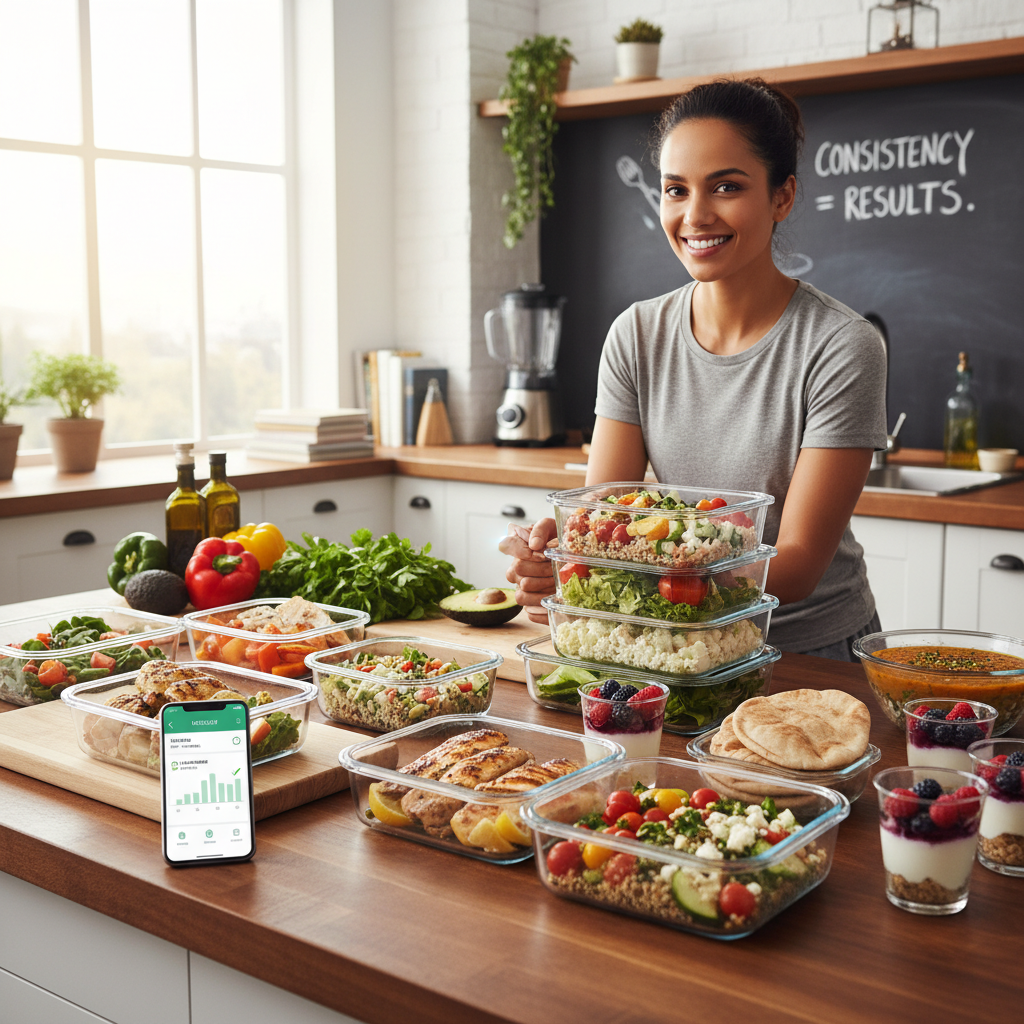
- Choose one Tier S or Tier A plan that matches your personality.
- Set a 30‑day budget for it and compare it to what you already spend on food.
- Stock one or two Mediterranean‑style “emergency dinners” so you always have a safety net.
The biggest risk in 2025 is not picking the “wrong” diet—it’s losing another year to indecision and extreme quick fixes. Anchor yourself to a plan with strong expert backing, reasonable costs, and habits you can imagine living with next year, not just next week.