If you’ve ever been tempted by prescription-strength retinoids for wrinkles but scared of the dreaded flaking, burning, and “ugly phase,” this 12‑week, dermatologist-style plan shows you exactly how to ramp up strong vitamin A creams without wrecking your skin barrier—or your social life.
Why Leveling Up To Prescription Retinoids Is Worth The Effort
Over‑the‑counter retinol is great for early fine lines, but dermatology clinics typically reach for prescription tretinoin or adapalene when someone has deeper wrinkles, pronounced sun damage, or stubborn texture issues.[3] These molecules directly bind retinoid receptors and have decades of data showing improved fine lines, collagen production, and skin smoothness with consistent use over months.[3]
Because they are potent, the trick isn’t just what cream you use, but how you introduce it. The next 12 weeks are designed as a ramp: slow at first, then progressively stronger as your skin adapts.

Step 1: Choose Your Starting Prescription And Support Crew
Pick Your Prescription Retinoid (With Your Derm)
Common starting options your dermatologist or tele-derm service may suggest include:
- Tretinoin 0.025% cream – Classic first-line for photoaging and wrinkles; strong evidence base and widely available generically.[3]
- Tretinoin 0.05% cream – Medium strength for those who have used retinoids before or have more resilient, oilier skin.[3]
- Adapalene 0.3% gel – Technically an acne retinoid, but also improves texture and fine lines; often better tolerated on oilier or breakout-prone skin.[3]
Tele-dermatology platforms and local derms commonly prescribe generic tretinoin for around $15–$40 for a 20–45 g tube, depending on your pharmacy discount card and insurance.
Barrier-Supporting Backup Products (The Non‑Negotiables)
To get through 12 weeks with minimal irritation, you need a simple, fragrance-free support team:
- Gentle cleanser – e.g., CeraVe Hydrating Facial Cleanser (around $15) or La Roche‑Posay Toleriane Hydrating Gentle Cleanser (around $17).
- Mid‑weight moisturizer – look for ceramides and hyaluronic acid, such as CeraVe Moisturizing Cream (~$18) or Vanicream Moisturizing Cream (~$15).[1][5]
- SPF 30+ broad‑spectrum sunscreen – daily, every single morning; derms consistently rank daily sunscreen a core anti‑wrinkle step alongside retinoids.[1][5]
- Optional barrier balm – petrolatum-based ointments or sensitive-skin balms can buffer application nights on dry, reactive areas.
This minimalist setup prevents the most common failure point: combining a strong prescription retinoid with harsh cleansers, scrubs, and multiple exfoliating acids at the same time.[3]
Your 12‑Week Derm-Backed Routine: Phase By Phase
Weeks 1–2: “Skin Boot Camp Lite” – Patch Test And Once Weekly
Goal: Make sure your skin doesn’t revolt.
Nights:
- Cleanse with a gentle cleanser; pat dry fully.
- Apply a thin layer of moisturizer and wait 10–15 minutes (this buffers absorption).
- Use a pea-sized amount of your prescription retinoid on just one test area (for example, one cheek) once a week.
- Skip any other actives (acids, vitamin C serums, scrubs) at night.
Days: Broad-spectrum SPF 30+ every morning, reapplied if you’re outside; retinoids increase sun sensitivity, and dermatologists repeatedly pair them with daily sunscreen for best anti‑aging results.[3]
Expect: Very little visible change in wrinkles yet. You’re just checking for burning, stinging, or intense redness. Mild tightness or minimal flaking is common and usually manageable with extra moisturizer.
Weeks 3–4: Once Weekly To Twice Weekly (Full Face)
Goal: Begin consistent, but low-frequency, full-face use.
Nights (2x/week, non‑consecutive):
- Cleanse, pat dry.
- Apply moisturizer first (“retinoid sandwich” method), especially around smile lines and corners of the nose.
- Dot a pea-sized amount of tretinoin or adapalene on forehead, cheeks, and chin; spread thinly over the entire face, keeping a margin away from eyes, nostrils, and lip edges.
Off nights: Hydrating routine only—cleanser + moisturizer; optionally layer a richer cream if you feel dry.
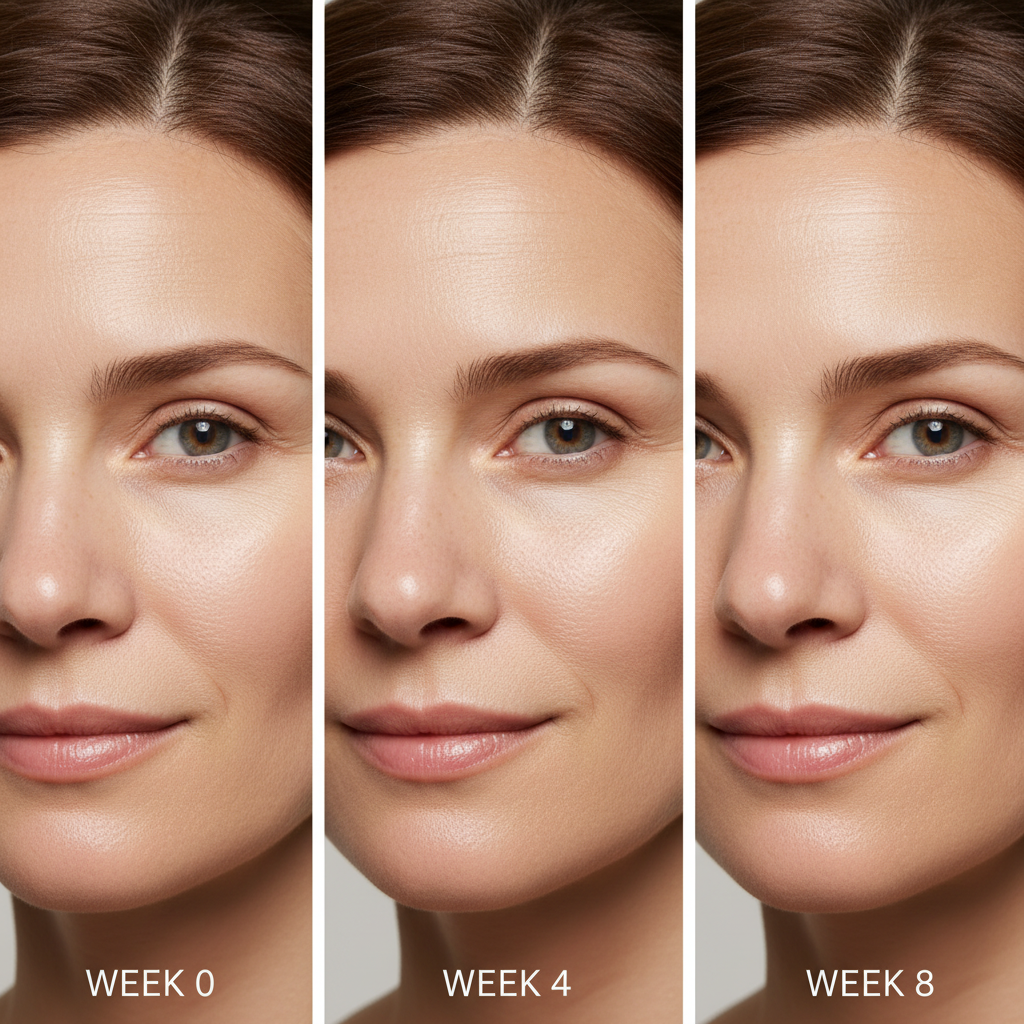
Expect: Some people notice a bit more glow and refined texture by the end of week 4, though most derms emphasize that real wrinkle changes take at least 2–3 months of steady use.[2][3]

Weeks 5–6: Graduating To Three Nights A Week
Goal: Build a stable routine that you could stay on indefinitely if your skin is sensitive.
If you’re tolerating twice‑weekly applications with only mild dryness, increase to three nights per week (for example, Monday, Wednesday, Friday).
Nights (3x/week):
- Option A – For normal/oily skin: Cleanser → thin layer of retinoid → moisturizer.
- Option B – For dry/sensitive skin: Cleanser → moisturizer → 20‑minute wait → thin layer of retinoid only over the T‑zone and areas with most wrinkles.
Expect: At this point, research and expert opinion suggest you may start to see smoother texture, smaller-looking pores, and early softening of fine lines, but deeper etched wrinkles still take longer to change.[2][3] Mild flaking around the mouth or nose is very common; add a bland balm on those edges before retinoid application if needed.
Weeks 7–8: Four To Five Nights A Week (If Tolerated)
Goal: Move into a near-daily rhythm for more collagen-stimulating time.
If your skin looks calm (no hot, painful redness; only light dryness), increase to 4–5 nights per week.
Key adjustments if irritation shows up:
- Drop back to 3 nights weekly for two weeks, then retry.
- Switch from gel to cream formulation if available; creams are often less drying on mature skin.
- Increase moisturizer quantity, and consider adding a ceramide-rich cream, as derms frequently pair stronger retinoids with hydrating formulas.[2][5]
Expect: Around the two‑month mark, many clinical and user reports with both retinol and prescription retinoids describe clearly improved smoothness, a more even tone, and noticeable softening of fine lines, especially on the forehead and around the eyes (if you’re applying carefully to the outer crow’s-feet area).[1][2][4] Deeper folds may look slightly less harsh but are rarely gone.
Weeks 9–12: Decide Whether To Stay, Strengthen, Or Stretch To Nightly
Goal: Lock in a sustainable long-term plan and decide whether to increase strength.
By now, if you’ve been consistent with 4–5 nights per week, your skin has had roughly 25–30 prescription retinoid exposures. Many dermatologists consider this a solid foundation to either maintain or, if you’re doing well, carefully intensify.[3]
At the 9–12 week mark, a typical derm-style review would look like this:
- If you’re still very dry or reactive: Stay at 3 nights weekly and keep your current strength.
- If you’re comfortable and want more anti‑wrinkle power: Discuss with your prescriber stepping from tretinoin 0.025% to 0.05%, but go back to once weekly with the new strength and re‑run the ramp‑up schedule.
- If your skin is thriving and lines are softening: Some people shift to nightly use at the same strength, while others maintain 4–5 nights and focus on adding antioxidants or in‑office treatments.
Expect by week 12: According to dermatology guidance on retinoids and long-term use, this is when many patients clearly describe softer wrinkles, smoother texture, less dullness, and a generally more even, “refined” look.[2][3] However, derms emphasize that collagen remodeling continues for many months; best wrinkle improvements are often seen after 6–12 months of steady use, not just 12 weeks.[3]
Smart Add‑Ons That Won’t Sabotage Your Prescription Retinoid
Morning Vitamin C And Nighttime Hydration
Many dermatologists now pair retinoids with antioxidant serums by day and barrier-strengthening creams at night.[5][6]
- Vitamin C serum (AM): Helps with brightness and free-radical protection; apply under sunscreen.
- Ceramide or peptide cream (PM off nights): Peptides and hydrating ingredients are often included in anti‑aging wrinkle creams to support firmness and barrier health while retinoids do the heavy lifting.[1][5]
Look for simple formulas; avoid layering multiple exfoliating acids or scrubs on top of a fresh prescription retinoid—this is a common reason routines fail due to irritation.[3]
When To Pause Or Call A Professional
Pause your prescription retinoid and contact your prescriber or dermatologist if you notice:
- Raw, burning, or painfully tight skin that doesn’t calm down with moisturizers
- Severe, spreading redness or swelling
- Cracked, bleeding areas, especially around eyes or mouth
Derms can adjust application frequency, switch you to a milder formulation, or recommend short-term barrier repair strategies. Consistency with a tolerable routine always beats aggressive use you can’t sustain.[2][3]

Your Next Move: Turn This Plan Into Action
Instead of guessing with random products, you can now follow a clear, 12‑week prescription retinoid roadmap that mirrors how dermatologists typically escalate strength and frequency while protecting your barrier. The key is to:

- Work with a derm or tele‑derm provider to choose an appropriate starting strength
- Stick to the week‑by‑week ramp so your skin has time to adapt
- Invest in a simple lineup of gentle cleanser, rich moisturizer, and high‑SPF sunscreen
- Judge results at 12 weeks—but commit mentally to at least 6–12 months for your deepest wrinkle changes
If you’re ready to trade confusion for a clear plan, start by booking a dermatology or tele-dermatology consult, ask specifically about a slow‑build prescription retinoid schedule for wrinkles, and plug their product choice directly into this 12‑week blueprint.