Walk down any supplement aisle and you’ll see dozens of glossy bottles promising “ultimate gut support,” “100 billion CFUs,” and “clinically studied strains.” Some cost £7, others £70. Yet most shoppers still pick based on hype, not evidence.
If you can learn to read a probiotic label the way a clinician or researcher does—understanding strains, CFUs, storage, and certifications—you instantly avoid the duds and focus on products that are far more likely to work for you.

The 10-Second Label Test That Filters Out Weak Probiotics
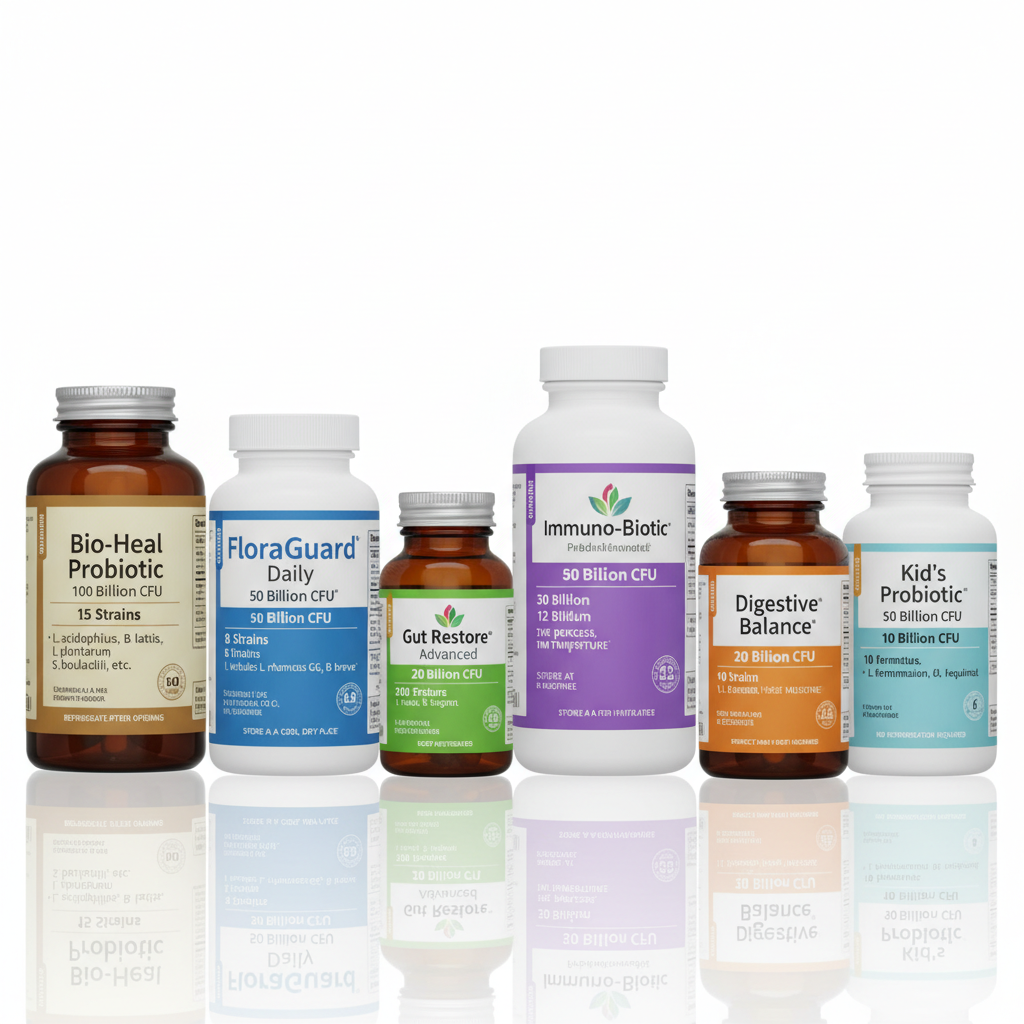
Before you compare brands, run every probiotic through this quick filter:
- Named strains, not just species (for example, Lactobacillus rhamnosus GG, not just “Lactobacillus rhamnosus”). Clinical benefits are tied to specific strains.[6][8]
- CFUs listed at “end of shelf life”, not “at manufacture.” Potency should be guaranteed until expiry.[9]
- At least about 1 billion CFU per day for general gut support (many products use 10–50+ billion, depending on the goal).[3][10]
- Storage instructions (fridge vs. shelf-stable) plus some explanation of how viability is protected (e.g., delayed-release capsules, moisture-resistant packaging).[5]
- Evidence of quality testing: third‑party lab testing, GMP, or independent certifications.[3][5]
If a product fails two or more of these, treat it as marketing, not medicine.
Strains vs. Species: The Part on the Label That Actually Matters
Most labels list a genus and species, like Lactobacillus acidophilus. But what really matters is the full strain name, such as Lactobacillus rhamnosus GG (ATCC 53103), because clinical trials test specific strains, not generic species.[6][8]
Strains you’ll keep seeing (and why)
- Lactobacillus rhamnosus GG: One of the most studied strains for general digestive support and some forms of diarrhea.[6][9] It appears in mainstream products like Culturelle Digestive Daily Probiotic, often around 10–12 billion CFU per capsule, about US$25–$30 for 30 days.[3]
- Bifidobacterium longum and B. bifidum: Commonly used for gut comfort, regularity, and sometimes IBS‑related symptoms.[6][9]
- Saccharomyces boulardii: A beneficial yeast often used in products aimed at antibiotic‑associated diarrhea and traveler’s diarrhea.[6][9]
Authority hook: clinicians use resources like the US Clinical Guide to Probiotic Products (usprobioticguide.com) to match specific strains to conditions before choosing a brand.[6] You can mirror that behaviour as a consumer by checking if the strain on the label has clinical backing for your particular issue.
CFUs: How Much Is “Enough” (and When Is It Just Marketing)?
CFU (colony‑forming units) is the count of live organisms in each dose. Research suggests that at least about 1 billion CFU per day is a baseline for seeing effects, with many gut‑focused products providing 10–50+ billion.[3][10]
Smart CFU ranges for common goals
- Everyday gut support: 1–20 billion CFU per day is typical in mainstream products like Bio‑Kult Everyday Gut (60 capsules, 2 billion CFU per capsule, ~£13.16).[2]
- Higher‑intensity support: 30–100+ billion CFU, such as Nutravita 60 Billion CFU Pro Bio Cultures Complex (~£17.99 for 60 capsules, 60 billion CFU with multi‑strain blend).[2]
- Marketing extremes: 200+ billion CFU can sound impressive but isn’t automatically better; strain quality, survival, and clinical evidence matter more than raw CFU hype.[5]
Price anchoring: once you see that 10–60 billion CFU products often sit in the £15–£30 (US$20–$40) range, ultra‑premium products at £60+ need to justify the difference with better data, forms or delivery technology—not just a bigger number on the front.

Real‑World Product Examples (2025) and What Their Labels Teach You
1. Seed DS-01 Daily Synbiotic – “Science‑forward” and subscription‑only
Positioning: High‑end synbiotic (probiotic + prebiotic) marketed on strain transparency and advanced capsule technology.
- Price: Around US$49–$69/month depending on region and subscription promos.[3][7]
- Label strengths: 24 strains clearly listed by full strain name; delayed‑release, 2‑capsule system to survive stomach acid; third‑party testing, vegan, allergen‑conscious.[3][7]
- Who it suits: Data‑driven buyers willing to pay more for detailed strain info, strong branding and sophisticated delivery.
Buying lesson: Transparency on strain IDs and delivery technology can justify a premium—but only if those strains link back to real outcomes you care about.
2. Ritual Synbiotic+ – Shelf‑stable, minimalist, heavily tested
Ritual’s Synbiotic+ is consistently ranked among the top probiotics for 2025–2026 by nutrition editors.[3][7]
- Price: About US$54 for 30 capsules (≈US$2 per serving).[3]
- Label highlights: 3 targeted strains plus prebiotic blend, fully traceable ingredients, Non‑GMO, and third‑party tested for purity and potency; shelf‑stable, once‑daily capsule.[3]
- CFU disclosure: The total CFU is listed, and potency is guaranteed through end of shelf life; this is what you want to see on any label.[3]
Buying lesson: Shelf‑stable + third‑party tested + clear strain list is a strong trio when you don’t want to manage refrigeration.
3. Mindbodygreen Advanced Probiotic+ – Symptom‑focused positioning
This product is often recommended specifically for bloating and digestive comfort.[3]
- Price: About US$80 for 30 servings (≈US$2.67 per day).[3]
- Label strengths: Multi‑strain formula with strains selected for gas and bloat support, third‑party tested, shelf‑stable capsules.[3]
- Hook: It sells not as “general probiotic,” but as a targeted solution—this is where people are willing to pay a premium.
Buying lesson: If your main issue is bloating or IBS‑type discomfort, choose products whose strains and marketing both focus on that, not vague “wellness.”
4. High‑value UK examples: Vitl, Zipvit, and Holland & Barrett
Recent UK reviews of 2025 probiotics highlight several strong value plays:
- Vitl Daily Biotic: About £14.99–£15/month; highlighted as “best overall value” in some 2025 guides.[1][4]
- Zipvit Pro-Bio 20 Billion CFU: ~£7.29–£7.99 for 120 capsules (≈£0.24/day), 3 strains, 20 billion CFU per dose; considered a top budget high‑CFU pick.[1][4]
- Holland & Barrett Live Friendly Bacteria: As low as about US$0.13/£0.10–£0.15 per day in some deals, but CFU and strain transparency can be less detailed.[1][4]
Buying lesson: To avoid FOMO on pricey brands, compare CFU counts, strain diversity, and certifications side‑by‑side. In many cases a £7–£20 product checks the same essential boxes as a £50 one.
How to Read Storage, Expiry & Certifications Without Getting Burned
Dead bacteria don’t help your gut, no matter how good the formula looked on paper. Label clues matter.
- Storage: Shelf‑stable products usually highlight this (“no refrigeration needed”) and often use delayed‑release capsules, desiccant caps, or foil blisters to protect from heat and moisture.[3][5]
- Expiry: Look for “guaranteed potency through end of shelf life.” If it only lists CFUs “at manufacture,” you don’t know what will be alive when you swallow it.[9]
- Certifications: Third‑party testing (for identity, purity, and potency), GMP certification, and non‑GMO claims all add layers of quality assurance.[3][5]
Expert guidance from Cleveland Clinic and NIH both emphasize choosing products from reputable brands that disclose testing and quality controls rather than mystery manufacturers.[9][10]

A 5-Step Shopping Checklist You Can Use Right Now
Use this step‑by‑step process and you’ll instantly be ahead of most buyers:
- Clarify your goal. Is it general gut health, IBS‑type symptoms, antibiotic recovery, immunity, or women’s urogenital support? Clinical guides and pharmacist resources stress matching strains to specific outcomes.[6][8]
- Search by strain, not brand. If you see a recommendation for L. rhamnosus GG or S. boulardii for your issue, look for those strain codes on the label, don’t just assume all “probiotics” are equivalent.[6]
- Set a CFU range. For daily support, aim for 1–20 billion CFU; for more intensive goals, 30–60+ billion may be reasonable, depending on advice from your clinician.[3][10]
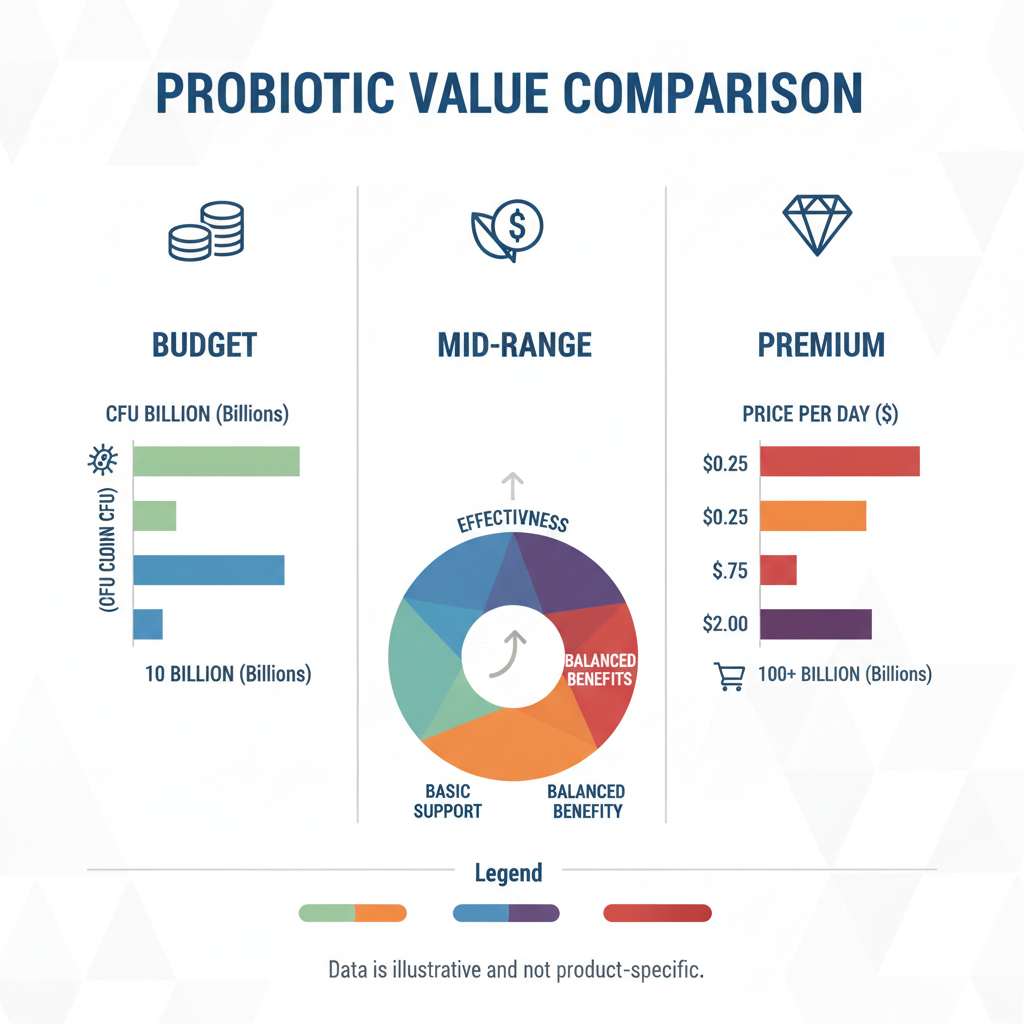
- Compare 2–3 products side by side. Put a premium product (e.g., Seed DS‑01 or Ritual Synbiotic+) next to a mid‑range option (e.g., Nutravita or Zipvit) and a budget option (e.g., Bio‑Kult or Holland & Barrett). Check: strain list detail, CFU at expiry, testing/certifications, and cost per day.[1][2][4]
- Decide a 4–8 week trial window. Most experts suggest giving a probiotic several weeks while monitoring bowel habits, bloating, and comfort, then reassessing with your healthcare professional.[9][10]
Why Acting Now Beats “Researching Forever”
The probiotic market in 2024–2025 is moving quickly: new multi‑strain formulas, smarter capsules, and stronger third‑party testing are steadily raising the bar.[3][5][7] Waiting often just means buying later at a higher price or after a formula change.
Leverage social proof (editorial round‑ups from Healthline, Fortune, BBC Good Food, and The Independent) as a shortcut, but don’t outsource your judgment completely.[1][2][3][7] The label is where the real story lives.

Call to action: Pick one goal, shortlist three products that clearly list strains, CFUs at expiry, storage, and testing, and commit to a time‑boxed trial—ideally in consultation with your doctor or pharmacist. The sooner you start experimenting systematically, the sooner you’ll know what actually works for your gut, instead of just funding the supplement industry’s marketing team.