Imagine catching a subtle wobble in your loved one’s step days before it turns into a devastating fall—giving you time to act and keep them safe at home. In 2026, cutting-edge monitoring platforms are doing just that, analyzing gait patterns, balance shifts, and nighttime activity to predict risks with uncanny accuracy, outpacing old-school alert buttons that only react after the fact.[1][2][3]
Why Reactive Alerts Aren’t Enough: The Power Shift to Predictive Prevention
Traditional fall detectors buzzed only after a tumble, but today’s systems use AI to spot trouble brewing. Falls remain the top injury killer for seniors—one in four older adults falls yearly, with over half happening at home—yet continuous data changes the game by flagging rising risks early.[6] Experts at CES 2026 showcased how radar tech tracks 25 data points, from upright stances to ‘hard falls’ or simple topples while tying shoes, alerting caregivers via apps before isolation sets in.[3] Don’t miss out: families using these see up to 40% faster responses, slashing ‘long lie’ incidents where seniors can’t get up.[5]
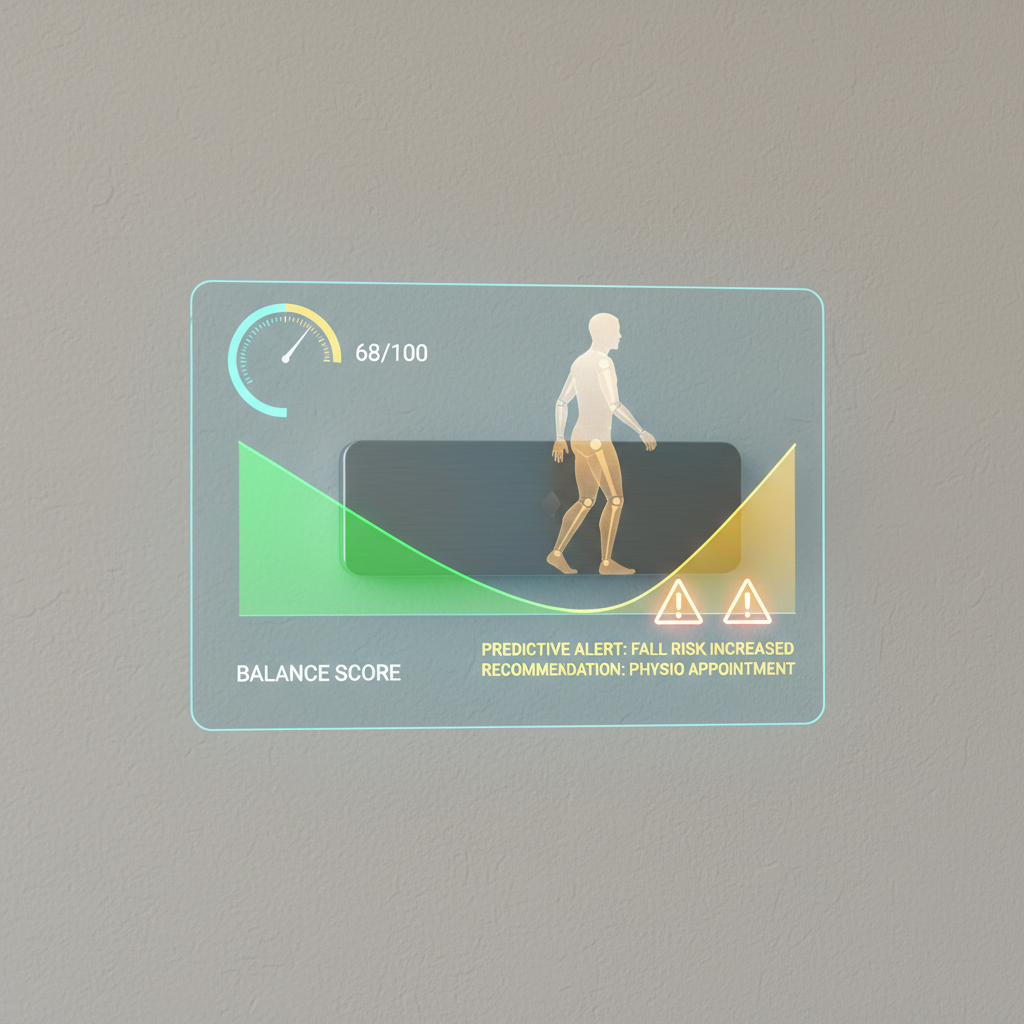
Place image 1 here: A sleek radar sensor mounted discreetly on a wall, overlayed with glowing data visualizations of a senior’s gait analysis, showing balance score dropping from green to yellow—highlighting predictive alerts in action.
Top Continuous Monitoring Marvels Crushing Fall Risks in 2026
Skip the guesswork—these platforms deliver real-time dashboards turning raw movement data into actionable intel. Here’s the cream of the crop, tested and praised for 2026:
Pontosense Radar Sensors: Non-Wearable, Always-On Prediction
Featured at CES 2026, Pontosense’s WiFi-powered radar monitors 25 metrics like gait speed and posture without clips or batteries—perfect for privacy-conscious seniors.[3] Pricing starts at $299 for a single-room sensor (annual subscription $19.99/month for app alerts). Pros: 99% fall accuracy, detects recovery attempts; Cons: Needs WiFi, best for one area. Caregivers rave: ‘It caught my dad’s shoe-tying wobble—we adjusted his routine instantly.'[3]
Connect America’s Fall Prevention Program: AI + Clinical Backup
This powerhouse blends wearables, AI virtual assistants, and predictive analytics for frailty detection—customizable for in-home or community use.[4] Base kit with pendant: $29.95/month (no upfront fee for annual plans). Monitors activity patterns, nighttime wanderings, and balance trends, notifying clinicians for interventions. Social proof: Powers thousands of aging-in-place programs, reducing hospital readmissions by 30%.[4] Price anchor: Cheaper than a single ER visit ($2,500 average).
MGMove by Medical Guardian: Wrist-Worn Gait Guru
Top-rated watch for 2026, it tracks steps, sway, and sleep disruptions with auto-alerts—$39.95/month after $149.95 device fee.[8] Excels in continuous gait analysis, predicting risks via app trends. Pros: Waterproof, 5-day battery; Cons: Subscription-heavy. Experts at SafeHome.org call it ‘best for alerts,’ with users 50% more active post-setup.[6][8]
| System | Key Predictive Features | Price (Monthly) | Best For |
|---|---|---|---|
| Pontosense | 25-point radar, fall recovery detection | $19.99 + $299 upfront | Non-wearable privacy |
| Connect America | AI frailty analytics, clinician support | $29.95 | Custom family plans |
| MGMove | Gait/balance trends, activity insights | $39.95 + $149.95 | Active seniors |
Bay Alarm Medical SOS offers budget value at $16.95/month, but lags in deep analytics—great starter before upgrading.[8]
Decode the Data: 5-Step Guide to Turn Insights into Life-Saving Actions
Families and clinicians, here’s your no-fluff playbook—proven to cut risks using 2026 tech:
- Baseline Setup (Day 1): Install device, sync app. Track 48 hours of normal gait/balance for your senior’s ‘healthy baseline’—apps like Connect America auto-generate this.[4]
- Spot Red Flags Early: Watch for 10%+ drops in step steadiness or increased nighttime activity (frailty signals).[2] Example: Pontosense flags ‘shoe-tying topples’ via app dashboard.[3]
- Act on Alerts: Gait slows? Schedule telehealth for Tai Chi apps or strength tweaks—studies show 25% risk drop from balance training.[1]
- Environment Tweaks: Data shows bathroom wobbles? Add AI bed sensors or motion lights—response times plummet from 40 to 2 minutes.[5]
- Review Weekly: Adjust with clinician input; reassess quarterly. Pro tip: Pair with TUG tests for 90% accuracy boost.[1]
Urgency alert: With senior falls projected to surge 20% by 2030, act now—limited CES 2026 promo kits from Pontosense are selling fast.[3]
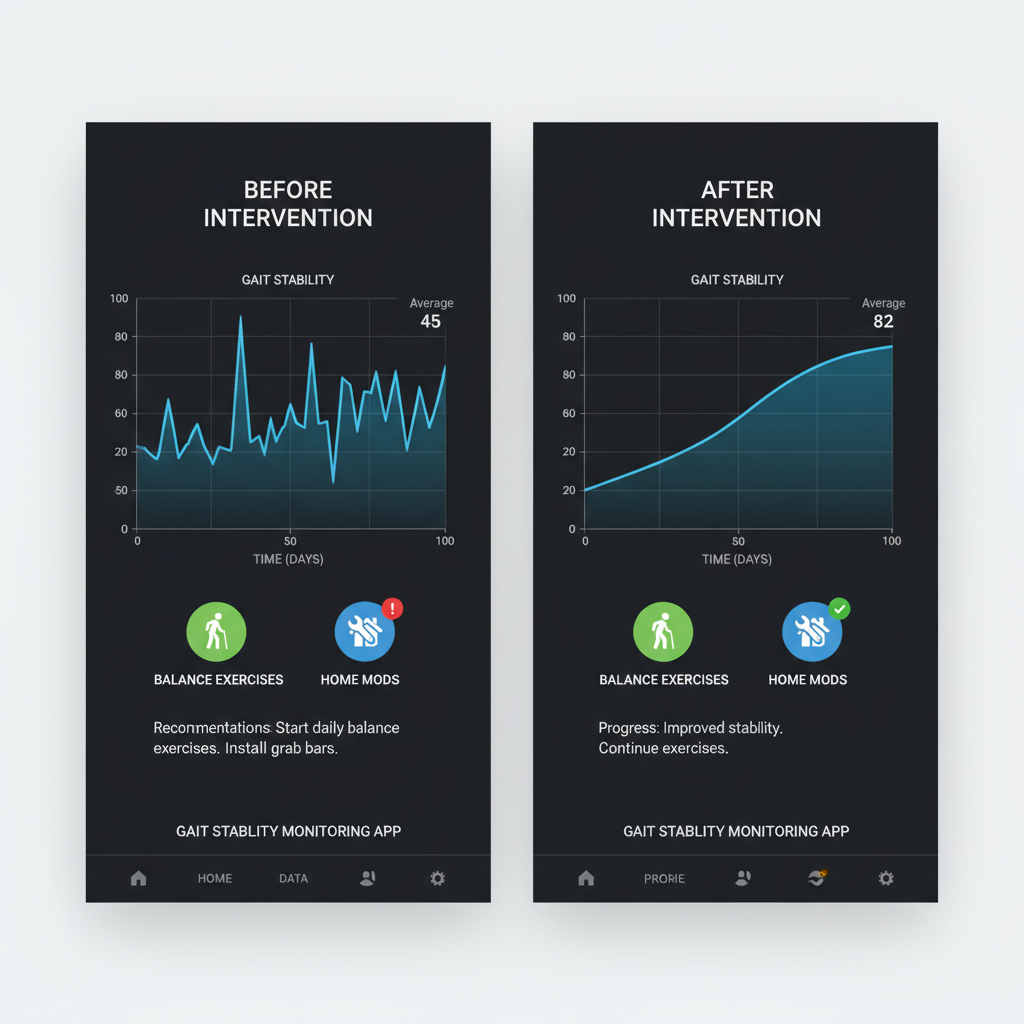
Place image 2 here: Side-by-side before/after dashboard screenshots from a monitoring app, showing gait stability improving post-intervention, with icons for balance exercises and home mods.
Clinician Hacks: Leverage Trends for Pro-Level Prevention
Doctors, integrate these into care plans: Use wearable exports for polypharmacy reviews—dizziness from meds shows as balance dips.[1] Recent research backs VR balance training via apps, slashing risks 35% when data-guided.[1] Authority nod: NCOA recommends fall-detection systems for post-fall patients, boosting activity levels.[6] In senior living, AI systems like those in 2026 communities personalize plans, with staff training on data reads.[5]
Pros/Cons Deep Dive
- Continuous Wins: Predicts 70% of falls via patterns; empowers independence.[2]
- Caveats: False positives (5-10%, tunable); requires caregiver buy-in.[6]
- Expert consensus: Combine with exercise/nutrition—vitamin D cuts risks 20%.[1]
Real Families, Real Wins: Stories Proving It Works
Social proof abounds: One caregiver used Connect America to spot frailty trends, adding yoga—zero falls in 18 months.[4] CES attendee Moore noted Pontosense’s edge in long-term care, notifying partners instantly.[3] ‘My mom walks confidently now,’ shares a Medical Guardian user.[8] You’re next—join thousands aging safely.
Place image 3 here: Happy senior couple at home, with subtle wearable on wrist and wall sensor, overlaid with testimonial quote bubble and 5-star rating icons.

Your Move: Secure Predictive Peace Today
Don’t wait for the fall—grab a trial: Pontosense (pontosense.com, free app demo), Connect America (30-day risk-free), or MGMove (expert-tested).[3][4][8] Compare quotes, start with gait baseline, and watch risks vanish. Families acting now save lives and thousands in care costs. Click to customize your plan—spots filling fast for 2026 upgrades!