You don’t need a chemistry degree to spot a truly high-end anti-aging serum—but you do need to know how to read a label past the glamorous branding. If you’re about to spend $80, $150, or more on a “luxury” serum, the real question is simple: are you paying for results… or for the bottle?
Step 1: Decode Hyaluronic Acid Like an Ingredient Snob
Hyaluronic acid (HA) shows up on almost every anti-aging serum, from drugstore to ultra-luxury. The difference is rarely that it’s there—it’s how it’s used.
What to look for on the INCI (ingredient) list:
- Multiple weights or forms of HA – phrases like “low molecular weight hyaluronic acid,” “sodium hyaluronate,” “crosspolymer,” or “multi-molecular hyaluronic complex” usually indicate more advanced, layered hydration and better plumping in different skin levels.[2]
- HA not just at the bottom of the list – in most water-based serums, actives that matter appear closer to the top third of the list. If HA is near the very end with colorants and preservatives, it’s likely “fairy dust” level.[2]
- Support actives for barrier health – ingredients like glycerin, niacinamide, panthenol, ceramides, and fermented extracts help HA stay in your skin instead of evaporating off.[2][3]
Luxury benchmark example (hydration-focused):
Estée Lauder Advanced Night Repair (around £52 / ~$65 for 30 ml) layers multiple forms of hyaluronic acid with a ferment (bifida ferment lysate) and a peptide (tripeptide-32) to support overnight repair and barrier strength.[2] This is a classic example of paying for a well-engineered system—delivery, soothing agents, and textures—rather than just “one big ingredient.”
Value benchmark (HA as a workhorse):
Watts Beauty’s 100% Hyaluronic Serum (from about $16.99) keeps things minimal: high-concentration hyaluronic acid in a simple base for hydration only.[4] It’s not a full anti-aging solution, but it’s a price anchor: if a “luxury” serum charges 5–8x more for the same basic HA effect and little else, you know you’re paying for the logo.

Step 2: Peptides—The Real Differentiator Between Hype and High Performance
In 2026, the most meaningful innovations in anti-aging serums are happening in peptide technology, not just in basic hydration.[2][3] Modern formulas increasingly use specific peptide complexes to target firmness, wrinkles, and skin density with clinical-style precision.[3]
How to read peptide claims like a pro
1. Look for real peptide names, not vague promises.
On the label or INCI list, you want to see recognizable peptide names such as:
- Matrixyl 3000 (palmitoyl tripeptide-1, palmitoyl tetrapeptide-7) – collagen-signaling peptides for firmness and wrinkle depth.[2]
- Copper peptides (often listed as copper tripeptide-1) – support collagen and wound healing and act as antioxidants.[2]
- Acetyl hexapeptide-8 (often marketed as “Argireline” or “Botox in a bottle”) – helps soften expression lines.[2]
- Biomimetic peptides / collagen fragments – often marketed as biomimetic collagen or “collagen fragments,” used in new-gen volumizing complexes with HA.[3]
2. Watch for concentration clues.
- Phrases like “30% multi-peptide complex” or “high peptide concentration” are more meaningful if paired with specific peptide names and actives.[2]
- In many luxury serums, peptides appear mid-list—this is normal, as they’re effective at low percentages—but they should not be buried at the very end behind fragrance and coloring.
3. Is there a delivery or support system?
Advanced 2026 formulas often pair peptides with:
- Hyaluronic acid for better penetration and plumping.[2][3]
- Retinoids or bakuchiol at tolerable doses for synergistic tightening and renewal.[2][3]
- Barrier-supporting ingredients to prevent irritation while actives work.[2][3]
Real-world peptide serum examples (and how to judge them)
Azio Beauty Intense Firming Face Serum – the “clinical” multi-peptide play (around £24)
This mid-priced serum is packed with copper tripeptide-1 and acetyl hexapeptide-8, plus vitamins and hyaluronic acid for hydration.[2] It’s a good example of a formula that spends its budget on proven peptides rather than heavy packaging—making many “designer” serums at triple the price look underdosed by comparison.
High-concentration peptide complex (30% multi-peptide) – the tech-heavy luxury option
One reviewed serum in 2026 testing includes a 30% multi-peptide complex (Matrixyl 3000, Argireline, copper peptides) plus supporting actives such as salicylic acid.[2] While not cheap, this is where luxury pricing starts to align with measurable innovation: stacking multiple, research-backed peptides at meaningful concentrations with a sophisticated delivery system.
Swiss luxury example: Swiss Detox Clinical Formulation Anti-Aging Serum
Positioned as a premium Swiss anti-aging serum, this formula combines peptides, hyaluronic acid, and Swiss Alpine botanicals to improve firmness, reduce wrinkles, and deeply hydrate.[1] It’s marketed as dermatologist-approved, lightweight, and free from parabens, sulfates, silicones, and artificial fragrances, appealing to buyers who value clean luxury alongside performance.[1] Here, the “luxury” premium includes origin story (Swiss), ingredient sourcing, and a more sensorial experience—not just actives.
Step 3: Match the Formula Type to Your Skin and Budget
To avoid regret purchases, align your serum type with both your skin’s needs and your willingness to invest.
If your main goal is hydration and glow
- Look for multi-weight hyaluronic acid + barrier support (like Estée Lauder ANR).[2]
- If you’re younger or just starting anti-aging, a solid HA-focused serum plus sunscreen can be smarter than jumping into heavy peptides and retinoids.[2][3]
- Use a more affordable HA serum (e.g., Watts Beauty) as a price anchor: if a $150 serum doesn’t clearly add more than what a $20–$70 HA + niacinamide combo offers, skip it.[4]
If your main goal is firmness, wrinkles, and “lift”
- Prioritize named peptide complexes (Matrixyl 3000, copper peptides, Argireline, biomimetic peptides) with HA for hydration.[2][3]
- Look for combination formulas that include gentle retinoids or bakuchiol for next-level collagen support.[2][3]
- Emerging 4D complexes, like volumizing systems that combine HA with collagen fragments and amino acids (e.g., VOL.U.LIFT GLP‑1 4D Skin Rebound Complex), are designed to tackle volume loss, deep wrinkles, dehydration, and density loss simultaneously.[3]

Step 4: Spot 2026 Trends So You Don’t Fall for Outdated Formulas
Anti-aging skincare in 2026 is defined by a few clear shifts:
1. From “fairy dust” to therapeutic concentrations
According to cosmetic chemists and industry testing, brands are increasingly moving toward clinically validated active levels, especially for peptides, retinoids, and antioxidants.[2][3] Serums that brag about 15 different plant extracts but hide their actives at trace levels are losing ground to formulas where a few well-chosen ingredients are present at therapeutic doses.
2. Peptides + HA as a smart pairing, not a buzzword combo
New-generation peptides are engineered to target specific aging pathways—collagen breakdown, volume loss, texture—while HA ensures hydration and improved delivery.[3] Together they make a credible backbone for an anti-aging routine, especially when layered with sunscreen and, where tolerated, retinoids.
3. Barrier and microbiome health front and center
Brands now emphasize barrier-strengthening and microbiome-friendly formulas, because irritated, inflamed skin does not respond as well to actives.[3] Luxury serums that layer peptides and HA with soothing, antioxidant-rich complexes (like Swiss Alpine botanicals or plant stem cells) fit this trend.[1][3]
Step 5: A Simple 3-Minute Label Checklist Before You Buy
Use this quick filter before spending on any “luxury” anti-aging serum:
1. Ingredient list sanity check
- Does it include specific peptides by name (e.g., copper tripeptide-1, Matrixyl 3000, acetyl hexapeptide-8)?[2][3]
- Does it offer multi-form HA or at least sodium hyaluronate high enough on the list to matter?[2]
- Are there supportive ingredients for barrier and antioxidant protection (niacinamide, vitamin E, ferulic acid, soothing botanicals)?[2][3]
2. Formula story vs. price
- Is the higher price justified by more advanced tech (high peptide percentages, patented complexes, clinical testing) rather than just “luxury” branding?
- Compare it to mid-range “clinical” brands (like Azio Beauty’s peptide- and copper-rich serum at ~£24) and heritage benchmarks like Estée Lauder ANR (~£52). If the formula looks weaker yet costs more, that’s a red flag.[2]
3. Skin-type match
- Sensitive skin: Seek HA-focused, fragrance-free formulas with gentle peptides and barrier support.[2]
- Dry, mature skin: Choose peptide-rich, HA-heavy serums with additional lipids or volumizing complexes.[2][3]
- Oily or acne-prone: Opt for light gel textures that combine peptides and HA with non-comedogenic bases and, if appropriate, mild exfoliants like PHA or BHA.[2]

Turn Label Literacy into Better Skin (and Smarter Spending)
Once you know how to decode hyaluronic acid types, recognize real peptide complexes, and anchor prices against solid mid-range options, luxury serums stop being a gamble and start becoming a strategic choice. You may still choose a premium Swiss formula for the sensorial experience and heritage—or a clinically driven peptide powerhouse for maximum results—but now it’s a conscious, informed decision, not a leap of faith.
Action steps you can take today:
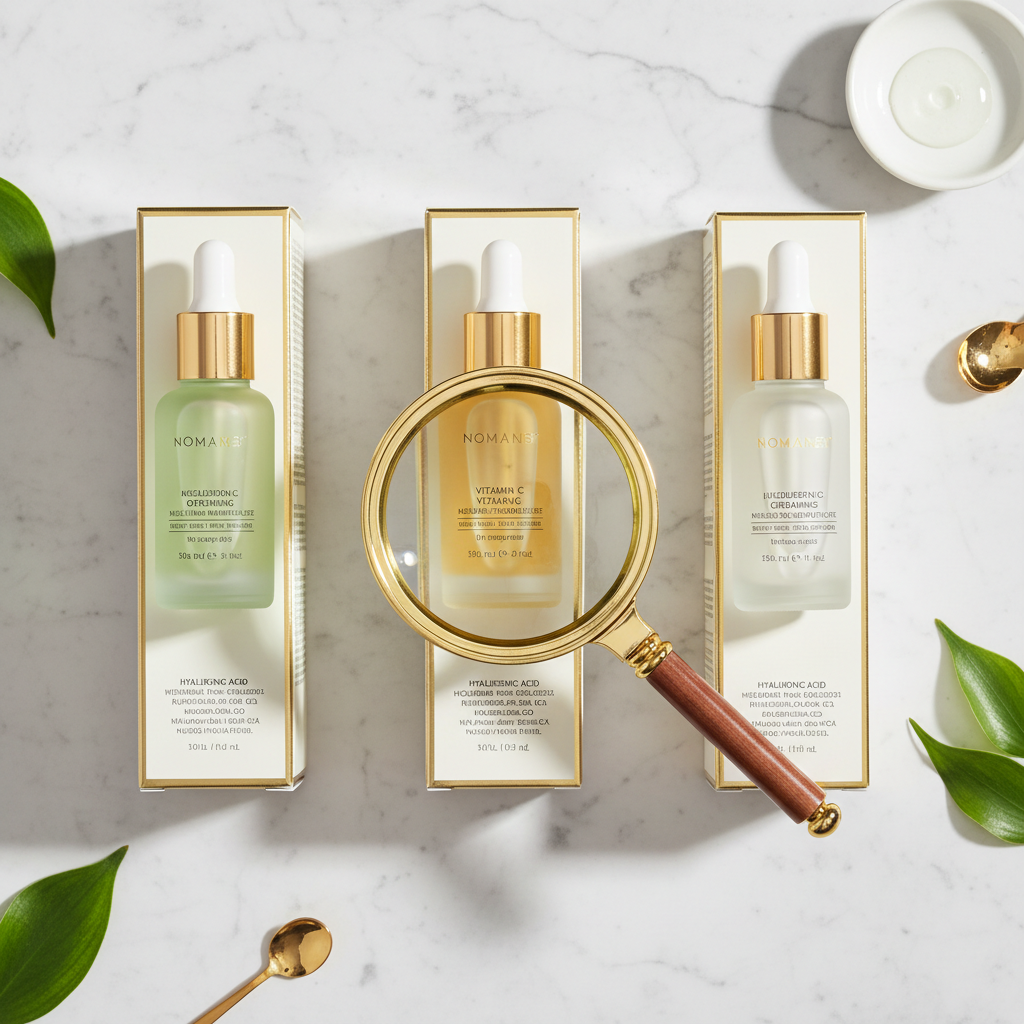
- Grab your current serum and check: do you see named peptides and multi-form HA, or just vague claims?
- Shortlist 2–3 serums—one classic (like Estée Lauder ANR), one peptide-heavy mid-range (like Azio Beauty Intense Firming Face Serum), and one luxury option (such as a Swiss peptide + HA serum)—and compare ingredient lists against the checklist above.[1][2]
- Decide where you want to invest: maximum actives per dollar, sensorial luxury, or a balance of both. Then commit to using your chosen serum consistently for at least 8–12 weeks; even the best formulas need time.[2][3]
Your future self—looking at smoother, better-supported skin in the mirror—will be glad you started reading labels like a formulator instead of a marketing target.