Hyperpigmentation hits differently when you have melanin-rich skin. Dark marks linger longer, melasma can look patchy and stubborn, and one wrong product can leave you with even more discoloration instead of less. Yet 2025 is finally the year brands are building advanced brightening formulas for deeper tones instead of testing on beige skin and hoping for the best.[2][4]
If you have brown or Black skin and you’re tired of playing chemist with random serums, this guide breaks down how hyperpigmentation behaves on deeper tones, which ingredient technologies are safest and most effective, and which current products (with prices) are actually worth your money.

Why Hyperpigmentation Is So Stubborn on Deeper Skin Tones
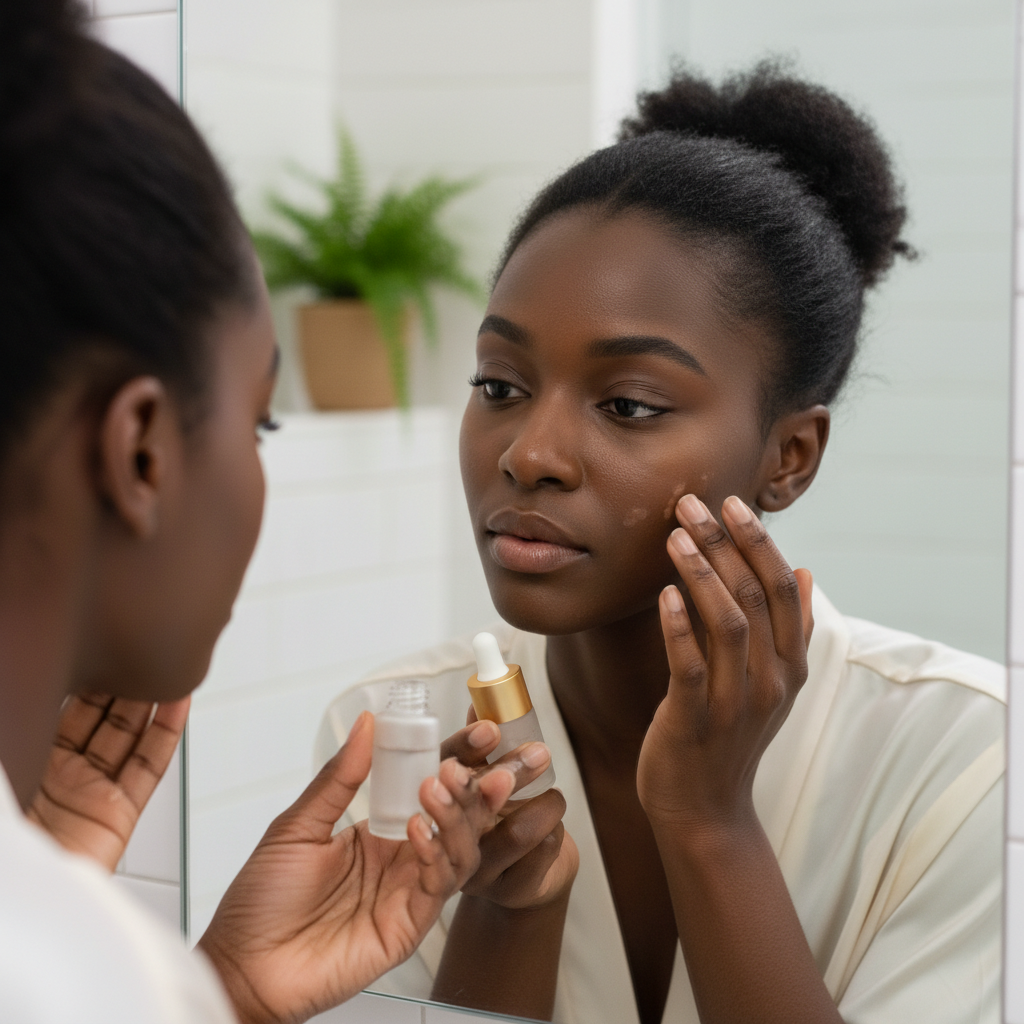
Melanin-rich skin has more active melanocytes (pigment-producing cells) that react strongly to inflammation, friction, and UV exposure.[1][2] That’s why:
- Post-acne marks can stay for months even after the pimple is gone.[1]
- Eczema, razor bumps, and insect bites often leave shadowy patches.[2]
- Overly harsh peels or scrubs can create new dark spots instead of clearing old ones.[1][4]
The big issue: what’s considered a “strong” brightening treatment on lighter skin can be too aggressive for darker skin, triggering more pigment. That’s why 2025 formulas for melanin-rich tones focus on multi-pathway, barrier-respecting brighteners instead of single, harsh actives.[1][4]
What Makes a Dark Spot Formula Truly “Advanced” for Melanin-Rich Skin?
Advanced doesn’t just mean “strong.” For brown and Black skin, it means smart, targeted, and tested on deeper tones.
1. Multi-pathway pigment control
Modern formulas combine ingredients that:
- Reduce melanin production (e.g., tranexamic acid, alpha arbutin, hexylresorcinol).[1]
- Block pigment transfer to surrounding skin (niacinamide).[1]
- Increase cell turnover so darkened cells shed faster (retinoids, gentle AHAs, azelaic acid).[1][2]
Example: A pro-level brightening serum highlighted by Live Tinted uses alpha-arbutin, hexylresorcinol, diglucosyl gallic acid, and peptides together to modulate multiple melanin pathways—without hydroquinone.[1] This kind of layering reduces the risk of irritation on melanin-rich skin.
2. Barrier-first, irritation-minimizing formulas
Inflammation equals more pigment in deeper tones, so 2025 formulations often pair actives with ceramides, hyaluronic acid, and calming botanicals.[1][2]
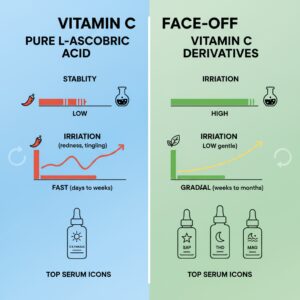
One example is a hydroquinone-free PM treatment designed specifically for medium to deep skin that layers tranexamic acid, niacinamide, glycolic acid, and 0.25% retinol with ceramide NP and THD vitamin C to keep the barrier calm while fading spots.[1]
3. Clinically tested on melanin-rich skin
Historically, deeper tones were barely represented in clinical trials.[2] That’s changing. New-gen products like La Roche-Posay’s formulas with Melasyl—a novel molecule that intercepts excess melanin before it surfaces—have been clinically tested on melanin-rich skin and shown to visibly reduce dark spots.[1]
Ingredient Technologies to Look For in 2024–2025
Tranexamic Acid: The melasma and PIH workhorse
Tranexamic acid (TXA) is now a star in hyperpigmentation care for deeper tones because it calms the overactive pigment cascade without the risks associated with long-term hydroquinone use.[1][4]
Look for it in nighttime serums and creams formulated with niacinamide and gentler exfoliants rather than strong peels.
Melasyl and Pathway-Targeting Molecules
La Roche-Posay’s use of Melasyl in spot serums represents a new class of actives that catch excess pigment before it becomes visible, paired with 10% niacinamide and micro-exfoliating LHA.[1] Early clinicals show brightness in 2–4 weeks and visible spot reduction around 8–12 weeks, even on deeper tones.[1]
Niacinamide: Essential for melanin-rich skin
At 5–10%, niacinamide has been shown to significantly reduce hyperpigmentation and strengthen the barrier in as little as four weeks.[1] It is especially valuable for skin of color because it reduces pigment transfer and soothes inflammation at the same time.
Azelaic Acid and Retinol Alternatives
Azelaic acid both treats acne and decreases melanin production, making it ideal for post-inflammatory hyperpigmentation (PIH) from breakouts.[1][2] Bakuchiol and lower-strength retinoids offer retinol-like turnover with less irritation—crucial for preventing rebound darkening.[1]

Real-World Products Centering Melanin-Rich Skin (With Prices)
1. Everyday brightening and texture care
- EADEM Cashmere Peel Gentle AHA + PHA Toner – about $42 (Sephora)
A milky exfoliating toner designed with melanated skin in mind, using a blend of AHAs and PHAs to smooth texture and fade dark spots without the burn of traditional peels.[2] Great if your skin reacts easily to harsher acids. - Glow Recipe Watermelon Glow Niacinamide Dew Drops – from ~$20 (mini) to ~$35 (full)
Hydrating niacinamide serum that boosts glow while softening hyperpigmentation—without a gray cast or shimmer.[2] Best as a daily support step rather than a stand-alone heavy hitter.
2. Targeted dark spot serums
- Clinique Even Better Clinical Radical Dark Spot Corrector + Interrupter – around $62
Combines vitamin C, salicylic acid, and brightening complexes to visibly fade dark spots and even tone; layers easily under makeup.[2] A good mid-range option if you want brand history and strong social proof. - Caudalie Vinoperfect Radiance Dark Spot Serum – around $82
Beloved for being pregnancy-friendly and gentle, using viniferine (a grapevine-derived brightener) to target sun spots and post-acne marks.[2] Ideal if your skin is reactive but you want long-term clarity. - ROSE Ingleton MD FutureBright Brightening Dark Spot Vitamin C Serum – about $68
Created by a Black dermatologist, this vitamin C serum is specifically praised for sensitive, melanated skin that can’t tolerate harsher formulas.[2]
3. Acne + hyperpigmentation two-in-one formulas
- Shani Darden Rescue Serum With 10% Azelaic Complex – about $68
Combines azelaic acid with other brighteners to tackle breakouts, redness, and dark spots simultaneously without heavy greasiness.[2] - Dr. Idriss Major Fade Dark Spot Starter Kit – about $55
Three-step set (AHA mask, serum, vitamin C moisturizer) designed to smooth texture and fade hyperpigmentation, giving you a mini protocol instead of guessing your way through product combos.[2]
4. Melanin-focused systems
- Buttah Skin 3-Step Hyperpigmentation Treatment Set – ~$70–$90 depending on configuration
A routine tailored to melanin-rich tones, offering a cleanser, vitamin C serum, and moisturizer designed to reduce dark spots while respecting deeper skin’s barrier and dryness patterns.[3] - Live Tinted SUPERBRIGHT™ 15% Vitamin C Stick – around $38
A balm-to-serum stick designed for spot-treating stubborn marks on medium-deep to deep skin, combining THD vitamin C, niacinamide, and a tranexamic derivative for on-the-go correction.[1]
How to Build a Safe, Results-Driven Routine for Brown & Black Skin
Step 1: Protect your progress with a cast-free SPF
No brightening routine works without sunscreen. UV exposure is one of the biggest triggers for melasma and recurrent hyperpigmentation.[1][2]
- Hyper Skin Hyper Daily Invisible For All SPF 50 SunDrops – about $58
A lightweight serum-style SPF 50 that disappears on melanated skin with no white cast and added brightening botanicals.[2]
Step 2: Choose one primary pigment-fading serum
To avoid irritation (and new dark spots), start with one advanced brightening serum at night:
- For acne-prone skin: choose azelaic acid-based formulas (like the Shani Darden Rescue Serum).[2]
- For melasma or widespread patches: look for tranexamic acid + niacinamide combos.[1]
- For sensitive skin: go for gentle complexes like viniferine (Caudalie) or low-irritant vitamin C serums (ROSE Ingleton MD).[2]
Step 3: Add gentle exfoliation 1–3 times a week
Skip harsh scrubs and high-percentage peels. Opt for lotion-texture acid blends like EADEM’s Cashmere Peel that respect the barrier while speeding turnover.[2]
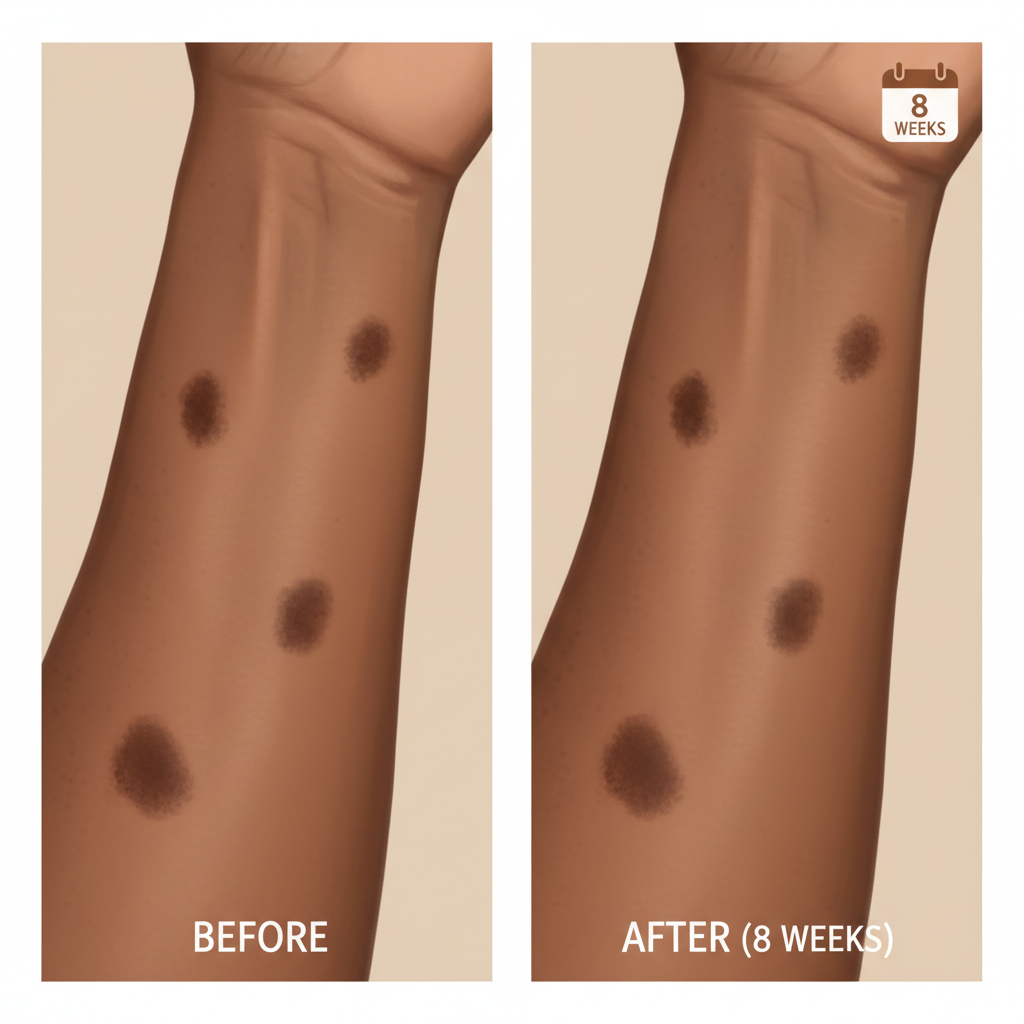
Step 4: Track progress in 8–12 week blocks
Deeper skin often needs 2–3 skin cycles to show visible change. Many of the latest formulas report clearer tone and reduced spots around the 8–12 week mark when used consistently with SPF.[1][2]

The 2025 Shift: Formulas Finally Built Around Melanin
Industry trend reports highlight a clear shift in 2025: more brands centering melanin-rich skin in R&D, more inclusive clinical testing, and a move toward barrier-safe, multi-pathway pigment control instead of aggressive one-note bleaching.[2][4] Emerging brands like Eadem, Hyper Skin, and Buttah, alongside legacy players like Clinique, Estée Lauder, and La Roche-Posay, are competing to deliver smarter solutions for dark spots, melasma, and acne marks on brown and Black skin.[1][2][3][4]
If you’ve been waiting years for hyperpigmentation care that doesn’t treat darker skin as an afterthought, this is the moment to act. Start with one advanced, melanin-conscious brightening serum, commit to daily, cast-free SPF, and give your routine a solid 12 weeks. The sooner you get consistent, the sooner those “permanent” marks stop feeling permanent.
Next step: Audit your shelf tonight. Keep only one brightening serum, one gentle exfoliant, and one no-cast SPF that you’ll actually wear. Anything that burns, stings, or leaves you ashier than before? It’s working against your melanin, not with it—time to let it go.