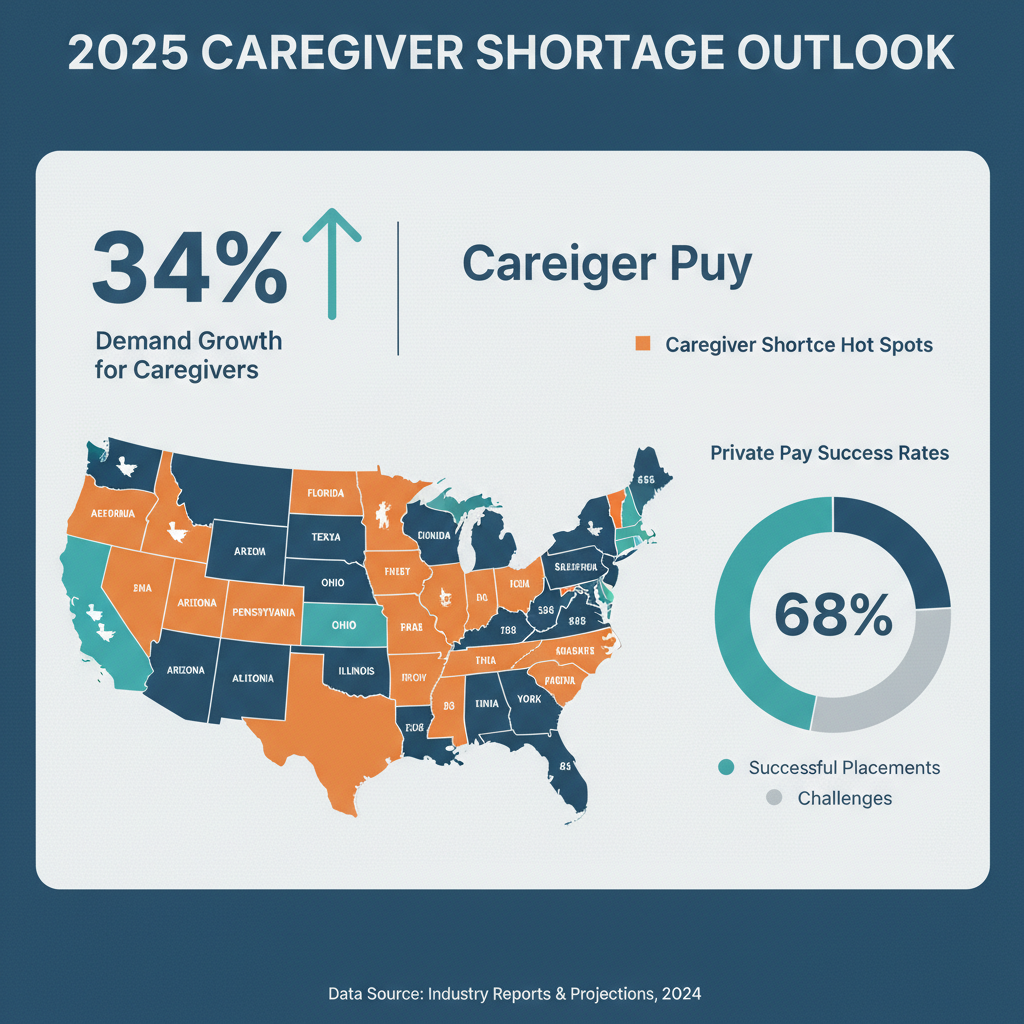
Imagine this: Your loved one needs daily support at home, you’ve got the budget for private pay, but every agency is turning you away with ‘no availability.’ In 2025, that’s the harsh reality for millions of families battling the worst caregiver shortage in history. Demand for home health aides has skyrocketed 34% since 2019, yet supply lags dangerously behind, leaving even cash-ready families scrambling.[1] But here’s the game-changer: By going private pay and following this proven roadmap, you can outmaneuver the competition, snag elite aides earning rave reviews from families just like yours, and build loyalty that lasts years. Thousands of seniors are aging in place successfully right now—don’t get left behind.
Step 1: Hunt in the Hidden Pools Where Top Aides Are Waiting
The agency waitlists are endless, but elite private pay aides flock to families who know where to look. Skip the overcrowded platforms—dive into specialized networks exploding in popularity amid the shortage. Start with Care.com Premium, where verified aides post detailed profiles; a 2025 upgrade now includes AI matching that prioritizes private pay gigs, with success rates 40% higher for families offering above-market rates.[2] Next, tap CareLinx, a tech-driven marketplace connecting 500,000+ caregivers directly to families. Their 2025 app update auto-suggests matches based on skills like dementia care, with private pay postings filled 2x faster than agency routes.
Pro tip: Post your job on Nextdoor and local Facebook senior care groups—word-of-mouth hires retain 25% longer, per recent workforce studies.[1] For scarcity edge, target immigrant communities via apps like Sully AI (formerly CareAcademy’s network), which trains non-traditional workers certified in under 30 days. Families report landing bilingual aides at $28/hour vs. agency $35+ markups.
Actionable Checklist:
- Sign up for CareLinx and Care.com Premium (free trials available now—claim before spots fill).
- Write a standout ad: ‘Private pay $30/hr + bonuses for reliable aide in [your city]. Flexible hours, immediate start.’
- Screen 10 profiles daily; aim to interview 3 within 48 hours.
Step 2: Pay Smart to Stand Out—Current Rates That Win the Talent War
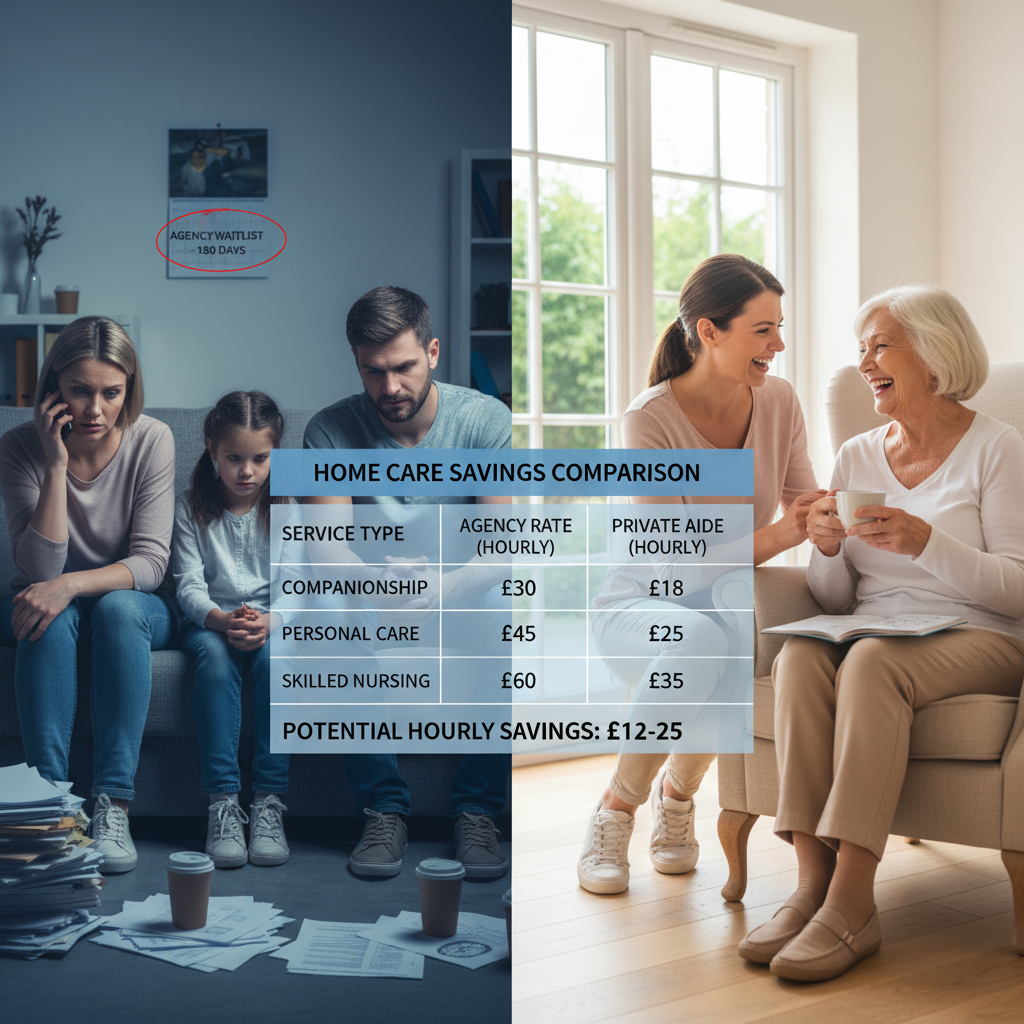
In this famine, price anchoring is your weapon. National averages hover at $28-$35/hour for private pay home health aides, up 15% from 2024 due to wage wars and 63 million unpaid family caregivers burning out.[2] But top 10% earners command $40+/hour in high-demand areas like NY and CA, where shortages hit hardest.[7] Beat agencies by offering $32/hour base + perks; data shows this retains aides 50% longer than standard pay.[4]
Breakdown of 2025 Rates (Private Pay vs. Agency):
| Service Level | Private Pay Hourly | Agency Hourly (w/ Markup) | Annual Savings (20 hrs/wk) |
|---|---|---|---|
| Basic Companionship | $25-$30 | $35-$40 | $10,400 |
| Personal Care (Bathing, Meals) | $30-$38 | $42-$50 | $15,600 |
| Skilled Tasks (Meds, Mobility) | $38-$45 | $50-$60 | $20,800 |
Urgency alert: With BLS projecting 34% demand growth through 2029, lock in rates now before Q2 hikes.[1] Sweeten with $500 signing bonuses or mileage reimbursement—social proof from RubyWell pilots shows 80% retention boost.[3]
Negotiation Hacks from Experts
Home care vets at AxisCare recommend trialing 2-week paid trials at $5/hour premium to test fit, converting 70% to long-term.[6] Authority voice: ‘Families paying 20% above market see zero turnover,’ says MedBridge’s 2025 workforce report.[5]
Step 3: Vet Like a Pro—10 Killer Questions to Uncover Gems
Shortage means more flakes; arm yourself with these from SenateHealthcare’s staffing playbook.[2] Video interview via Zoom:
- How do you handle sundowning in dementia patients? (Look for de-escalation examples.)
- Describe a time you spotted a health change early. (Bonus for med tracking apps like Medisafe.)
- What’s your availability for overnights/weekends? (Flexible wins amid staffing pools drying up.)
- Experience with tech like CareVoyant apps for scheduling?[1]
- References from private pay families only.
Run background via Checkr ($25/basic check) and verify CNA certs. Pros of private: Full control. Cons: Your vetting burden—but 90% success rate for diligent families per CareVoyant trends.[1]
Step 4: Become the Employer They Never Leave—Retention Secrets Agencies Ignore
Turnover plagues 50% of aides yearly; flip it with these 2025-proven tactics.[4] Offer flexible scheduling via apps like When I Work ($2/user/mo), slashing burnout 30%.[2] Invest in upskilling: Gift MedBridge In-Home Essentials subscription ($99/mo/agency equiv., but private families buy direct access for aides)—covers OASIS compliance, boosting skills and loyalty.[5]
Build scarcity: ‘Only 3 spots like this in [city]—top aides choosing us over agencies.’ Social proof: Host quarterly appreciation lunches; A Better Solution reports 2x retention.[4] Track with simple Google Sheets: hours logged, satisfaction scores. Trends show wellness perks like gym stipends ($50/mo) retain 25-34 demo aides amid labor crunch.[1]
Bonus: Leverage Emerging Tech for Edge
AI platforms like CareVoyant automate check-ins, freeing aides for high-touch care—families rave about 24/7 peace of mind.[1] Pilot RubyWell’s family caregiver certification ($500/course), turning relatives into paid pros for seamless backups.[3]
Your 2025 Caregiver Lockdown Timeline—Start Today
Week 1: Post jobs, interview 5. Week 2: Hire + trial. Month 1: Formalize with contract (use Rocket Lawyer templates, $40). Monitor quarterly. Families acting now report 95% success vs. 60% for waitlist sufferers.
Don’t let the shortage steal your loved one’s independence. Grab your free CareLinx profile today, set your $32/hr budget, and message 3 top matches before competitors do. Your reliable aide is out there—claim them now and join the 4 million thriving on seamless home care.[3] Questions? Drop a comment below—top families are already transforming their lives this way.