Most wearables still drown you in charts and numbers. The new generation of premium fitness trackers quietly adds something more dangerous to your excuses: real coaching powered by AI that adapts every run, ride, or recovery day to your body in real time.
Instead of just logging heart rate and GPS tracks, top 2025 devices are now turning those signals into decisions: when to push, when to back off, how hard to run this interval, and what tomorrow’s plan should look like if today’s workout hit harder than expected.[2][3]
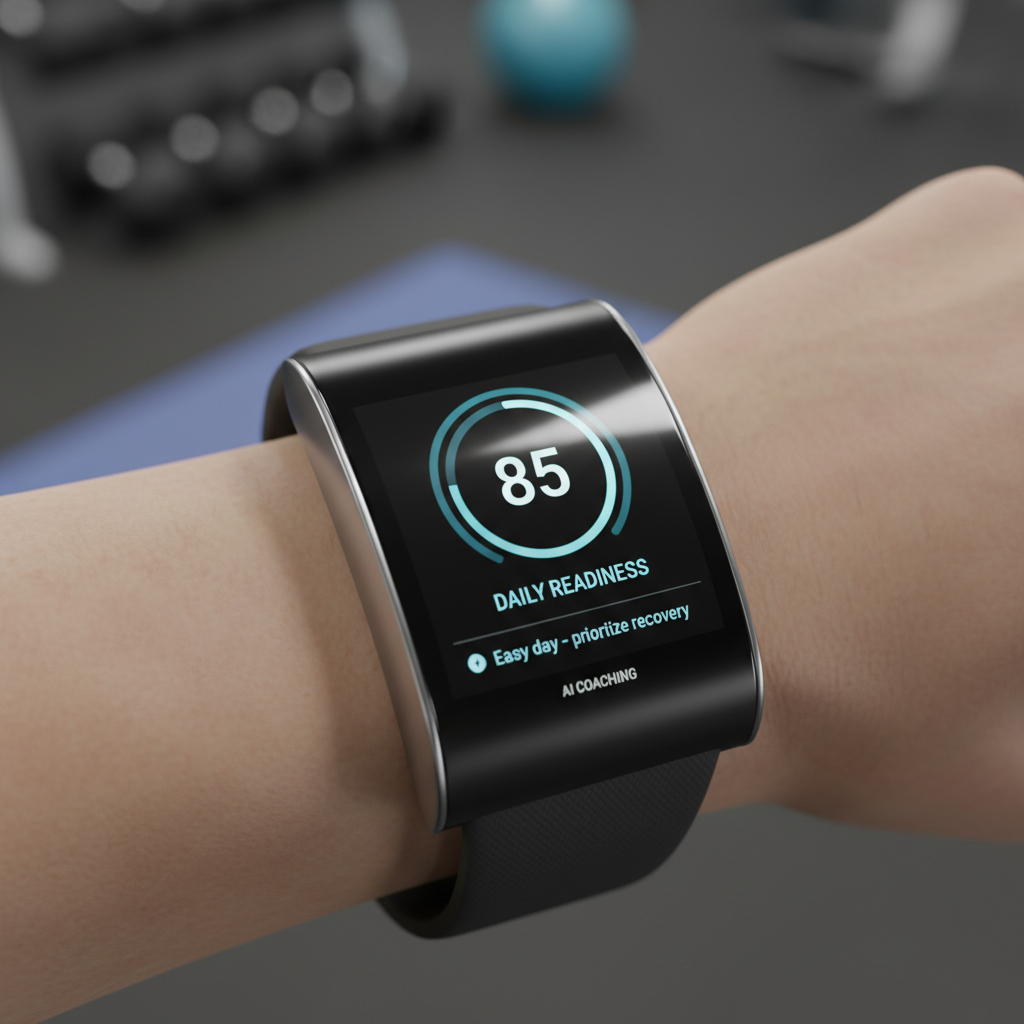
[Image suggestion: Close-up of a modern fitness tracker screen showing a daily “Readiness” or “Training Status” score with AI-generated guidance like “Easy day – focus on recovery.”]
The Big Shift: From “Data Logger” to Always-On AI Coach
Three years ago, a “premium” tracker mostly meant better sensors and brighter AMOLED screens. In 2025, the premium line is drawn around something else: who can interpret your heart rate and GPS data the smartest.[1][2][4]
What the New AI Layer Actually Does
Across brands, the pattern is the same: sensors feed data into machine-learning models that spit out coaching decisions, not just metrics.[2]
- Heart rate & HRV (heart rate variability) drive “readiness” or “recovery” scores to decide if you should do intervals, endurance, or rest.[1][2][4]
- GPS + pace + elevation are used to detect effort patterns, fatigue, and whether you’re hitting the right zones for your goal (5K vs marathon vs hiking).[3][4]
- Sleep and stress data tweak tomorrow’s plan automatically when you get a bad night or a brutal workday.[1][2]
Some platforms even use natural language to spell out your plan like a human coach: “You’ve ramped your cardio by 12% this month; tomorrow should be an easy 30-minute run plus stretching.”[2]
Devices That Don’t Just Track — They Think
If you want truly “smart” guidance from heart rate and GPS, a handful of premium players are clearly ahead in 2025.[3][4]
Garmin Forerunner 265 / 165: Training-Load Nerds’ Favorite
Price range: around $300–$450 depending on model and sales (Forerunner 165 being the more affordable, 265 the more premium).[3][4]
Garmin has quietly been doing AI-style coaching for years; now it’s front and center:
- Daily suggested workouts are generated from your recent heart rate data, training load, and recovery—ideal if you want to “just press start” and get a science-backed session.[3]
- Body Battery and stress tracking use HR and HRV to show how recovered you are and whether today should be a push or maintenance day.[4]
- PacePro & Race Day features transform GPS and elevation into race-specific pacing plans that adjust as your fitness changes.[4]
Best for: runners and multisport athletes who want structured plans, race prep, and very accurate GPS plus heart-rate-driven feedback.[3][4]
Whoop 5.0: Screenless, Subscription-First Coaching
Price: hardware often bundled with a monthly subscription; it’s one of the more expensive ecosystems but positioned as “coach-level” analytics.[3][4]
Whoop builds its entire experience around long-term data modeling:
- Strain, Sleep, and Recovery scores drive explicit coaching like “Today is high-recovery; a heavy session is recommended.”[3][4]
- Journal + AI insights correlate habits (alcohol, late meals, travel) with your recovery and performance over weeks.[4]
- On higher-end versions, blood pressure and AFib detection layer in health-risk signals beyond basic sport tracking.[4]
Best for: serious athletes and data-obsessed users who care more about readiness and recovery than wrist screens, and who don’t mind a subscription for deeper AI analysis.[3][4]
Fitbit Charge 6: AI Coaching for the Everyday Athlete
Price: roughly in the $150–$200 band, making it a relatively affordable gateway into AI-driven coaching.[4]
The Charge 6 looks like a classic slim tracker—but its brain got an upgrade from Google’s machine-learning work on Pixel Watch:
- Improved workout algorithms use heart rate, HRV, and GPS to better detect effort and zones.[4]
- Fitbit continues to roll out new insights and AI coaching, with stress resilience, heart health insights, and health recommendations added through 2024.[4]
- Integration with Google Maps and Google Pay adds smart features without overwhelming fitness focus.[4]
Best for: everyday users who want better-than-basic coaching, solid heart-rate and GPS accuracy, and an approachable price tag.[4]
Samsung Galaxy Watch (One UI Watch 6): The AI Generalist
Price range: usually $300–$400 depending on size and LTE features, but frequent discounts create strong value.[4]

Samsung leans into whole-body analytics:
- Energy Score combines heart rate, sleep, and activity to guide how hard you should train that day.[4]
- Body composition analysis and AGEs Index push beyond step counts into long-term metabolic and health risk signals.[4]
- Dual-frequency GPS gives run and ride data accurate enough for serious outdoor training.[4]
Best for: users who want a full smartwatch with strong coaching and health intelligence, not just a sport band.[4]
[Image suggestion: Comparison-style shot of three different premium wearables (Garmin-style sport watch, slim Fitbit-style band, and a full smartwatch) with captions like “Race Coach,” “Everyday Guide,” “Health Hub.”]
How to Turn AI Coaching into Real-World Results
Owning an AI-powered tracker is only half the battle. The real edge comes from configuring it like a coach, not a toy.
Step 1: Tell It Your Real Goal (Not the Polite One)
Most platforms ask for a goal: race distance, weight change, weekly activity time, or sleep target. Be specific:
- Garmin: set an upcoming race and target time so PacePro and daily suggested workouts align.[3][4]
- Whoop: prioritize performance or longevity and be honest in the journal prompts to train the model on your lifestyle.[4]
- Fitbit: choose a realistic Active Zone Minutes goal that nudges you just above your current baseline.[4]
Step 2: Wear It (Almost) 24/7 for 30 Days
AI models need baselines. Most readiness and training-load features only become reliable after a few weeks of continuous heart-rate, sleep, and GPS data.[1][2][4]
- Commit to one month of all-day wear, including sleep.
- Log at least 3–4 structured workouts per week so the system “sees” hard, moderate, and easy days.
Step 3: Obey the Easy Days
Modern trackers are surprisingly good at spotting overtraining using heart rate, HRV, and sleep disturbance.[1][2][4] When your device flags low readiness, treat that as a coach’s red flag, not a suggestion.
- Swap intervals for an easy zone-2 session or walk.
- Prioritize sleep and low-stress activity; your next hard session will benefit.
Step 4: Use the GPS Data for Smarter Routes
Don’t just record your run; use GPS patterns for deliberate training:
- Create routes with controlled hills if your watch offers hill-mode pacing (Garmin, Samsung).[3][4]
- Compare pace vs heart rate across similar routes to see if your aerobic base is improving.
- Use race-simulation features to rehearse pacing for your event distance.[3][4]
Choosing the Right “AI Coach” for Your Personality
All of these devices can use heart rate and GPS to coach you, but their style is wildly different. Match the platform to how you like to be pushed:
| Profile | Best Fit | Why |
|---|---|---|
| Goal-driven runner or triathlete | Garmin Forerunner 265/165 | Deep training metrics, structured workouts, race-focused features.[3][4] |
| Recovery-obsessed, loves long-term trends | Whoop 5.0 | Recovery and strain scores, habit correlation, premium insights.[3][4] |
| Busy professional wanting guidance, not geekery | Fitbit Charge 6 | Simpler scores, growing AI coaching, good value.[4] |
| Health-first, wants a do-it-all smartwatch | Samsung Galaxy Watch with One UI Watch 6 | Energy Score, body composition, strong GPS in a full smartwatch.[4] |
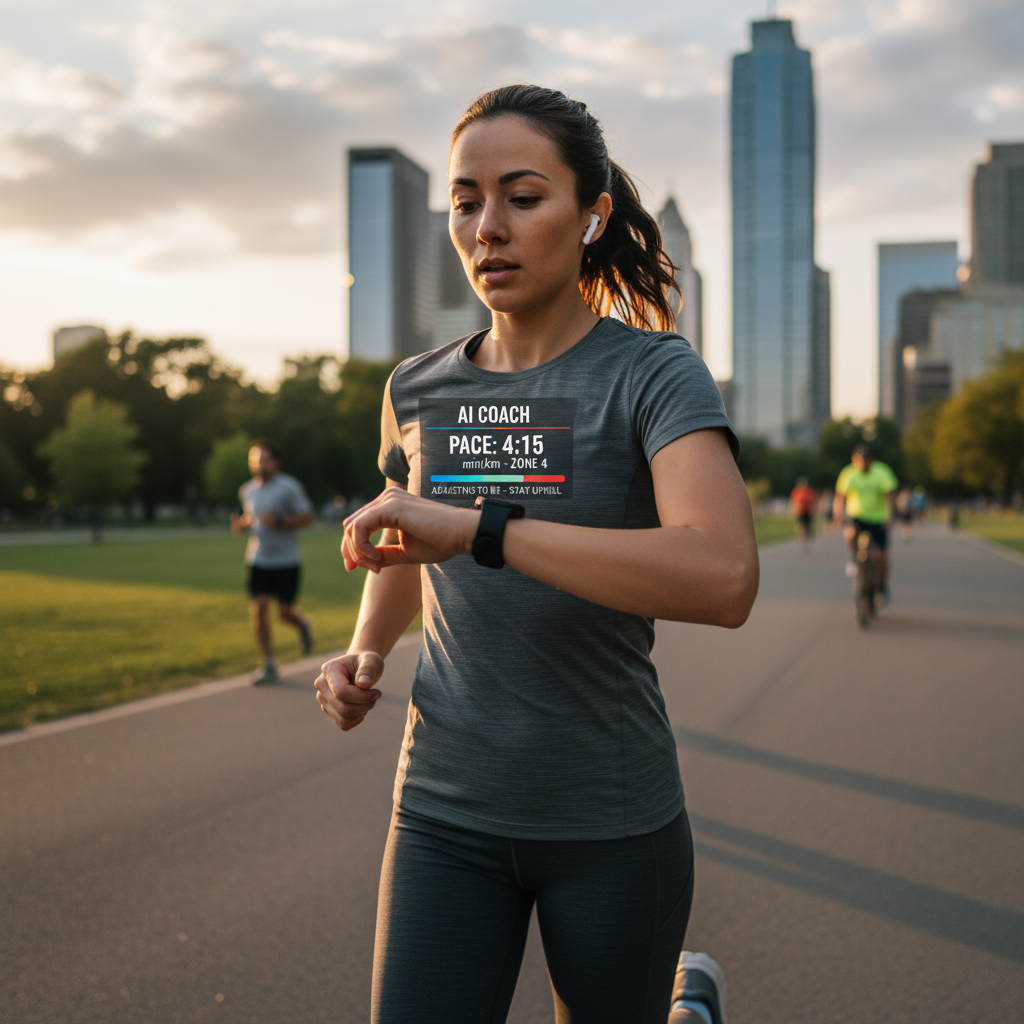
[Image suggestion: Over-the-shoulder shot of a runner glancing at their watch mid-run while on-screen guidance reads “Slow down to stay in Zone 2” or similar AI cue.]
Why Acting Now Beats Waiting for the “Next Model”
Wearable AI is evolving fast, and that creates a subtle FOMO trap: wait forever for the next upgrade, or start collecting data today so your coaching gets smarter by the time others are still comparing spec sheets.
Because these systems learn from your history, the real premium feature is time: the longer you wear it, the more accurately it can predict what your body needs.[1][2][3]
If you’re serious about making 2025 the year you stop guessing your training load, pick the device that matches your personality, commit to 30 days of honest data, and let the AI coach earn its spot on your wrist—one smart decision at a time.
Call to action: Choose one device from the table above that fits your profile, set a specific 8–12 week goal (like “run a 10K” or “lift 3x per week”), and give your new AI coach full permission to run the show. Revisit your readiness, pace, and recovery scores after those weeks—you’ll have hard proof of whether the coaching is working, not just pretty charts.