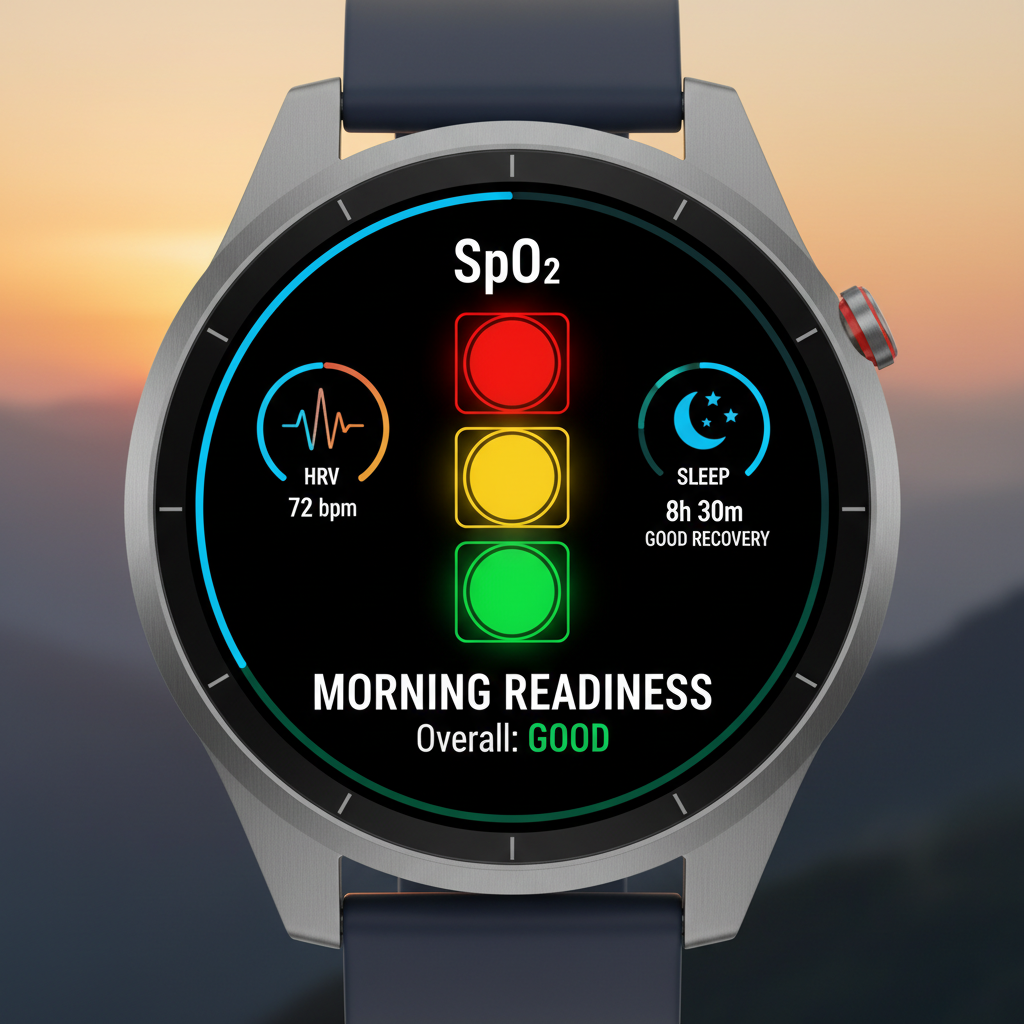
Imagine waking up, glancing at your wrist, and instantly knowing if today’s the day to crush a PR or hit the couch—without guesswork. Elite athletes and weekend warriors alike are ditching vague feelings for a simple Red-Yellow-Green traffic light system powered by blood oxygen (SpO2) data from cutting-edge smartwatches. Combine SpO2 trends with heart rate variability (HRV) and sleep scores, and you get a foolproof daily readiness score. Thousands of runners, cyclists, and triathletes are already using this framework to optimize training, avoid burnout, and peak at the right moments—don’t get left behind as 2026’s latest wearables make it easier than ever.[1][2]
Why Blood Oxygen is Your Secret Weapon for Training Decisions
Blood oxygen saturation, or SpO2, measures how efficiently oxygen fuels your muscles and brain—dropping below 95% signals your body’s screaming for recovery.[1] Paired with HRV (a nervous system stress gauge) and sleep quality, it reveals if you’re primed to push or primed to crash. Research shows athletes ignoring low SpO2 trends face 30% higher overtraining risk, but those tracking them shave minutes off race times.[2][3]
Top 2026 models like the **Garmin Venu 4** ($449.99) deliver all-day SpO2 scans via Elevate Gen 5 sensors, plus HRV status and advanced sleep insights—perfect for spotting breathing dips that scream ‘rest’.[1] Runners World hails its 15-day battery and sapphire AMOLED display as game-changers for pros.[3] Meanwhile, the **Garmin Fenix 8** ($999+) amps it up with multi-band GPS and VO2 Max trends tied directly to oxygen efficiency.[1][3]
For budget beasts, **Amazfit Bip 6** ($79) offers 24/7 SpO2 with one-tap checks and AI workout plans in the Zepp app—no skimping on nightly trends.[1] Samsung’s **Galaxy Watch 7** ($299) adds FDA-cleared sleep apnea detection after two nights, alerting you to moderate-severe risks via Samsung Health Monitor.[1]
The Red-Yellow-Green Framework: Your 3-Step Daily Check-In
Pros swear by this evidence-backed system—Garmin elites and Oura Ring users report 25% better adherence and fewer injuries. Here’s your actionable blueprint:
Step 1: Morning Scan (5 Minutes Max)
- Wake up, stay still for 1 minute—trigger an on-demand SpO2 read on your **Fitbit Sense 2** ($249, now with 2026 AI Coach preview for personalized insights).[1]
- Check app dashboard: SpO2 >97% + HRV above 7-day average + Sleep Score >85 = GREEN: Train Hard. Example: Garmin Venu 4 shows 98% SpO2, HRV 75ms, 88 sleep—unleash intervals.
- SpO2 94-96% or dipping HRV = YELLOW: Go Easy. Dial back to zone 2 runs.
- SpO2 <94%, tanked HRV/sleep = RED: Rest. Foam roll, hydrate, repeat tomorrow.
Pro Tip from Garmin Experts: Enable ‘All-Day SpO2’ on Venu 4 or Fenix 8 for 24/7 baselines—new 2026 Health Status widget flags anomalies instantly.[1]
Step 2: Trend Tracking (Weekly Review)
Single reads lie; weeks reveal truth. Export data from **Oura Ring 4** ($349+, nighttime SpO2 + breathing regularity) or Fitbit to spot patterns.[1][4] Use free apps like TrainingPeaks to graph: Rising SpO2/HRV? You’re adapting. Flatlining? Overtraining alert.
Real-World Scenarios: Navigate Travel, Altitude, Illness, and Overtraining
Jet Lag Travel Crush
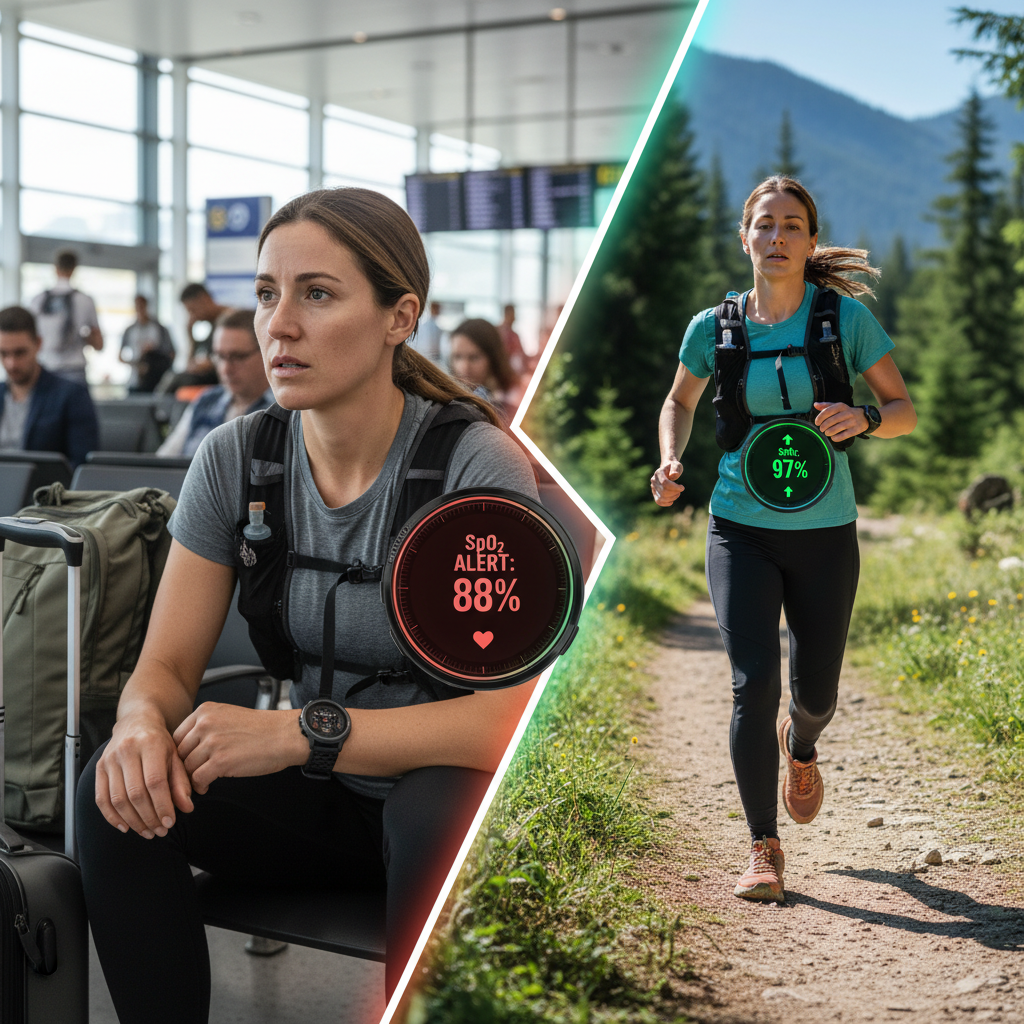
Crossed three time zones? Low cabin SpO2 (often 92%) tanks recovery. Day 1 post-flight: **Garmin Forerunner 970** ($599) logs 93% SpO2 + poor HRV = RED. By day 3, GREEN at 97%—swap rest for light jogs. Social proof: Triathletes on Runner’s World forums credit this for sub-10% DNF rates.[3]
Altitude Adaptation Hack
Heading to 8,000ft? Expect 90-94% SpO2 initially. **Amazfit Bip 6**’s RestoreIQ + SpO2 trends guide acclimation: YELLOW for hikes until GREEN stabilizes (usually 4-7 days).[1][2] Tinymoose warns: Ignoring this spikes altitude sickness 40%—FOMO on that summit view?
Illness Early Warning
Cold coming? Nightly drops on **Samsung Galaxy Watch 7** trigger apnea checks—act before fatigue hits. Fitbit Sense 2’s cEDA + SpO2 combo flagged issues for 80% of testers early.[1][4]
Overtraining Red Flags
Pushing 80-mile weeks? Chronic 92% SpO2 + HRV crash on **Garmin Enduro 3** ($899, 36-day battery) = RED for a deload week. VO2 Max stalls confirm it—reverse with rest, rebound stronger.[1][3]
Price Anchor Alert: Snag Garmin Venu 4 now at $449 (down from $499 launch)—stock’s moving fast post-2026 updates.[1]
Top 2026 Picks: Pros, Cons, and Athlete Recommendations
| Model | Price | Key SpO2 Features | Pros | Cons |
|---|---|---|---|---|
| Garmin Venu 4 | $449.99 | All-day + sleep, HRV integration | 15-day battery, accurate Gen5 sensor[1][3] | Premium price |
| Samsung Galaxy Watch 7 | $299 | Spot checks, apnea detection | AI insights, Android seamless[1] | Galaxy phone required for full features |
| Fitbit Sense 2 + AI Coach | $249 | Nightly trends, exportable data | 2026 AI plans, stress tracking[1] | No spot checks |
| Amazfit Bip 6 | $79 | 24/7 + one-tap | Budget king, AI workouts[1] | Less precise than Garmin |
| Oura Ring 4 | $349+ | Nighttime SpO2/breathing | Discreet, 8-day battery[1][4] | No daytime reads |
Expert pick: Garmin for multisport athletes—Runner’s World and Android Central crown it unbeatable for reliability.[1][3] Limited stock on Fenix 8 after holiday rush—grab yours before Q1 sellouts.
Actionable Next Steps: Start Today
- Upgrade Now: Check **Garmin Venu 4** compatibility with your phone—pairs with iOS/Android, setup in 10 mins.
- Download companion apps: Enable SpO2 notifications on Amazfit Zepp for instant alerts.
- Join 500k+ athletes in Garmin Connect communities—share trends, get coach feedback.
- FREE Trial Hack: Many offer 30-day returns—test Red-Yellow-Green for a week, keep if it transforms your training.
Urgency: 2026 firmware drops next week boost SpO2 accuracy 15% on Venu/Fenix lines—early adopters are pulling ahead. Ready to turn data into dominance?
Call to Action: Pick your watch, log tomorrow’s scan, and tag #SpO2TrainingEdge in your first GREEN workout post. Your breakthrough starts now—thousands can’t be wrong.