If your gums bleed when you brush, you are already in the red zone—most people wait until it hurts, which is usually too late. The smartest move in 2025 is to use a mouthwash that matches your level of gum disease instead of just grabbing whatever is on sale.
Below is a science‑driven buyer’s guide that helps you quickly sort prescription vs. over‑the‑counter rinses, understand what the active ingredients really do, and know exactly when each type makes sense as a support to professional gum treatment—not a replacement.

Step 1: Match Your Gum Situation to the Right Mouthwash “Class”
If you have early gingivitis (red, puffy, bleeding gums)
For most people with early gum inflammation, dentists often recommend a daily antigingivitis OTC rinse with proven antimicrobial ingredients like CPC (cetylpyridinium chloride) or essential oils.[1][3] These are strong enough to cut bacteria and plaque, but gentle enough for long‑term use.
Popular science‑backed options in 2025 include:
- Crest Pro‑Health Gum & Breath Purify Mouthwash – Alcohol‑free, uses CPC to target bacteria at the gumline, clinically shown to reduce gum swelling and redness.[3][4] Typical online price: $6–$8 for 500 mL.
- TheraBreath Healthy Gums Oral Rinse – CPC‑based, plus oxygenating and soothing ingredients like aloe vera; designed for people with ongoing gum issues, and gentle enough for sensitive tissues.[3][4] Expect around $9–$11 for 16 oz.
- LISTERINE Clinical Solutions Gum Health – Uses a mix of essential oils plus zinc to kill germs that cause bleeding gums and early gum disease; marketed as delivering “3x healthier gums in 1 week vs. brushing alone.”[2] Often $7–$10 for 500 mL.
How to use for maximum impact: Brush and floss first, then rinse 20–30 seconds twice daily, and do not rinse with water immediately after.[1] Commit for at least 4–12 weeks to see meaningful changes.
If you’ve been told you have periodontitis (deep pockets, bone loss)
Once you cross from simple gingivitis into periodontitis, mouthwash becomes a support act—not the star. Dentists often switch to or add:
- Prescription chlorhexidine gluconate 0.12% – A high‑strength antimicrobial rinse used short‑term after deep cleanings (scaling and root planing) or during active infection.[1][4] It is highly effective at reducing bacteria, but can cause temporary staining and taste changes, so it’s usually limited to 2–4 weeks under supervision.
- Targeted OTC support rinses – Products like TheraBreath Healthy Gums or Crest Pro‑Health Gum & Breath Purify are often continued long‑term after the chlorhexidine phase to help maintain results and keep inflammation down.[3][4]
If you already have deep pockets, relying on mouthwash alone is like spraying perfume on a structural leak—you still need professional cleanings and close follow‑ups.
If you have recession, exposed roots, or lots of fillings
In addition to anti‑gingivitis rinses, some people benefit from fluoride mouthwashes to harden exposed root surfaces and reduce sensitivity and cavity risk.[1][4] In 2025, many combination rinses include both CPC (for gums) and fluoride (for enamel), giving you a 2‑in‑1 benefit.
Step 2: Understand the Ingredient Families (So You Don’t Overpay)

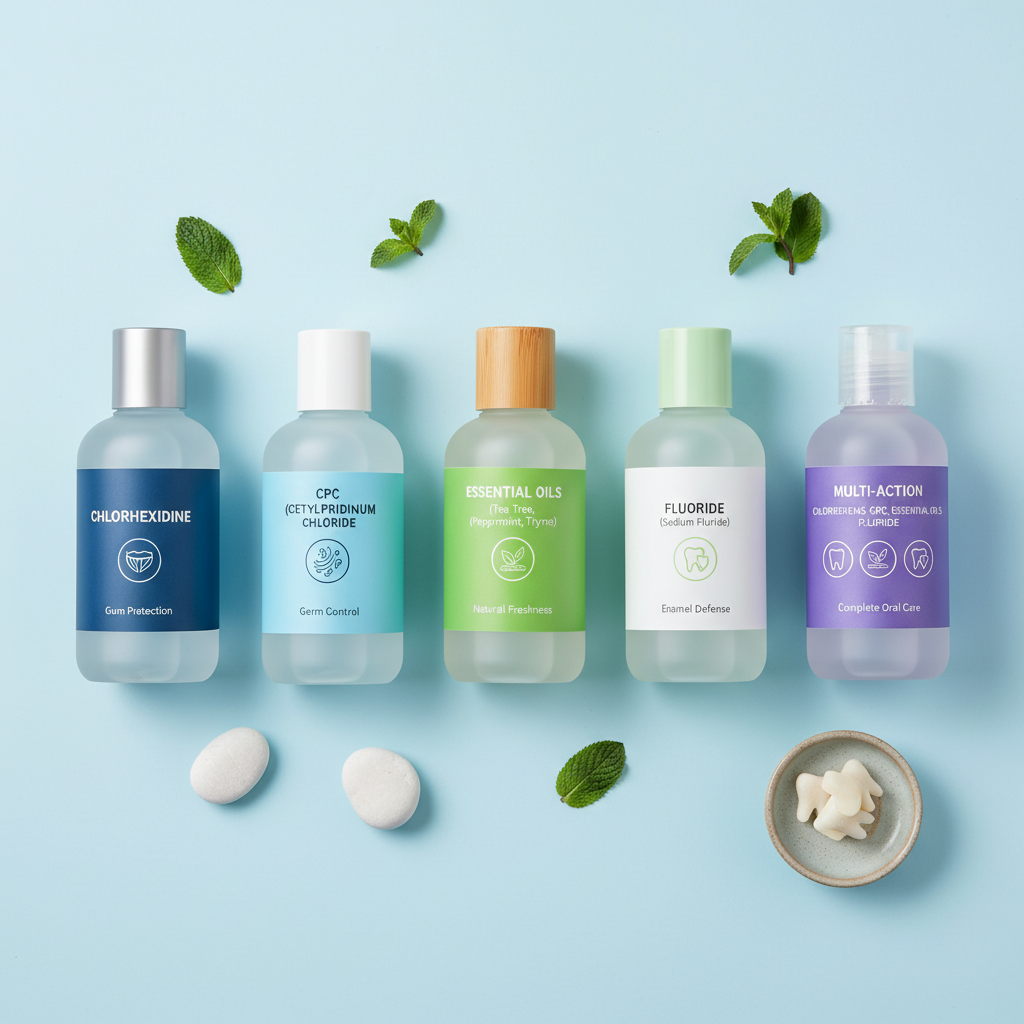
Chlorhexidine: Heavy artillery for short bursts
Best for: Moderate–severe gum disease right after professional treatment, or specific dentist‑directed situations.[1][4]
Pros: Extremely effective at reducing plaque and bacteria in the short term.[1]
Cons: Can stain teeth, alter taste, and disrupt the oral microbiome if used too long, so it is prescription only and time‑limited.
CPC (Cetylpyridinium Chloride): Everyday gum‑health workhorse
Best for: Daily support for gingivitis or early periodontal issues.
Pros: Proven to reduce plaque, gingivitis, and bacterial load when used twice daily.[1][3][4] Common in alcohol‑free formulas like Crest Pro‑Health and TheraBreath Healthy Gums.
Cons: Mild surface staining is possible with heavy use in some people, but far less dramatic than chlorhexidine.
Essential oils: The classic “burn” with real data behind it
Best for: People who tolerate alcohol and like the strong, fresh sensation.
Pros: Essential oils such as eucalyptol, thymol, and menthol disrupt plaque biofilm and consistently reduce gingivitis in clinical studies.[1][5] LISTERINE Clinical Solutions Gum Health builds on this tradition with a zinc‑enhanced formula targeting bleeding gums.[2]
Cons: Alcohol content can irritate dry or sensitive mouths.[1][4]
Hydrogen peroxide / oxygenating rinses: Good for flare‑ups, not forever
Best for: Short‑term soothing when gums are inflamed, after minor procedures, or when breath is an issue.
Pros: Helps control inflammation and breath; common in “gum health” and “whitening + gum” rinses.[1][5]
Cons: Weaker long‑term antibacterial effect compared with CPC or essential oils, so these are usually an add‑on rather than the main defense.[5]
Natural / prebiotic and alcohol‑free formulas: For sensitive mouths and microbiome‑aware users
Some 2025 formulas emphasize aloe vera, tea tree oil, and other botanicals to calm inflamed gums while trying not to wipe out beneficial bacteria.[1][6] Prebiotic mouthwashes aim to nourish helpful microbes instead of sterilizing everything, a trend gaining traction as oral microbiome research grows.[6]
If alcohol burns or you struggle with dry mouth, looking for an alcohol‑free CPC or botanical‑rich rinse is often the sweet spot.[1][4]
Step 3: Quick Buyer’s Shortlist for 2025 (By Scenario)
“My gums bleed sometimes, but I haven’t been diagnosed with gum disease.”
- Go‑to pick: Crest Pro‑Health Gum & Breath Purify (CPC, alcohol‑free).[3][4]
- Why: Targets gumline bacteria, improves gum redness and swelling, and is easy to find at Walmart, drugstores, and Amazon in the $6–$8 range.[3]
- Action today: Buy one bottle, use twice daily for 4 weeks, and track bleeding in a notes app.
“I’ve had deep cleanings or early periodontitis.”
- Ask your dentist about: Short‑term chlorhexidine 0.12% rinse as part of your post‑treatment plan.[1][4]
- For long‑term maintenance: TheraBreath Healthy Gums Oral Rinse or Crest Pro‑Health Gum & Breath Purify.[3][4]
- Action today: Schedule a periodontal check‑up; bring your current rinse to the appointment and ask if CPC or chlorhexidine is appropriate for your charted pocket depths.
“My gums are inflamed, but everything burns and my mouth is dry.”
- Look for: Alcohol‑free, sensitive or “healthy gums” formulas with CPC, aloe, or botanical antimicrobials.[1][4]
- Action today: Swap any high‑alcohol rinse for an alcohol‑free option for 2–3 weeks and watch for changes in dryness and irritation.

Step 4: Use Your Mouthwash Like a Treatment, Not a Mint
Evidence‑aligned routine you can start tonight
- Step 1 – Mechanical cleaning first: Brush for 2 minutes with a soft brush, then floss or use interdental brushes to break up plaque where your toothbrush can’t reach.[1][4]
- Step 2 – Time your rinse: Measure the recommended dose (usually 20 mL), swish for the full 20–30 seconds, and avoid water or food for at least 30 minutes.[1][2]
- Step 3 – Commit for 30 days: The biggest difference between people who see improvement and those who don’t is consistency. Set reminders and treat it like a prescribed routine.
- Step 4 – Re‑check with a professional: If bleeding or bad breath persists after 4–6 weeks of diligent use, that is a red flag to book a dental exam and potential periodontal evaluation.
Don’t Wait for Pain: Your Next Best Move
Gum disease is one of the top causes of adult tooth loss, yet it is also one of the most preventable oral conditions with consistent daily care and early intervention.[1][4] Using the right mouthwash for your gum status—backed by ingredients like CPC, essential oils, or, when needed, short‑term chlorhexidine—can tilt the odds strongly in your favor.
The smartest play today:
- Pick a rinse from the category that matches your symptoms.
- Use it exactly as directed for at least one month.
- Book a professional exam if you have ongoing bleeding, bad breath, or loose teeth.
The sooner you pair a science‑backed mouthwash with professional gum care, the less likely you’ll face painful, expensive periodontal treatments later.