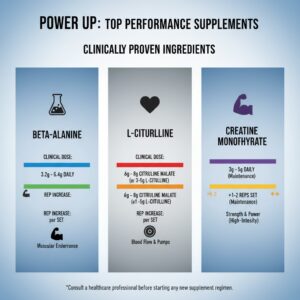
You do not build muscle because a tub screams “EXTREME PUMP” or “MAX GAINZ.” You build muscle when the label quietly matches what current research calls clinically effective doses for strength and hypertrophy – scoop after scoop.
This guide shows you exactly how to read a pre-workout label like a coach, not a consumer – using 2025 research standards and real product examples – so you can pick a formula that actually supports muscle growth instead of just giving you itchy skin and a caffeine rush.
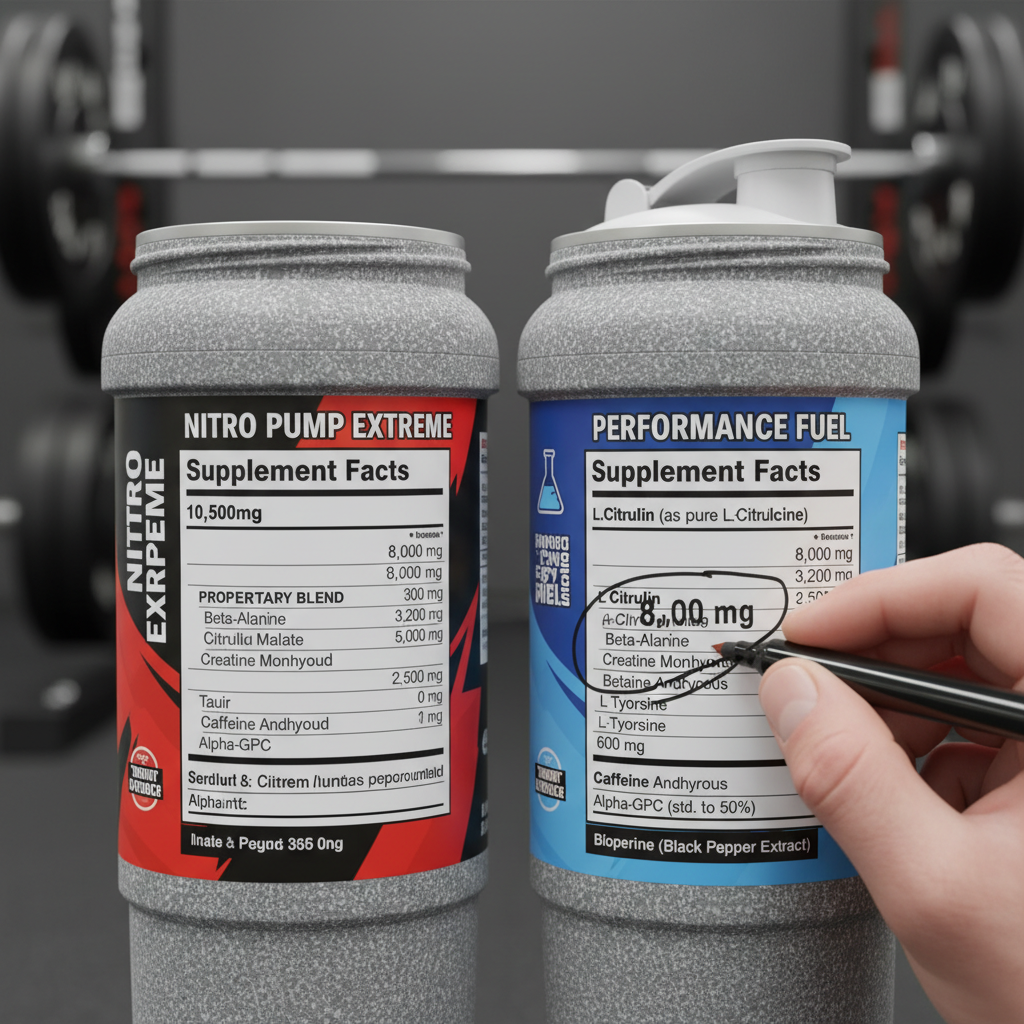
[Image suggestion: Close-up of two pre-workout labels side by side – one with proprietary blends and tiny doses, one with fully disclosed, clinically dosed ingredients – with a hand circling key numbers on the good label.]
The 5 Non-Negotiable Muscle-Building Checks for Any Pre-Workout
To keep this truly actionable, here’s the punchline first: a muscle-focused pre-workout in 2025 should tick these five boxes, based on current sports nutrition research and expert-reviewed product testing.[1][2][3][5][7]
1. Creatine: 3–5 g (or You Take It Separately)
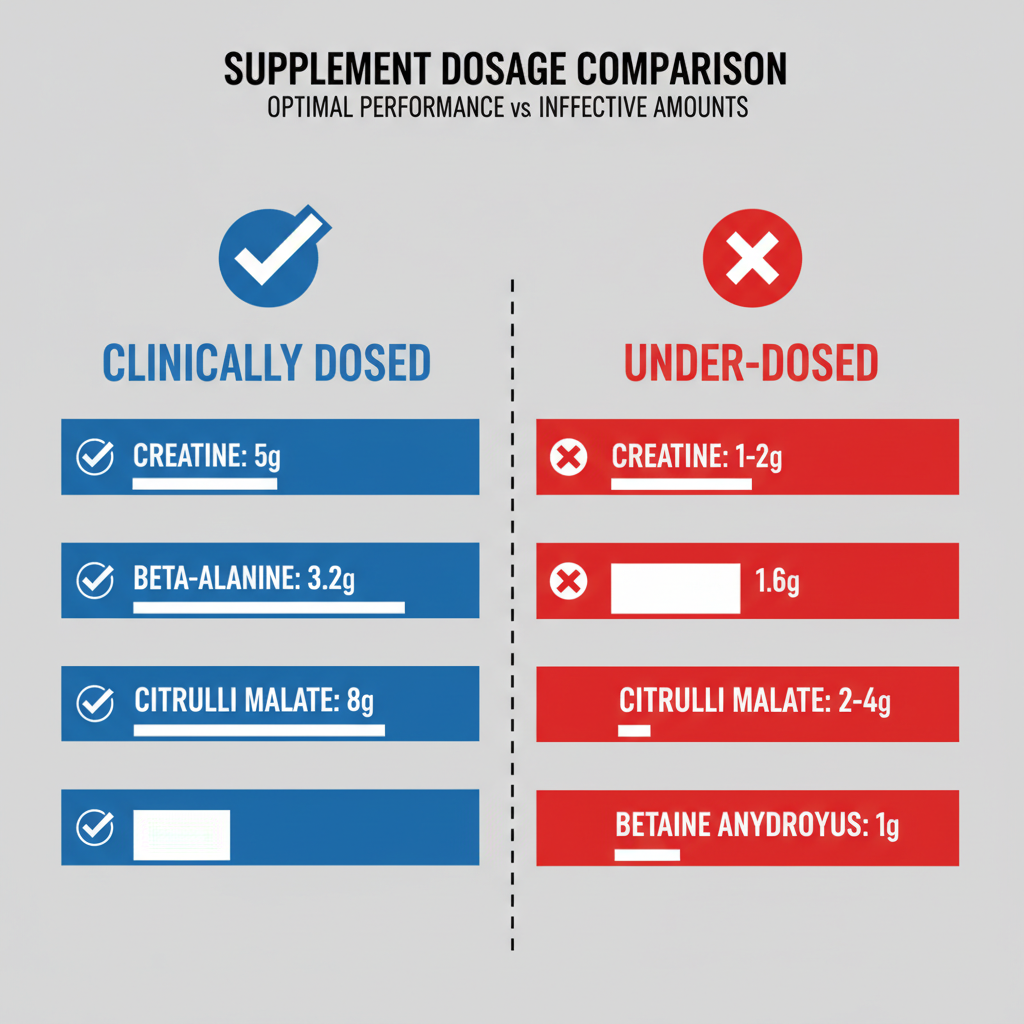
Creatine monohydrate is still the most researched muscle-building supplement available, repeatedly shown to increase strength, power, training volume, and lean mass over time.[5][7] For hypertrophy, you want 3–5 g per day, regardless of timing.[5][7]
How to apply it:
- Best practice: Either choose a pre-workout with ~3 g creatine per serving or commit to a separate creatine monohydrate powder.
- Red flag: “Contains creatine” but the label shows <2 g, or hides it in a proprietary blend.[1][3]
Real product examples (2025):
- Optimum Nutrition Gold Standard Pre-Workout – 3 g creatine per scoop, widely recommended as a muscle-gain pre-workout by Fortune and Garage Gym Reviews, price roughly $25–$35 for ~30 servings (about $0.80–$1.15/serving).[2][3][4]
- Transparent Labs Bulk – includes creatine in a full, research-backed dose in their Bulk formula (U.S. pricing typically $49–$55 for ~30 servings). Transparent labeling, no proprietary blends.[4]
2. Beta-Alanine: At Least 3.2 g for Serious Training Blocks
Beta-alanine raises muscle carnosine, which buffers acid and helps you grind out more reps in the 60–240 second range – prime hypertrophy territory.[1][4][5] Effective daily dosing usually starts at 3.2 g/day, often split across the day.
- Gold standard muscle dose: ≥3.2 g beta-alanine per day.[5]
- Serviceable but light: 1.6–2 g may help a bit, but you are underclinical if that’s your only source.[1][4]
Product snapshots:
- Transparent Labs Bulk – provides a full 4 g beta-alanine per serving in many markets, aligning with research-backed protocols.[4]
- Optimum Nutrition Gold Standard Pre-Workout – 1.5–1.6 g beta-alanine per scoop, which is beneficial but technically below full clinical loading if you are not getting more elsewhere.[1][2][4]
3. Citrulline (or Nitrates) for Pumps That Actually Aid Performance
In 2025, serious pre-workouts lean into L-citrulline or citrulline malate to boost nitric oxide, blood flow, and nutrient delivery – which can translate into better volume and recovery across sets.[1][3][4][5]
- Clinically used range: 6–8 g L-citrulline or citrulline malate pre-workout for performance and pump benefits.[3][4][5]
- Marketing-only dose: <3–4 g, especially when buried in a proprietary blend.
Real-world examples:
- Transparent Labs Bulk – 8 g citrulline malate per serving, intentionally matching the most commonly studied dose, highlighted by Men’s Health as a key strength and recovery driver.[4]
- Legion Pulse – positioned as a clinically dosed formula with research-backed levels of L-citrulline; Garage Gym Reviews notes its clinically dosed ingredients and performance benefits.[3]
4. Betaine Anhydrous: 2.5 g Is the Sweet Spot
Betaine may support power output, work capacity, and lean mass in some studies when taken at around 2.5 g/day. Many “muscle” formulas either skip it or underdose it to save cost.
- Target dose: ~2.5 g betaine per serving for a genuine muscle-supportive formula.
- Half-measures: 1–1.5 g is common in budget formulas – technically an inclusion, but not at the level most studies use.
Look for brands that explicitly showcase 2.5 g on the label rather than hiding it in a proprietary blend. Transparent Labs, Legion, and other “evidence-based” brands frequently highlight this dosing in their marketing.
5. Caffeine: Dose for Performance, Not Just Jitters
Caffeine improves strength, power, and endurance, but only when dosed relative to bodyweight and tolerance.[1][2][5][7]
- Evidence-based range: ~3–6 mg/kg bodyweight, but for most lifters that ends up around 150–300 mg pre-workout.[5][7]
- Lifestyle reality: If you already drink a lot of coffee or train late, a lower-caffeine or non-stim pre-workout plus standalone creatine may be smarter.[3][7]
Examples:
- Optimum Nutrition Gold Standard Pre-Workout – 175 mg caffeine per serving, a moderate and widely acceptable dose.[2][3]
- Legion Pulse – available in both stim and non-stim versions, giving you control over caffeine load while keeping other ingredients clinically dosed.[3]
[Image suggestion: Simple infographic-style table showing “Clinically Dosed vs Under-Dosed” for creatine, beta-alanine, citrulline, betaine, with checkmarks and X icons.]
How to Rip Through a Label in 30 Seconds (With 2025 Product Examples)
Here’s a quick label-decoding system you can use on any pre-workout in-store or online – using current 2025 product lines and pricing as concrete anchors.[1][2][3][4]
Step 1: Check for Transparent Labeling (No Proprietary Blends)
Proprietary blends make it impossible to know if doses are clinically relevant. Many 2025 “budget” or influencer-backed formulas still hide under blends.
- Green flag brands: Transparent Labs Bulk, Legion Pulse, Optimum Nutrition Gold Standard – all list individual ingredient amounts clearly.[2][3][4]
- Yellow flag: blends described as “pump matrix” or “anabolic complex” without exact milligram amounts for each ingredient.
Step 2: Do the Creatine Math
If your pre-workout contains <3 g creatine, plan to add a separate creatine monohydrate (often as cheap as $0.10–$0.15 per 5 g serving) or consider a different pre-workout.
- Cost anchor: A tub of Optimum Nutrition Gold Standard at ~$30 for 30 servings plus a standalone creatine (~$15–$25 for 60–100 servings) can still keep you under $1.25–$1.40 per full daily stack while remaining fully dosed for hypertrophy.[2][3][4]
Step 3: Compare Citrulline & Beta-Alanine Against Research Doses
Use this mental cheat sheet:
- Citrulline: Aim for 6–8 g per serving. Transparent Labs Bulk and Legion Pulse hit this range; many mainstream “pump” products do not.[3][4]
- Beta-alanine: ≥3.2 g if you want full loading via pre-workout alone; 1.6 g is “helper level” but not complete.[1][4][5]
Step 4: Scan Price Per Serving – Not Just Tub Price
Brands love big tub price shock to push you toward cheaper, under-dosed competitors. Always divide price by servings:
- Optimum Nutrition Gold Standard Pre-Workout: Frequently around $0.80–$1.15 per serving, with 3 g creatine, moderate beta-alanine, 175 mg caffeine – strong value for lifters who will top up beta-alanine or creatine separately if needed.[2][3]
- Transparent Labs Bulk: Roughly $1.60–$1.90 per serving, but includes full clinical doses of citrulline, beta-alanine, and other muscle-supportive ingredients, appealing to those who want everything in one scoop.[4]
- Podium Athlete Pre (UK): About £33.49 for 24 servings (~£1.39 per serving), positioned for high-intensity performance; good formula but check doses against the clinical benchmarks above.[1]
Step 5: Ignore Flashy Extras Until the Fundamentals Are Right
BCAAs, “nootropics,” and exotic plant extracts sound great, but evidence for direct extra hypertrophy on top of a solid diet and properly dosed core ingredients is limited or mixed.[1][5][6]
- Only consider these as tie-breakers after creatine, beta-alanine, citrulline, betaine, and caffeine are dialed in.
- Remember: many clinically under-dosed formulas use these extras to distract from weak fundamentals.
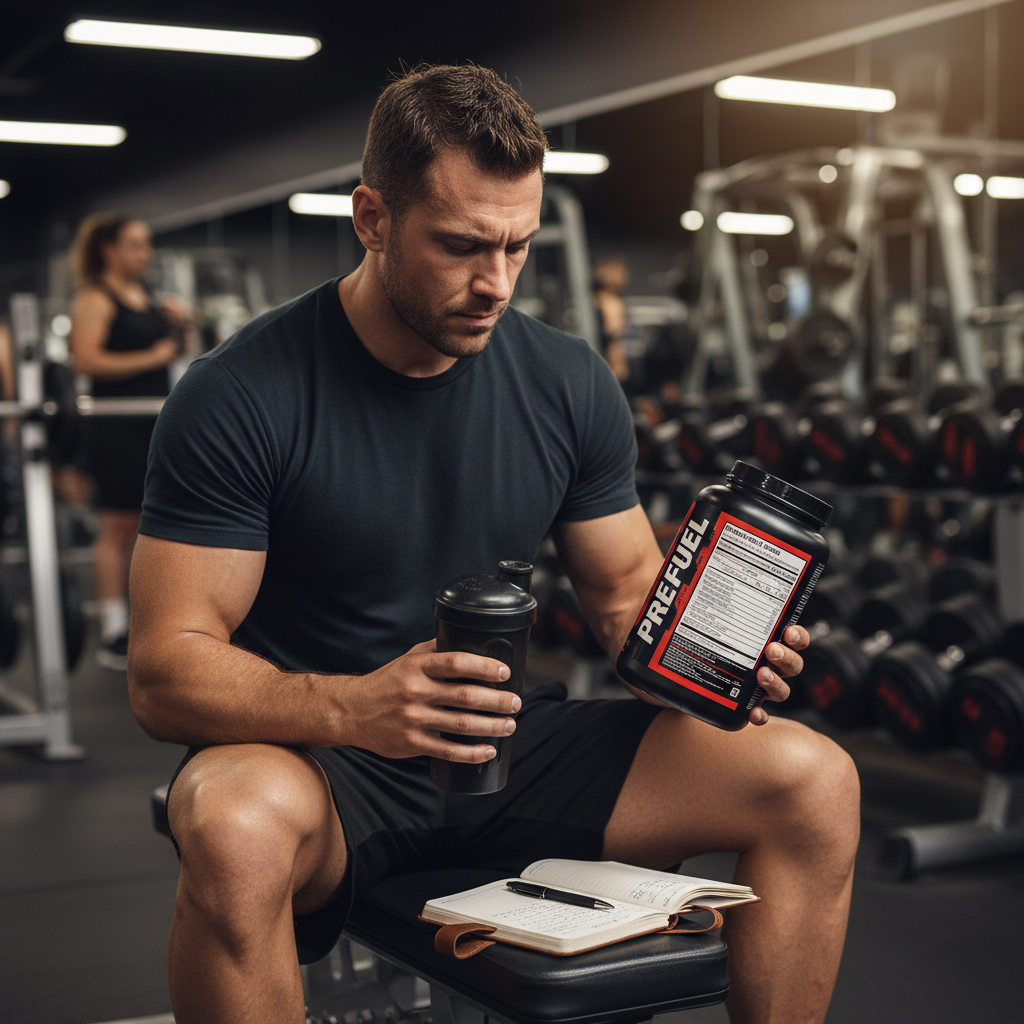
[Image suggestion: Gym shot of an athlete with a notebook and shaker, checking a supplement label before training, emphasizing informed choice and long-term progress.]
The 2025 “Clinically Dosed Muscle Pre-Workout” Checklist
Use this quick checklist before you buy (or before you toss your current tub into the bin):
- Creatine: 3–5 g total per day (in pre-workout or separate).[5][7]
- Beta-alanine: 3.2–6.4 g/day total from all sources for full carnosine loading.[5]
- Citrulline: 6–8 g pre-workout for blood flow and performance.[3][4][5]
- Betaine: ~2.5 g for power and lean-mass support.
- Caffeine: 150–300 mg (or a non-stim option if you are sensitive).[1][2][3][7]
- Label transparency: No proprietary blends, all ingredient doses listed clearly.[1][3][4]
- Price per serving: Benchmark against clinically dosed leaders like Transparent Labs Bulk, Legion Pulse, and Optimum Nutrition Gold Standard to see whether a “deal” is really just under-dosing in disguise.[2][3][4]
What to Do Today (So Your Next Scoop Actually Moves the Needle)
If you want actionable steps, here is a simple 3-move plan you can execute immediately:
- Step 1 – Audit your current tub: Grab it, check creatine, beta-alanine, citrulline, betaine, and caffeine against the checklist above. If two or more are missing or clearly under-dosed, accept that you are mostly paying for flavor and stimulants.
- Step 2 – Decide your strategy:
– If you like your current stim profile but doses are low, add a cheap standalone creatine and beta-alanine to hit clinical ranges.
– If the whole formula is weak or proprietary, shortlist evidence-based options like Transparent Labs Bulk, Legion Pulse, or Optimum Nutrition Gold Standard Pre-Workout and compare price per clinically dosed serving.[2][3][4] - Step 3 – Lock in a 6–8 week training block: Any pre-workout is only as good as the progressive overload you pair it with. Commit to tracking loads, reps, and volume for at least 6–8 weeks while using a clinically dosed setup; that’s the timeframe where creatine and beta-alanine really start paying off.[5][7]
The market in 2025 is flooded with “best pre-workout” claims, but once you understand clinical dosing and label transparency, most products eliminate themselves. The few that are left – even if they cost a bit more per serving – are the ones that can actually support more volume, more strength, and more muscle over time.
Your next scoop can be either a habit… or a strategy. Use the checklist, audit your current pre-workout today, and if it fails the dosing test, upgrade to a clinically backed formula or stack so every rep you grind out in the gym has science behind it, not just marketing.