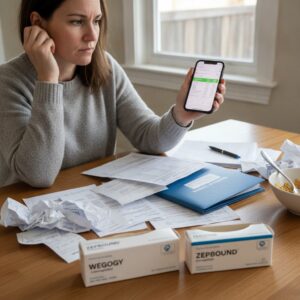
If you are staring down a 50‑pound weight‑loss goal in 2025, the real decision is no longer “diet or gym,” it is “medication, lifestyle program, or both—and in what order?”.[4] The safest, most sustainable path for most people is a structured lifestyle program that can be amplified—but not replaced—by GLP‑1 and dual‑agonist medications when medically appropriate.[2][8]
Why GLP‑1s Are Reshaping 50‑Pound Weight Loss
Modern GLP‑1 and dual‑agonist drugs such as semaglutide (Wegovy) and tirzepatide (Zepbound) work by mimicking gut hormones that reduce appetite, slow stomach emptying, and help regulate blood sugar, which leads many patients to eat substantially less without constant willpower battles.[6] Large trials show average total body‑weight loss of roughly 12% with Wegovy and around 18% with Zepbound at full doses, meaning someone starting at 280 pounds might lose about 34–50 pounds on Wegovy and 50 or more pounds on Zepbound with close medical supervision.[6][8] In 2025, leading cardiology and obesity societies explicitly state that these medications are more effective at producing large, clinically meaningful weight loss than lifestyle change alone, but also stress that behavior change is still required for best outcomes.[8][4]
These drugs are now recommended by organizations such as the World Health Organization for adults with obesity when combined with structured nutrition, activity, and counseling rather than used as stand‑alone quick fixes.[4] Experts emphasize that obesity is a chronic condition, so the expectation is long‑term or even indefinite treatment for many patients, similar to blood‑pressure or cholesterol medications, rather than short “crash” courses.[4]
[Image idea: A split visual with a GLP‑1 injection pen on one side and a coached group lifestyle session (nutrition plus exercise) on the other, illustrating the choice between meds, lifestyle, or both.]
What Happens When You Stop GLP‑1s?
One of the biggest sources of FOMO right now is social media success stories showing dramatic 40–80 pound drops in a year on GLP‑1s, but early discontinuation data show that much of that weight can gradually return if underlying habits never change.[6][7] Guidance published in 2025 notes that ongoing physical activity, resistance training two to three times per week, and higher‑protein eating patterns are critical to reduce weight regain once medication is tapered.[7][5]
There is also growing concern about muscle and bone health: rapid weight loss on GLP‑1s can lead to 15–25% of the lost weight coming from lean tissue, which may lower strength and metabolic rate unless patients deliberately prioritize resistance training and sufficient protein.[5][2] That is one reason major academic centers now urge patients on these drugs to think beyond the scale and commit to comprehensive programs that include strength work, nutrition quality, sleep, and mental‑health support.[5]
How Structured Lifestyle Programs Perform on Their Own
High‑quality lifestyle programs—especially those that combine dietitian‑designed eating plans, exercise progression, sleep training, and behavioral coaching—can realistically deliver 7–10% body‑weight loss over 6–12 months, with some participants reaching 15% or more when adherence is strong.[3] For someone aiming to lose 50 pounds, that typically means 20–35 pounds from lifestyle alone in a year, with additional losses possible over a longer horizon if changes are sustained.[3]
Commercial metabolic health programs that integrate intensive lifestyle curricula with optional medications have reported around 13–17% weight loss at 12 months, with participants still losing 10% or more of their body weight even when GLP‑1 access is interrupted, underscoring how powerful coaching and behavior change can be on their own.[3] Academic centers likewise report that much of the long‑term success and cost‑effectiveness of GLP‑1s hinges on nutrition and lifestyle counseling rather than prescription alone.
Real‑World Programs You Can Actually Join
In 2025, several programs explicitly combine medical evaluation, GLP‑1 prescriptions when indicated, and structured lifestyle coaching, often delivered virtually, with subscription pricing that competes with traditional commercial weight‑loss plans.[3] Some programs bundle app‑based tracking, live coaching, and physician visits into monthly fees that can run from under 100 USD for lifestyle‑only tiers to several hundred dollars per month when GLP‑1 medications and lab monitoring are included, not counting the drug cost itself when insurance coverage is limited.[3]
Traditional in‑person hospital‑based weight‑management clinics continue to offer multidisciplinary programs led by physicians, dietitians, psychologists, and exercise specialists that can be particularly valuable for people with complex medical histories such as diabetes, heart disease, or prior bariatric surgery.[6] These clinics frequently emphasize gradual lifestyle change first while assessing whether medications like semaglutide, tirzepatide, or older options (for example, phentermine–topiramate) are appropriate add‑ons for patients with higher risk profiles or larger weight‑loss targets.[6][8]
GLP‑1 Shots vs Lifestyle Programs: Key Differences
The table below summarizes core trade‑offs to consider if you want to lose about 50 pounds safely in 2025.[4][8]
| Aspect | GLP‑1 / Dual‑Agonist Medications | Structured Lifestyle Programs | Combined Approach |
|---|---|---|---|
| Typical 12–18 month weight loss | About 12–18% of body weight on average with full‑dose semaglutide or tirzepatide.[6][8] | Often 7–10%, sometimes higher with high adherence.[3] | Meta‑analyses suggest greater total loss when meds are paired with lifestyle.[2][3] |
| Speed of results | Noticeable appetite change within weeks; major loss over 6–12 months.[6] | Gradual but steady; more dependent on adherence and environment.[3] | Faster early drops with better skill‑building for maintenance.[2] |
| Cost | List prices often exceed 900–1,000 USD per month for brand‑name GLP‑1s before insurance.[6][8] | Programs range from under 100 USD per month for digital coaching to higher fees for clinic‑based care.[3] | Highest short‑term cost but can be more cost‑effective if it reduces complications and regain. |
| Side effects and risks | Commonly nausea, vomiting, diarrhea, constipation; rare but serious risks like pancreatitis and gallbladder issues require medical oversight.[6][8] | Generally low‑risk; possible overuse injuries or nutrient gaps if poorly structured. | Requires careful monitoring of nutrition and muscle mass during rapid loss.[2][5] |
| What happens when you stop | Appetite usually returns; partial weight regain common unless strong habits are in place.[6][7] | Skills and routines can persist if you keep practicing them.[3] | Best chance of maintaining more of the loss while potentially tapering medication later.[4] |
| Who it suits best | People with obesity and weight‑related conditions who have struggled with lifestyle‑only attempts and are appropriate candidates medically.[8] | Those preferring non‑drug approaches or with contraindications to medications. | People aiming for large losses (around 50 pounds or more) who want both speed and long‑term stability.[2][4] |
Latest 2025 Guidance and Trends You Should Know
International organizations now emphasize that GLP‑1 therapies should be framed as long‑term treatment options combined with structured diet and activity plans, not short‑term vanity tools.[4] Major cardiology and obesity societies highlight that these drugs not only reduce weight but also improve cardiometabolic markers like blood pressure, blood sugar, and cholesterol, particularly when integrated into comprehensive programs.[2][8]
Psychologists and mental‑health researchers are also paying close attention to how GLP‑1s change people’s relationship with food, reporting that many patients experience less intrusive “food noise” but may still need counseling to address emotional eating, body image, and identity shifts after major weight loss.[9] This has led to a surge in weight‑management programs that deliberately integrate mental‑health support so patients do not simply substitute one coping mechanism for another.[9]

[Image idea: An infographic‑style image showing three pillars—Medication, Lifestyle, Mindset—with icons (syringe or pen, plate and dumbbell, brain/heart) supporting a central “Long‑Term Health” goal.]
An Action Plan to Lose 50 Pounds Safely
For a 50‑pound target, a realistic safe pace is usually around 1–2 pounds per week in the early months, slowing as you approach goal and your body adapts, which makes 12–18 months a common timeframe for sustainable loss.[6][7] The safest strategy is to treat this as a health transformation project rather than a sprint, with clear phases that can include medications, but always anchored in habits you can keep.
Step‑by‑Step Strategy
First, get a medical evaluation that includes body‑mass index, waist circumference, blood pressure, fasting labs, medication review, and screening for conditions such as diabetes, sleep apnea, or heart disease, because these strongly influence whether GLP‑1s are appropriate and how closely you should be monitored.[4][8] At the same time, look for programs that give you access to a registered dietitian, structured movement plan, and behavioral coaching, either through a local health system or a credible virtual metabolic health service.[3]
Second, commit to a lifestyle baseline for at least 8–12 weeks: emphasize a higher‑protein, minimally processed eating pattern; build up to most days of the week with walking or other moderate activity; and add resistance training two to three times per week to protect muscle.[5][7] Track simple metrics like steps, weekly strength sessions, and protein servings to build confidence and demonstrate to yourself—and your clinician—that you can follow through on behavior change, which will only amplify the effect of any medication.[5]
Third, if you and your clinician decide GLP‑1 or dual‑agonist therapy makes sense, think in terms of a 12–24 month roadmap rather than “trying it for a few months,” with clear check‑ins on side effects, lab markers, muscle strength, and mental health.[4][8] During this time, continually upgrade your skills: cooking, meal planning, stress management, sleep hygiene, and resistance training progression, so that if you eventually taper the dose you carry forward a robust lifestyle foundation.[2][7]
Using Psychology to Stay Motivated (and Avoid Regret)
There is real FOMO around GLP‑1s in 2025, but the people most likely to regret their path are not those who “missed” the medications—it is those who relied only on the shot and never built sustainable habits.[6] Reframing medications as a power tool that makes lifestyle change easier rather than a substitute for effort helps align expectations with what experts now recommend.[4]
Price anchoring can also work in your favor: when you compare the out‑of‑pocket cost of brand‑name GLP‑1s—often near or above 1,000 USD per month without good insurance coverage—to the cost of coaching, a gym membership, or a high‑quality food plan, investing in skill‑building suddenly looks like a bargain.[6] Social proof from clinical‑program results and emerging studies showing that participants combining coaching and medication maintain more weight loss, even when their access to drugs is interrupted, can reinforce that you are not “going backwards” by prioritizing lifestyle—you’re actually playing the long game.[2][3]
[Image idea: Before‑and‑after style conceptual graphic of a “short‑term only meds” path showing weight rebound vs a “meds + lifestyle” path showing more stable maintenance over time.]
So Which Path Should You Choose?
For many people with 50 pounds to lose and obesity‑related health risks, the most evidence‑aligned choice in 2025 is a combined approach: enroll in a structured lifestyle program and, when medically eligible, add GLP‑1 or dual‑agonist medication as a powerful accelerator rather than a stand‑alone fix.[2][4] If medications are not appropriate or affordable for you, doubling down on high‑quality coaching, resistance training, sleep optimization, and mental‑health support still offers a realistic route to meaningful weight loss and better health, just on a somewhat slower timeline.[3]

The key is to avoid false either–or thinking: the safest way to lose 50 pounds is to build a lifestyle that protects your muscles, metabolism, and mind, and then decide—with a qualified clinician—whether modern weight‑loss drugs are a strategic tool you want to stack on top of that foundation.[4][5] Your future self will not care whether the last 10 or 20 pounds came from GLP‑1s, lifestyle, or both; what will matter is that you chose an approach you could live with—and maintain.