Most under-eye products promise miracles, but the real difference between a regret purchase and a results-driven eye cream comes down to one thing: ingredients that are proven to work together on dark circles, puffiness, and fine lines. Instead of chasing every new launch, you can learn to read ingredient lists like a dermatologist and build a short, reliable checklist that filters hype from science.
Why Your Dark Circles Aren’t Just About Sleep
Under-eye shadows and bags are usually caused by a mix of genetics, thinning skin, pigment, and fluid retention, which is why a generic “anti-aging” label is almost meaningless. Some people mainly need pigment-fading and collagen support, while others need powerful de-puffing and hydration, so the same eye cream can be magic for one person and useless for another.
The fastest way to stop wasting money is to map your main concern (pigment, hollows, lines, or swelling) to a specific ingredient family, then ignore products that don’t clearly include those actives in realistic concentrations near the top or middle of the ingredient list.
The Science-Backed Ingredient Shortlist
Despite the crowded market, a small group of ingredients consistently shows up in dermatologist recommendations and clinical research for the eye area: caffeine, peptides, retinoids, vitamin C, niacinamide, hyaluronic acid, and barrier-repair lipids like ceramides. Retailers now even educate shoppers by linking specific concerns—like dark circles and puffiness—to these exact ingredient categories in their buyer guides, which is a useful confirmation that these actives are widely accepted as the core toolkit for eye care.[2]
High-performing formulas usually combine several of these at once to attack multiple drivers of tired-looking eyes, for example pairing caffeine for puffiness with brighteners like vitamin C or niacinamide for discoloration and a peptide or retinoid for fine lines.[2]
Caffeine: The Fast De-Puffer
Caffeine is a vasoconstrictor, meaning it temporarily tightens blood vessels to reduce fluid-related puffiness and some shadowing, which is why it appears across both conventional and natural eye creams aimed at morning use.[2][3] Many newer brightening formulas combine caffeine with pigment-evening ingredients like niacinamide or botanical extracts to give a more noticeable “awake” effect.
Products like Caudalie’s Vinoperfect Dark Circle Brightening Eye Cream, which relies on a trio of caffeine, niacinamide, and a proprietary brightening ingredient, illustrate how brands now treat caffeine as a supporting actor in multi-ingredient strategies rather than a solo hero.
Peptides: Firmness and Fine Lines
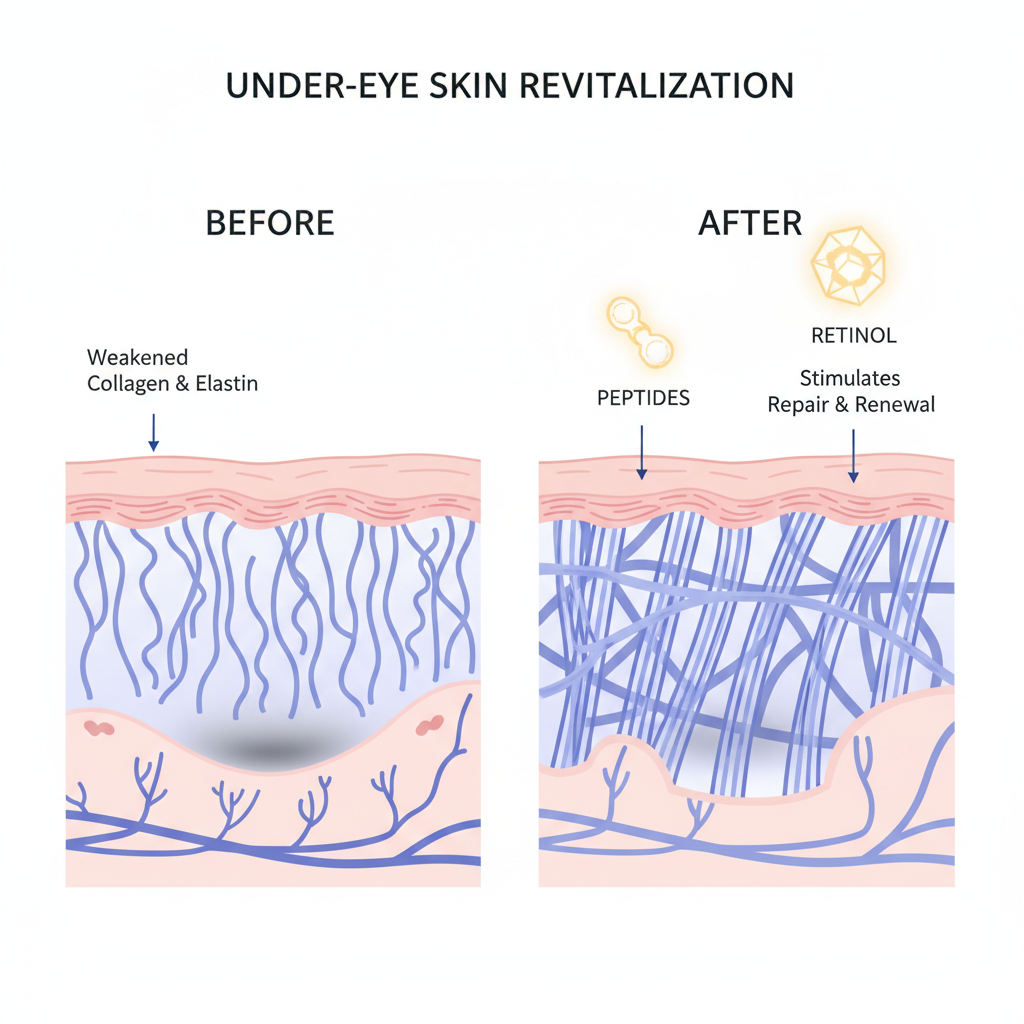
Peptides are short chains of amino acids that act as signaling molecules, encouraging the skin to support collagen and elasticity, which can soften fine lines and mild crepiness around the eyes over time.[2][3] They frequently appear in richer, more nourishing formulas meant for overnight use or for people with drier or more mature skin.
Several higher-end and natural-leaning brands combine peptides with botanical extracts and hydrating agents, leveraging peptides as the anti-aging backbone while plant oils and butters improve comfort and barrier function for delicate under-eye skin.[3]
Retinol and Retinol Alternatives
Retinol remains one of the most thoroughly studied anti-aging ingredients for boosting cell turnover and supporting collagen, which can improve fine lines and texture over months of consistent use.[4] Dermatology-focused brands have invested heavily in refining retinol eye formulas to balance efficacy with tolerability in this sensitive area, making them a go-to for people whose primary concern is wrinkles rather than puffiness alone.[4]
For those with sensitive skin or a preference for natural products, retinol alternatives such as bakuchiol are now common in eye creams, aiming to deliver some smoothing and firming benefits with less risk of irritation, and are often combined with hydrating and soothing ingredients in organic-leaning ranges.[3]
Vitamin C and Niacinamide for Brightening
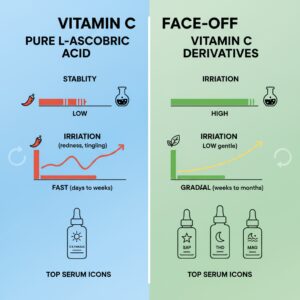
Vitamin C helps address discoloration and dullness by supporting more even tone and offering antioxidant protection, which is why brightening eye treatments frequently pair it with hydrating ingredients to offset potential dryness.[2][3] Niacinamide works through a different mechanism, interfering with pigment transfer in the skin, and is often recommended for hyperpigmentation-based dark circles rather than hollowing or structural shadows.[2][4]
Some modern brightening eye creams now combine niacinamide, vitamin C derivatives, and caffeine so they can simultaneously tackle pigment, mild vascular visibility, and puffiness—an approach highlighted in several recent launches that market themselves specifically as dark-circle correctors rather than generic moisturizers.[2]
Hyaluronic Acid and Ceramides for Plumpness
Hyaluronic acid is a humectant that draws water into the skin, making the under-eye area look plumper and less crepey in the short term, which can soften the appearance of fine lines caused by dehydration.[2] Ceramides and other barrier lipids lock that moisture in and help repair the skin barrier, which is especially important if you use actives like retinol that can cause dryness or sensitivity.
Many well-reviewed eye creams in 2025 quietly rely on this hydrating-plus-barrier approach as the base of the formula, then layer in targeted actives like peptides or antioxidants, creating a cushion around more potent ingredients for better long-term tolerance.[2][3]
Real Products That Reflect This Ingredient Logic
If you want evidence that this ingredient-first way of thinking matches what’s actually selling, look at how big retailers group their most popular eye creams by key actives such as retinol, vitamin C, niacinamide, caffeine, and hyaluronic acid in their category pages.[2] Shopping filters often explicitly connect concerns like dark circles, puffiness, fine lines, and dryness to those exact ingredients, reinforcing the idea that actives—not marketing adjectives—should drive your choices.[2]
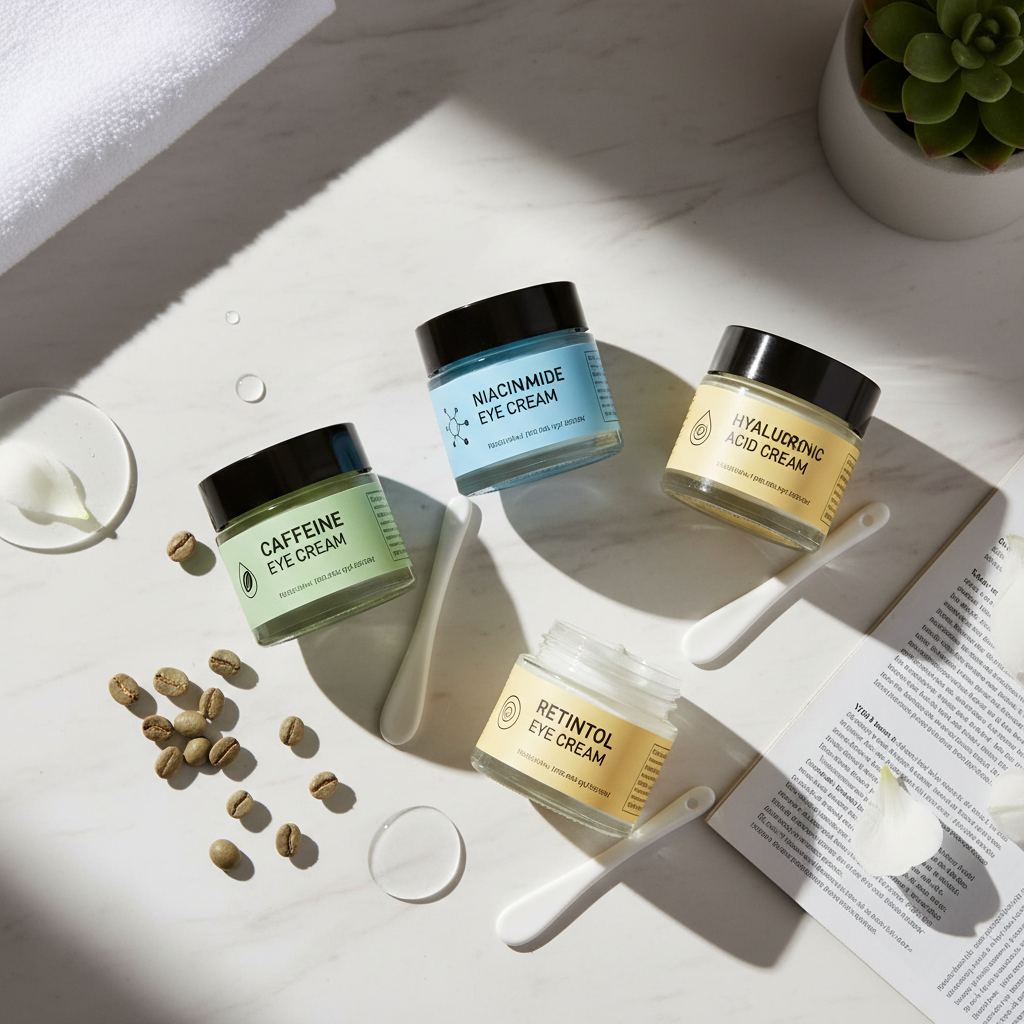
Natural and organic-focused guides also highlight products built around caffeine, botanical antioxidants, plant-derived retinol alternatives, and hydrating oils, showing that even cleaner formulations still orbit the same proven categories like de-puffers, brighteners, and collagen-support agents.[3]
Examples Across Price Points
Dermatology-backed brands often emphasize retinol and niacinamide in dedicated wrinkle-repair or tone-correcting eye creams, leveraging years of research into retinoids for fine lines alongside pigment-focused ingredients for dark circles.[2][4] In contrast, many natural-leaning options focus their story on caffeine, peptides, and botanical extracts such as green tea, rosehip, or algae, appealing to shoppers who want gentler or more eco-conscious formulas while still hitting the core actives needed for visible improvement.[3]
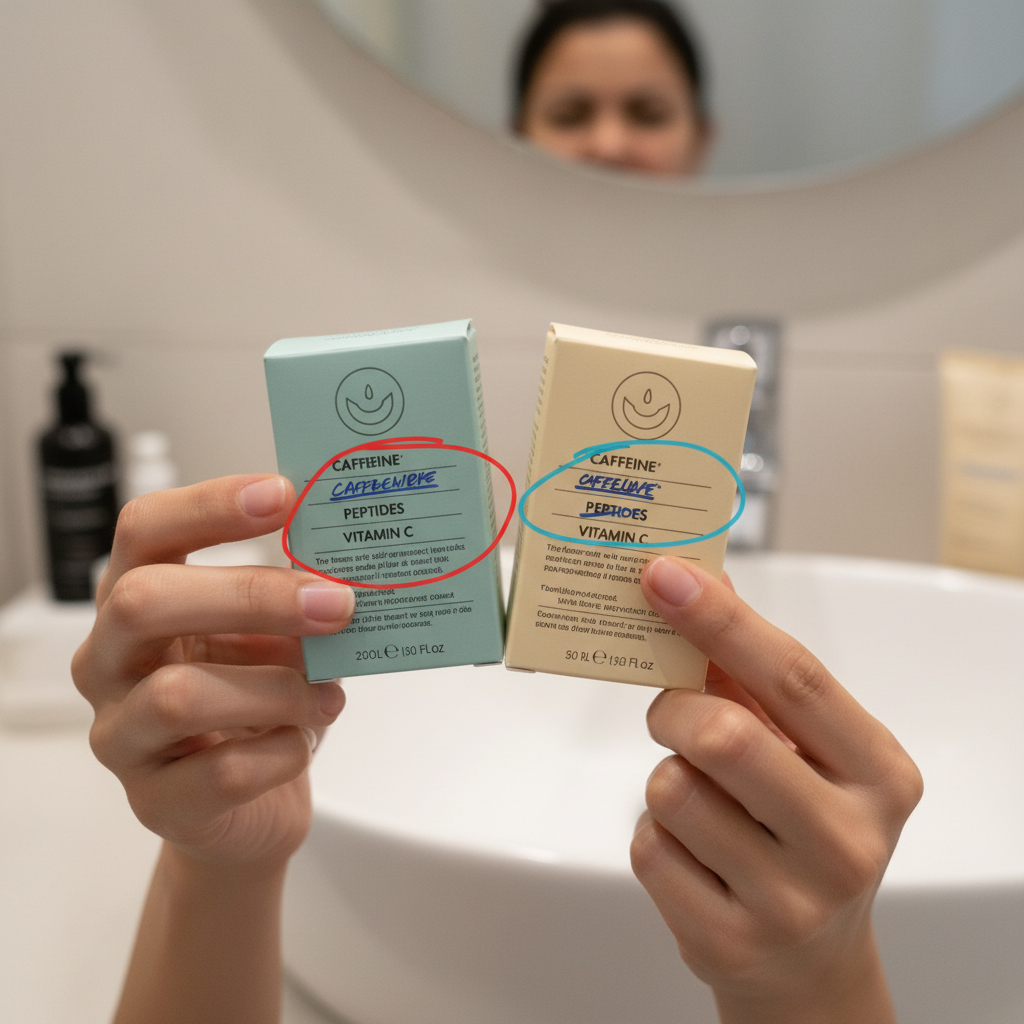
Brightening-focused products like Caudalie’s dark-circle eye treatment showcase how newer launches use clearly labeled combinations—such as niacinamide, caffeine, and proprietary antioxidant complexes—to give readers a practical template of what to look for on a box when comparing options in-store or online.
How to Decode an Eye-Cream Label in 60 Seconds
Instead of memorizing hundreds of product names, it is more effective to treat every new eye cream as a puzzle: does this formula contain at least one recognized ingredient for your main issue, plus support players to keep the area hydrated and comfortable. A simple checklist makes this process fast enough to use while scrolling or standing in a store aisle.
Ask three questions: one, does it have a de-puffing or brightening ingredient like caffeine, vitamin C, or niacinamide if dark circles or bags are your main concern; two, does it add a proven anti-aging active like a retinoid or peptide if fine lines bother you; and three, does it include hydrating and barrier helpers like hyaluronic acid and ceramides to keep your skin calm while the actives work.[2][3]
Quick Matching Guide by Concern
For mostly pigment-based dark circles, prioritize niacinamide, vitamin C, or similar brighteners, optionally supported by caffeine for mild vascular shadows, and pair them with hydration if the area tends to look dry.[2][4] If your main frustration is morning puffiness, focus on caffeine-rich gels or creams and consider formulas that also include soothing botanicals to reduce the look of fluid retention under the eyes.[2][3]
If you are more worried about fine lines and texture, make retinol or peptides a non-negotiable in your nighttime routine, then keep daytime simpler with a hydrating, fragrance-light eye product that layers well under sunscreen and makeup for ongoing protection.[2][4]
Smart Shopping: Avoiding Common Traps
Pretty packaging, vague terms like “age-defying,” and influencer buzz can easily distract from the ingredient list, which is the only part that consistently correlates with results over time. A good rule of thumb is to assume that if a product does not clearly highlight at least one of the core evidence-backed ingredients discussed here, it is unlikely to perform any better than a basic moisturizer.
Price alone is also a poor predictor of effectiveness, because both mid-range and prestige options often use similar categories of active ingredients like retinoids, peptides, and antioxidants, especially in the eye-care segment where regulatory limits and sensitivity concerns cap how aggressive formulas can be.[2][3]
Three Immediate Steps You Can Take Today
First, audit your current eye product: look up the ingredients and see whether you can spot caffeine, peptides, retinoids, vitamin C, niacinamide, hyaluronic acid, or ceramides—if not, manage expectations and use it mainly for basic hydration. Second, when browsing new options, filter product pages by concerns like dark circles, puffiness, and fine lines, then cross-check that the featured actives actually match the ingredient families associated with those concerns in retailer education content and dermatologist discussions.[2][4]
Third, commit to testing one well-chosen formula for at least 8 to 12 weeks, especially if it contains retinol or peptides, since structural and pigment changes happen slowly, and avoid bouncing between multiple products so you can clearly tell what is working for your under-eye area.
Your Next Move
If you are tired of collecting half-used eye creams, make your next purchase the first one chosen by ingredient logic instead of marketing promises. Build a short list of two or three formulas—ideally one brightening or de-puffing option for mornings and one retinoid- or peptide-based option for nights—that clearly list the actives that match your primary concerns.
Once you lock in that simple two-step eye routine, protect your investment with daily sunscreen around the eye area and realistic expectations about timelines, and you will be far more likely to see the gradual but real improvements that ingredient-focused shoppers experience over months rather than days.